Savory Sesame Peanut Noodle Salad Recipe Delight
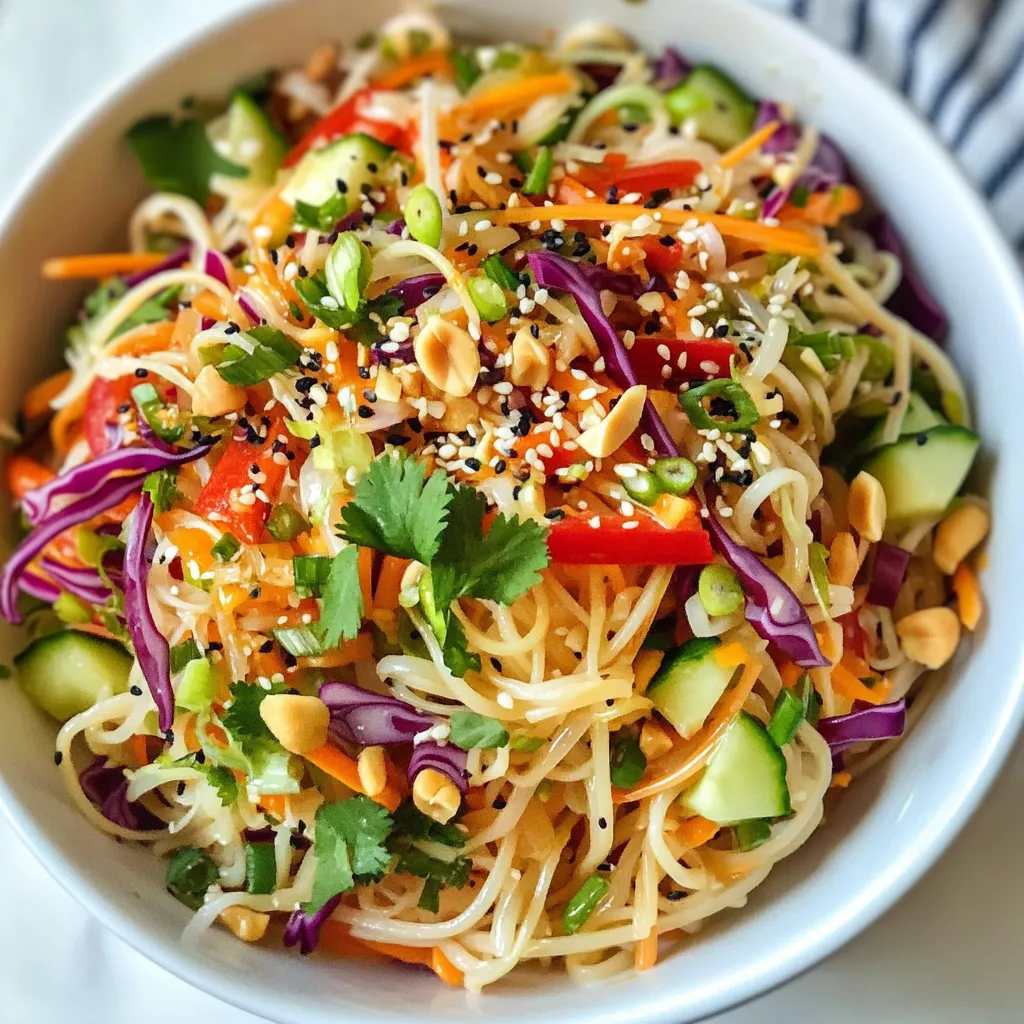
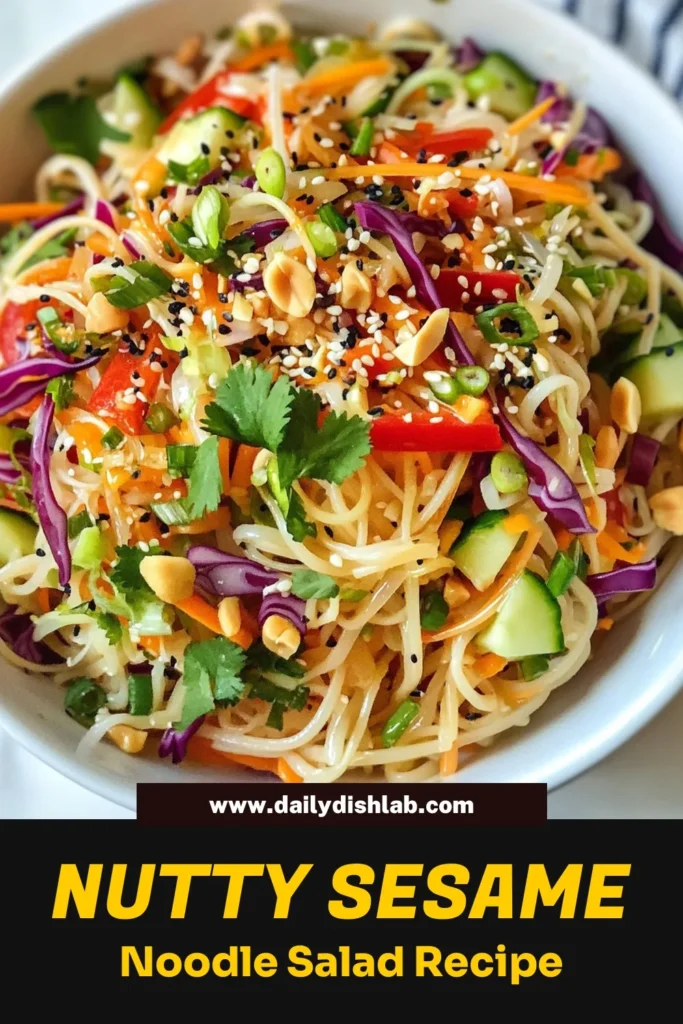
Are you ready to take your taste buds on a flavorful adventure? My Savory Sesame Peanut Noodle Salad will brighten your mealtime with vibrant veggies and a creamy peanut dressing. This recipe is quick, easy, and packed with fresh ingredients. Whether you’re meal prepping or hosting a fun gathering, this salad checks all the boxes. Let’s dive into how to build this delicious dish step by step!
Why I Love This Recipe
- Fresh and Crunchy: This salad is packed with vibrant vegetables that provide a satisfying crunch in every bite.
- Flavorful Dressing: The creamy peanut dressing is rich, savory, and can be adjusted to your heat preference.
- Quick and Easy: With a prep time of just 15 minutes, this dish is perfect for a quick lunch or dinner.
- Versatile: This salad is easily customizable; you can add protein like chicken or tofu for a heartier meal.
Ingredients
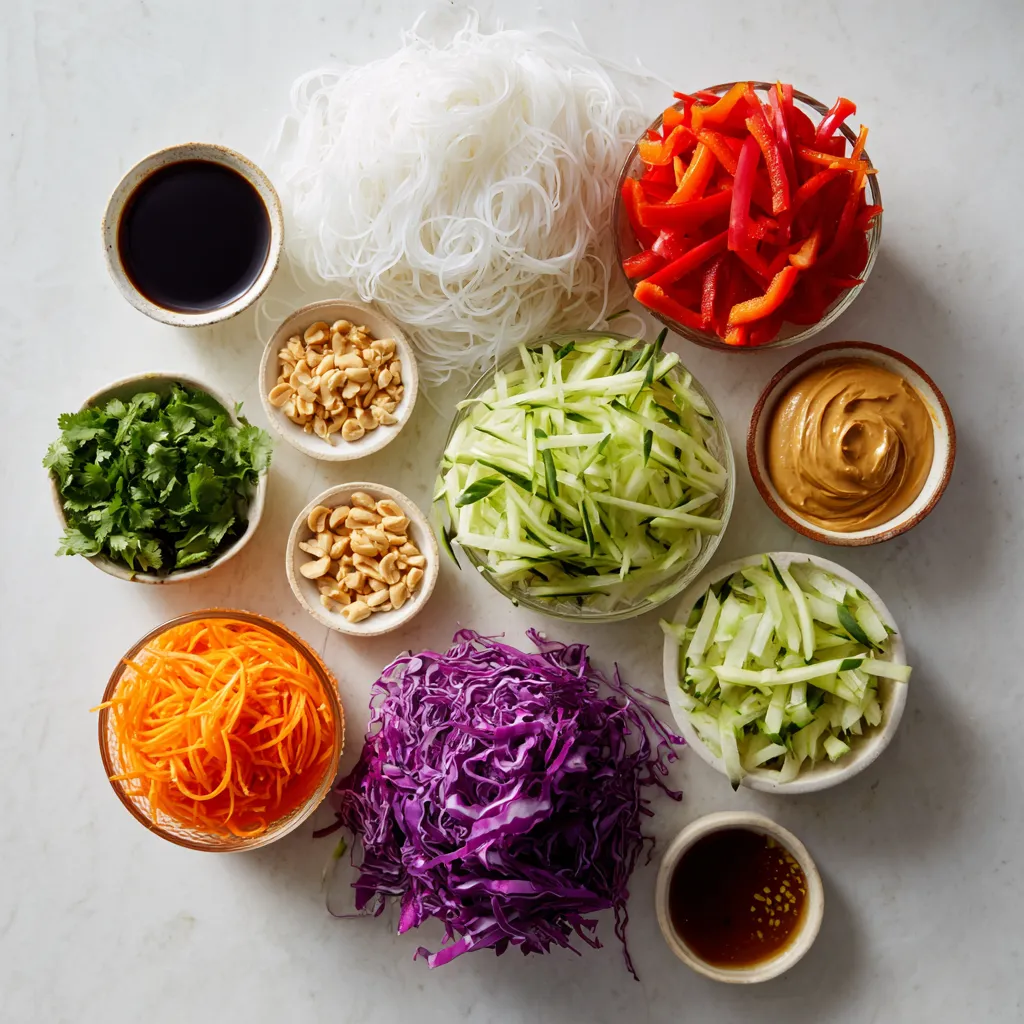
Main Ingredients for Sesame Peanut Noodle Salad
- 8 oz. rice noodles
- 1 cup red bell pepper, julienned
- 1 cup cucumber, julienned
- 1 cup shredded carrots
- 1 cup red cabbage, thinly sliced
- 1/4 cup fresh cilantro, chopped
- 1/4 cup green onions, sliced
- 1/2 cup roasted peanuts, chopped
The choice of ingredients makes this salad pop with color and flavor. Rice noodles are light and soak up the dressing well. Red bell pepper adds sweetness and crunch. Cucumber brings a refreshing bite. Shredded carrots and red cabbage add texture and color. Fresh cilantro and green onions offer a burst of freshness. Roasted peanuts give a nice crunch and nutty flavor.
Dressing Components
- 1/4 cup creamy peanut butter
- 2 tablespoons soy sauce
- 2 tablespoons sesame oil
- 1 tablespoon rice vinegar
- 1 tablespoon honey
- 1 teaspoon sriracha (optional)
- 1-2 garlic cloves, minced
The dressing blends creamy and savory flavors. Peanut butter is the star, giving richness. Soy sauce adds saltiness, while sesame oil brings depth. Rice vinegar offers a tangy kick. Honey balances the salt and adds a hint of sweetness. Sriracha can spice things up if you like heat. Garlic enhances the overall flavor, making it truly delicious.
Step-by-Step Instructions
Preparing the Noodles
To cook rice noodles, start by boiling water. Add 8 oz. of rice noodles and let them soak for 8-10 minutes. They should become soft and tender. After cooking, drain the noodles and rinse them under cold water. This stops the cooking and helps keep them firm. Set the noodles aside in a bowl.
Vegetable Preparation
While the noodles soak, wash your veggies. For fresh ingredients, choose bright colors and firm textures. Julienning vegetables adds a nice crunch to the salad. For the red bell pepper and cucumber, cut them into thin strips. Shred the carrots and slice the red cabbage thinly. Place all the veggies in a big bowl for mixing.
Making the Dressing
In a small bowl, mix together 1/4 cup of creamy peanut butter, 2 tablespoons of soy sauce, and 2 tablespoons of sesame oil. Add 1 tablespoon of rice vinegar and 1 tablespoon of honey for sweetness. If you like heat, stir in 1 teaspoon of sriracha. Mince 1-2 garlic cloves and add them to the mix. Whisk until smooth. If the dressing is too thick, add a tablespoon of warm water to thin it out.
Combining Ingredients
Next, add the drained noodles to your bowl of veggies. Pour the dressing over everything. Gently toss the noodles and veggies together. Make sure every piece gets coated well in the dressing. This keeps the flavors even throughout the salad.
Finishing Touches
Now, it’s time for the fun part! Add 1/2 cup of chopped roasted peanuts, 1/4 cup of fresh cilantro, and 1/4 cup of sliced green onions to the salad. Fold these ingredients in gently to keep the peanuts crunchy. Give your salad a taste and adjust flavors as needed. You might want more soy sauce, honey, or even sriracha.
Chilling Time
To enhance the flavor, refrigerate the salad for at least 30 minutes. This chilling time allows the flavors to blend nicely. When you are ready to serve, take it out and enjoy the fresh, savory taste. It’s perfect for gatherings or a light meal!
Tips & Tricks
Flavor Enhancements
To add spice, try adding more sriracha to the dressing. You can also add red pepper flakes for extra heat. For sweetness, mix in more honey or use maple syrup. If you want a different flavor, consider using a sesame ginger dressing instead of the peanut dressing. It can give a fresh twist to the salad.
Presentation Ideas
Serve the salad in a large, colorful bowl for a fun look. You can also use individual plates for a fancy touch. Drizzle more sesame oil on top for shine. Sprinkle extra peanuts and fresh cilantro for a pop of color. This makes the dish more inviting and tasty.
Cooking Techniques
When cooking rice noodles, avoid overcooking. They should be tender, not mushy. Rinse them under cold water right after cooking to stop the cooking process. This helps keep their texture.
For the veggies, cut them thin. This keeps them crunchy and vibrant. If you let them sit too long, they can lose their crispness. Toss them in just before serving to keep them fresh.
Pro Tips
- Use Fresh Ingredients: The freshness of your vegetables will enhance the flavor and texture of the salad. Opt for crisp, vibrant vegetables for the best results.
- Adjust the Heat: If you enjoy a bit of spice, feel free to increase the amount of sriracha in the dressing. Alternatively, you can add red pepper flakes for a different heat profile.
- Customize Your Veggies: Feel free to substitute or add other vegetables like bell peppers, snap peas, or even avocado to personalize the salad to your taste.
- Meal Prep Friendly: This salad keeps well in the fridge for up to 3 days, making it a great option for meal prep. Just remember to add the peanuts right before serving to maintain their crunch.
Variations
Protein Additions
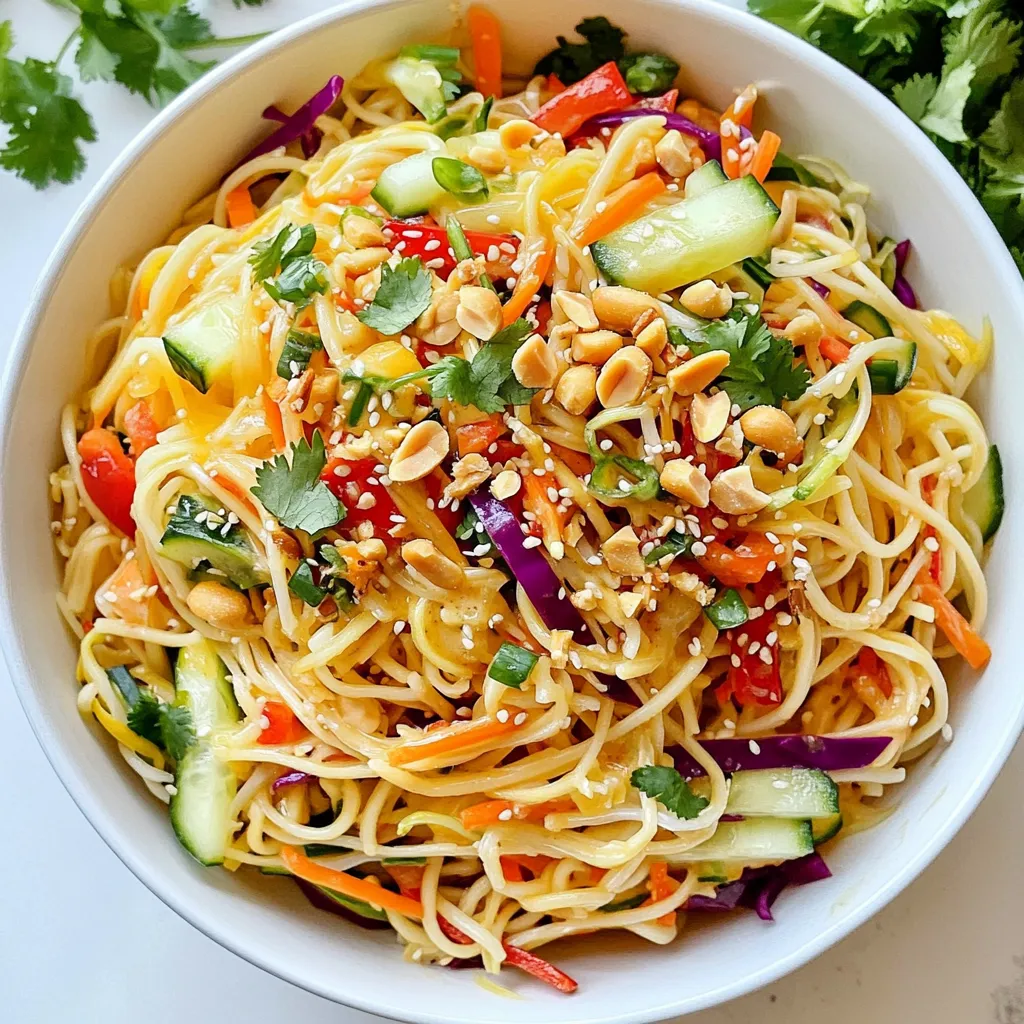
You can add protein to your sesame peanut noodle salad in several ways. For meat lovers, grilled chicken or shrimp works well. Simply cook them, slice, and toss into the salad. If you prefer plant-based options, tofu is a great choice. Firm tofu absorbs flavor well and adds texture. You can also try tempeh or chickpeas for a hearty vegan alternative. These options boost protein without losing flavor.
Different Veggie Choices
Feel free to mix up the veggies in your salad. You can add snap peas, broccoli, or bell peppers for crunch. Seasonal vegetables like asparagus in spring or zucchini in summer keep the salad fresh and exciting. Always look for the freshest produce. Fresh veggies enhance the taste and nutrients of your dish.
Dressing Customizations
The dressing is where you can get creative. Adjust the spice by adding more sriracha for heat or less for mildness. If you want a sweeter taste, add more honey. For dietary needs, you can swap out the peanut butter for almond or sunflower seed butter. This way, you keep the creamy texture while catering to allergies. Always taste your dressing before adding it to the salad, so you can tweak it just right.
Storage Info
How to Store Leftovers
To keep your Sesame Peanut Noodle Salad fresh, place leftovers in an airtight container. This helps maintain the taste and crunch of the veggies. If you have a lot of salad, divide it into smaller portions. This way, you can grab what you need without exposing the whole batch to air. Always remember to let the salad cool down to room temperature before sealing it in the container.
Shelf Life
Your salad lasts about 3 to 4 days in the fridge. Check for signs of spoilage, such as a sour smell or slimy texture. If the veggies look wilted or the dressing separates too much, it’s time to toss it out. Always trust your senses; if it doesn’t look or smell right, don’t eat it.
Reheating Tips
Reheating this salad is not the best idea. The noodles can become mushy, and the veggies lose their crunch. If you want to enjoy leftovers, try serving them cold. You can also add a bit of fresh dressing to refresh the flavors. If you must heat it, do so gently in a pan over low heat. Avoid the microwave, as it can ruin the texture.
FAQs
Can I use a different type of noodle?
Yes, you can use a different type of noodle. Rice noodles are great for this dish, but you can try others too. For a gluten-free option, use rice or quinoa noodles. Whole grain noodles also work well for added fiber. Choose what you enjoy most!
What is the best way to meal prep this salad?
Meal prepping this salad is easy. Start by chopping your veggies ahead of time. Store them in separate containers to keep them fresh. You can also cook the noodles and keep them in the fridge. Mix everything when you are ready to eat!
Can I make this salad in advance?
Yes, you can make this salad in advance! Prep the veggies and noodles the day before. Keep the dressing in a separate container. Mix everything together right before you serve. This keeps the salad fresh and crunchy.
Is this salad suitable for kids?
This salad can be made kid-friendly! Cut the veggies into smaller pieces for easier eating. You can also reduce the sriracha or skip it if your kids don’t like spice. Let them help mix the salad for fun and engagement.
How do I add more flavor to the salad?
To add more flavor, try these tips. You can add more soy sauce or honey for sweetness. Marinate the veggies in a bit of sesame oil before mixing. You can also sprinkle in some lime juice for a zesty kick!
This article covered how to make a sesame peanut noodle salad from start to finish. You learned about the key ingredients, a step-by-step guide for preparation, and tips for variations and storage. Overall, this dish is fresh, flavorful, and easy to customize. Experiment with different veggies or proteins to make it your own. Whether you’re prepping for a meal or serving at a gathering, this salad will impress. Enjoy the process and the tasty result
Sesame Peanut Noodle Salad
Ingredients
- 8 oz rice noodles
- 1 cup red bell pepper, julienned
- 1 cup cucumber, julienned
- 1 cup shredded carrots
- 1 cup red cabbage, thinly sliced
- 0.25 cup fresh cilantro, chopped
- 0.25 cup green onions, sliced
- 0.5 cup roasted peanuts, chopped
- 0.25 cup creamy peanut butter
- 2 tablespoons soy sauce
- 2 tablespoons sesame oil
- 1 tablespoon rice vinegar
- 1 tablespoon honey
- 1 teaspoon sriracha (optional, for heat)
- 1 clove garlic, minced
Instructions
- Cook the Noodles: Begin by preparing the rice noodles according to the package instructions. Usually, this involves soaking them in hot water for 8-10 minutes until tender. Drain and rinse under cold water to stop the cooking process. Set aside.
- Prepare the Vegetables: While the noodles are soaking, julienne the red bell pepper, cucumber, and shred the carrots and cabbage. Place all prepared vegetables in a large mixing bowl.
- Make the Dressing: In a small bowl, whisk together the peanut butter, soy sauce, sesame oil, rice vinegar, honey, sriracha (if using), and minced garlic until smooth and creamy. If the dressing is too thick, thin it out with a tablespoon of warm water until desired consistency is reached.
- Combine Everything: Add the drained noodles to the bowl with the vegetables, then pour the dressing over the top. Gently toss everything together until the noodles and vegetables are well coated in the dressing.
- Add Finishing Touches: Incorporate the chopped peanuts, cilantro, and green onions into the salad, gently folding them in to keep the peanuts crunchy.
- Taste and Adjust: Give the salad a taste; add more soy sauce, honey, or sriracha according to your preference.
- Chill and Serve: For best flavor, refrigerate the salad for at least 30 minutes before serving to let the flavors meld.
![For Garlic Parmesan Roasted Cauliflower, you need fresh ingredients to get the best flavor. Here’s what you will need: - 1 large head of cauliflower, cut into florets - 4 tablespoons olive oil - 4 cloves garlic, minced - 1 teaspoon smoked paprika - 1 teaspoon onion powder - 1 teaspoon salt - ½ teaspoon black pepper - ½ cup grated Parmesan cheese - 2 tablespoons fresh parsley, chopped (for garnish) - Lemon wedges (for serving) Using fresh ingredients matters. Fresh garlic brings a strong aroma. Fresh parsley adds a pop of color. Each ingredient works together to make this dish shine. If you have dietary restrictions, consider these substitutes: - Use nutritional yeast instead of Parmesan for a vegan option. - Swap olive oil for avocado oil if you prefer. - Try cauliflower rice if you want a lower-carb option. These swaps can keep the dish tasty while meeting your needs. For the full recipe, check the details above. 1. Preheat your oven to 425°F (220°C). This high heat helps the cauliflower roast well. 2. Line a baking sheet with parchment paper. This keeps the cauliflower from sticking. 3. In a large bowl, mix the olive oil, minced garlic, smoked paprika, onion powder, salt, and black pepper. Stir until combined. 4. Add the cauliflower florets to the bowl. Toss them well to coat with the oil and spice mix. Each floret should be covered for the best flavor. 1. Spread the coated cauliflower evenly on the prepared baking sheet. Make sure they are not crowded. 2. Roast the cauliflower for about 25 minutes. Stir halfway through to ensure even cooking. 3. Check for doneness by poking a floret with a fork. It should be tender and golden brown. 1. After roasting, take the cauliflower out of the oven. Quickly sprinkle the grated Parmesan cheese over the top. 2. Return the baking sheet to the oven for 5 more minutes. This melts the cheese and makes it crispy. 3. Once done, remove it from the oven. Garnish with fresh parsley and serve with lemon wedges. The lemon adds a fresh zing that brightens the dish. For the full recipe, including ingredient details, check the [Full Recipe]. To achieve crispy cauliflower, you need enough space on the baking sheet. Avoid crowding the florets. This allows hot air to circulate and crisp them up. I also recommend a touch of oil for that golden finish. Stick to the roasting time of 25 minutes, and stir halfway through to roast evenly. If you want to roast other veggies at the same time, keep their cooking times in mind. Carrots and bell peppers work well alongside cauliflower. Just cut them smaller than the cauliflower so they cook at the same pace. For seasoning adjustments, feel free to play around with the spices. A pinch of cayenne adds heat. Try fresh herbs like thyme for a fragrant twist. You can also swap the Parmesan for nutritional yeast for a vegan option. For storing leftovers, place them in an airtight container. Let them cool first. Store in the fridge for up to three days. When reheating, use the oven if you want to keep the crunch. Heat at 350°F for 10 minutes, or until warm. If you want to freeze the roasted cauliflower, allow it to cool completely. Use a freezer-safe bag, and squeeze out the air before sealing. It should last up to three months. When ready to eat, thaw in the fridge and reheat in the oven for best results. For the full recipe, refer to the earlier section. Enjoy your garlic Parmesan roasted cauliflower! {{image_2}} You can change the taste of your Garlic Parmesan Roasted Cauliflower in fun ways. Try adding spices like cayenne for heat or cumin for a warm flavor. Herbs like thyme or rosemary can also add freshness and aroma. If you want a twist, think about using cheese alternatives. Nutritional yeast gives a cheesy flavor without dairy. You can also use feta or goat cheese for a tangy bite. This dish works great with many meals. Serve it alongside grilled chicken, fish, or even quinoa for a filling meal. You can create a cauliflower salad by mixing in cherry tomatoes, cucumbers, or olives. This adds color and crunch! Pair your roasted cauliflower with dips like ranch or hummus for a tasty appetizer. The creamy dips make a great contrast to the roasted flavors. For more ways to enjoy this dish, check out the Full Recipe. What are the best cooking methods for cauliflower? The best cooking methods for cauliflower include roasting, steaming, and sautéing. Roasting brings out the natural sweetness and adds a nice crunch. For a softer texture, steaming works well. Sautéing gives you a quick cook while keeping the flavor bright. Each method highlights the taste of cauliflower in its own way. Can I use frozen cauliflower for this recipe? Yes, you can use frozen cauliflower for this recipe. Just make sure to thaw it first. Pat the cauliflower dry with a towel to remove excess moisture. This step helps the cauliflower crisp up nicely during roasting. How do I know when the cauliflower is done roasting? You’ll know the cauliflower is done when it is golden brown and tender. A fork should easily pierce through the florets. Keep an eye on it in the last few minutes to avoid burning. The cheese should be melted and slightly crispy at the end. Overview of calories and main nutrients A serving of Garlic Parmesan Roasted Cauliflower has about 150 calories. It contains fiber, vitamins C and K, and calcium. The olive oil adds healthy fats, while Parmesan cheese adds protein. Discussion on health benefits of cauliflower and Parmesan Cauliflower is low in calories and high in nutrients. It supports digestion and helps with weight management. Parmesan cheese adds flavor and calcium for strong bones. Together, this dish offers a tasty way to enjoy these benefits. Suggested serving sizes for a balanced meal For a balanced meal, serve about one cup of roasted cauliflower. Pair it with lean protein, like chicken or fish, and a whole grain, like brown rice or quinoa. This creates a complete meal with good nutrients. To make garlic Parmesan roasted cauliflower, you will need: - 1 large head of cauliflower, cut into florets - 4 tablespoons olive oil - 4 cloves garlic, minced - 1 teaspoon smoked paprika - 1 teaspoon onion powder - 1 teaspoon salt - ½ teaspoon black pepper - ½ cup grated Parmesan cheese - 2 tablespoons fresh parsley, chopped (for garnish) - Lemon wedges (for serving) Start by preheating the oven to 425°F (220°C). Line a baking sheet with parchment paper. In a large bowl, mix the olive oil, minced garlic, smoked paprika, onion powder, salt, and black pepper. Add the cauliflower florets and toss them until they are well coated. Spread the coated florets on the baking sheet. Roast them for 25 minutes, stirring halfway through. They should be tender and golden brown when done. Sprinkle the grated Parmesan cheese on top and return it to the oven for another 5 minutes. This will melt the cheese and make it slightly crispy. Garnish with fresh parsley and serve with lemon wedges on the side. This recipe serves 4 people and takes about 35 minutes in total, including 10 minutes of prep time. For more tips on garlic Parmesan roasted cauliflower, check out related recipes or cooking guides that inspire your kitchen adventures! In this post, we explored how to make garlic Parmesan roasted cauliflower. We discussed ingredients, preparation steps, and roasting tips for the perfect dish. Fresh ingredients are key for great flavor. We also offered advice on storing leftovers and suggested delicious variations. The journey of this recipe can enhance any meal. Try these tips and make it your own! Enjoy every bite of your tasty creation.](https://dailydishlab.com/wp-content/uploads/2025/06/fe37a522-1e60-44eb-9a11-11c72f683603-768x768.webp)