Go Back
- 4 salmon fillets - 1/4 cup honey - 1/4 cup Dijon mustard - 2 tablespoons olive oil - 2 cloves garlic, minced The salmon fillets are the star of this dish. They are rich in omega-3 fatty acids and provide a tasty, flaky texture. Honey and Dijon mustard create a sweet and tangy glaze. Olive oil adds a nice depth of flavor and helps the salmon cook evenly. Minced garlic gives it that aromatic kick that makes your mouth water. - 1 pound asparagus, trimmed - 1 cup cherry tomatoes, halved Asparagus brings a crisp texture and vibrant color. It pairs perfectly with salmon. Cherry tomatoes add a burst of sweetness and juiciness. Together, these veggies make your plate look beautiful and balanced. - Salt and pepper - 1 lemon, zested and juiced - Fresh dill or parsley for garnish Salt and pepper enhance all the flavors in your dish. Lemon zest and juice add brightness and freshness. Fresh dill or parsley makes a lovely garnish that also boosts flavor. Use these to elevate your meal from simple to stunning. {{ingredient_image_1}} Preheat the Oven Start by preheating your oven to 400°F (200°C). This helps the salmon cook evenly and perfectly. Prepare the Honey Mustard Mixture In a small bowl, mix together the honey, Dijon mustard, olive oil, minced garlic, lemon zest, and lemon juice. Stir until it is well combined. This mixture will give your salmon a sweet and tangy flavor. Seasoning the Salmon Next, take your salmon fillets and place them on a large sheet pan lined with parchment paper. Season each fillet with salt and pepper. This enhances the flavor of the fish and adds a nice touch. Adding Vegetables Now, arrange the trimmed asparagus and halved cherry tomatoes around the salmon. Drizzle the remaining honey mustard mixture over the vegetables. This will infuse them with great flavor as they cook. Baking Time and Temperature Place the sheet pan in the preheated oven. Bake for about 15-20 minutes. The honey mustard will caramelize, making everything extra tasty. Checking for Doneness To check if the salmon is done, use a fork to see if it flakes easily. The asparagus should be tender as well. If it’s not ready, give it a few extra minutes. You want a perfectly cooked, flaky salmon. How do I identify fresh salmon? Fresh salmon has bright, shiny skin. It should smell like the sea, not fishy. The flesh should be firm and bounce back when you touch it. Look for salmon with clear, bright eyes and no browning on the edges. What is the ideal cooking temperature? Cook salmon to an internal temperature of 145°F (63°C). Use a meat thermometer for accuracy. The salmon should flake easily with a fork. This ensures it is moist and safe to eat. How do I adjust honey and mustard ratios? You can change the honey and mustard amounts to fit your taste. For a sweeter dish, add more honey. For a tangier flavor, increase the mustard. Start with equal parts and adjust as you like. How can I use fresh herbs? Fresh herbs can boost the taste of your dish. Dill pairs well with salmon. Parsley adds a fresh touch. Chop them finely and sprinkle on top before serving. This adds color and flavor. What sides pair well with honey mustard salmon? Serve with roasted potatoes or a fresh salad. Quinoa or rice also make great sides. They balance the meal and add texture. What are some plate presentation tips? Make your dish look nice by arranging salmon and vegetables neatly. Use colorful veggies for a bright plate. Garnish with herbs and lemon slices. This makes your meal feel special and inviting. Pro Tips Choose Fresh Salmon: Always opt for fresh, high-quality salmon fillets for the best flavor and texture. Look for fillets with vibrant color and a clean smell. Marinate for Extra Flavor: If time allows, marinate the salmon in the honey mustard mixture for 30 minutes to 1 hour before baking to enhance the flavors. Vegetable Variations: Feel free to swap out asparagus and cherry tomatoes with other seasonal vegetables such as bell peppers or zucchini for a different taste. Rest Before Serving: Let the salmon rest for a couple of minutes after baking. This allows the juices to redistribute, ensuring a moist and tender dish. {{image_2}} Swapping Salmon for Other Fish You can swap salmon for other fish like tilapia or cod. These fish cook similarly and absorb flavors well. An important tip: adjust baking time based on thickness. Thinner fillets may need less time in the oven. Using Chicken as an Alternative Chicken works great too! Use boneless chicken breasts for a tasty twist. Make sure to cut them to the same size as the salmon. This way, everything cooks evenly. Chicken takes a bit longer, about 25-30 minutes. Always check that it reaches 165°F for safety. Seasonal Vegetable Choices Feel free to change up the vegetables! Broccoli and bell peppers are excellent choices. They add nice color and crunch. In winter, try Brussels sprouts or carrots for a hearty touch. Seasonal veggies keep the dish fresh and exciting. Adding Other Ingredients You can also add other ingredients like zucchini or sweet potatoes. These add flavor and nutrients. Just cut them into even pieces to ensure they cook well. Mixing in a variety of colors makes the dish more appealing. Different Mustard Types While Dijon mustard is great, you can try whole grain or honey mustard. Each type brings a unique taste. Whole grain adds texture, while honey mustard gives extra sweetness. Adjust the honey based on your mustard choice. Experimenting with Other Glazes You can also play with different glazes. Try a teriyaki or barbecue sauce for a fun twist. Each sauce changes the flavor profile. It’s a great way to keep your meals interesting and flavorful. For storing leftovers, let the dish cool down first. Place salmon and veggies in an airtight container. This keeps them fresh and safe. In the fridge, it lasts about 3 days. If you want to enjoy it later, follow these tips. You can freeze the dish if you want to save it longer. Wrap the salmon and veggies tightly in plastic wrap. Then, place them in a freezer-safe bag. It can last up to 2 months in the freezer. When you’re ready to eat, take it out and thaw it in the fridge overnight. To reheat, place it in the oven at 350°F (175°C) for about 15 minutes. This warms it up nicely without drying it out. Prepping in advance makes life easier. You can mix the honey mustard sauce ahead of time and store it in the fridge. Chop the veggies and keep them in a separate container. Use clear glass or plastic containers for easy viewing. When you’re ready to cook, just grab everything and assemble. This makes weeknight dinners quick and fun! Baking salmon takes about 15-20 minutes at 400°F (200°C). The time may vary based on your oven's heat. To tell if the salmon is done, check for flakiness. Use a fork to gently press on the fish. If it flakes easily, it’s ready. The internal temperature should reach 145°F (63°C) for safety. Yes, you can use regular mustard, but it changes the flavor. Dijon adds a nice tang and richness. Regular mustard is spicier and less complex. If you want to replace Dijon, try mixing yellow mustard with a bit of honey. This can mimic the sweet and tangy taste you get from Dijon. Great sides include roasted vegetables, rice, or a fresh salad. Asparagus and cherry tomatoes pair nicely with the salmon. Complementary flavors include lemon, garlic, and fresh herbs. Adding a side of couscous or quinoa also enhances the meal’s texture and taste. You now have the tools to make honey mustard salmon and fresh veggies. We discussed key ingredients like salmon, honey, and asparagus. I shared step-by-step instructions to ensure a perfect dish. We also covered tips for flavor and storage. Try different proteins and veggies to keep it fun. This meal is healthy, tasty, and easy. Enjoy cooking your delicious salmon dish!

Sheet Pan Honey Mustard Salmon

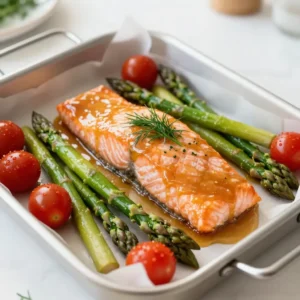
A delicious and easy sheet pan meal featuring salmon, asparagus, and cherry tomatoes, all coated in a sweet and tangy honey mustard sauce.
Prep Time 10 minutes
Cook Time 20 minutes
Total Time 30 minutes
Course Main Course
Cuisine American
Servings 4
Calories 350 kcal

Ingredients
  

  • 4 fillets salmon
  • 0.25 cup honey
  • 0.25 cup Dijon mustard
  • 2 tablespoons olive oil
  • 2 cloves garlic, minced
  • 1 lemon zested and juiced
  • to taste salt and pepper
  • 1 pound asparagus, trimmed
  • 1 cup cherry tomatoes, halved
  • for garnish fresh dill or parsley

Instructions
 

  • Preheat the oven to 400°F (200°C).
  • In a small bowl, mix together the honey, Dijon mustard, olive oil, minced garlic, lemon zest, and lemon juice until well combined.
  • Place the salmon fillets on a large sheet pan lined with parchment paper. Season with salt and pepper.
  • Drizzle half of the honey mustard mixture over the salmon, ensuring it’s evenly coated.
  • On the same sheet pan, arrange the asparagus and cherry tomatoes around the salmon. Drizzle the remaining honey mustard mixture over the vegetables.
  • Bake in the preheated oven for about 15-20 minutes, or until the salmon is cooked through and flakes easily with a fork, and the asparagus is tender.
  • Remove from the oven and let it rest for a couple of minutes. Garnish with fresh dill or parsley before serving.

Notes

Feel free to substitute other vegetables based on your preference.
Keyword asparagus, easy dinner, honey mustard, salmon, sheet pan