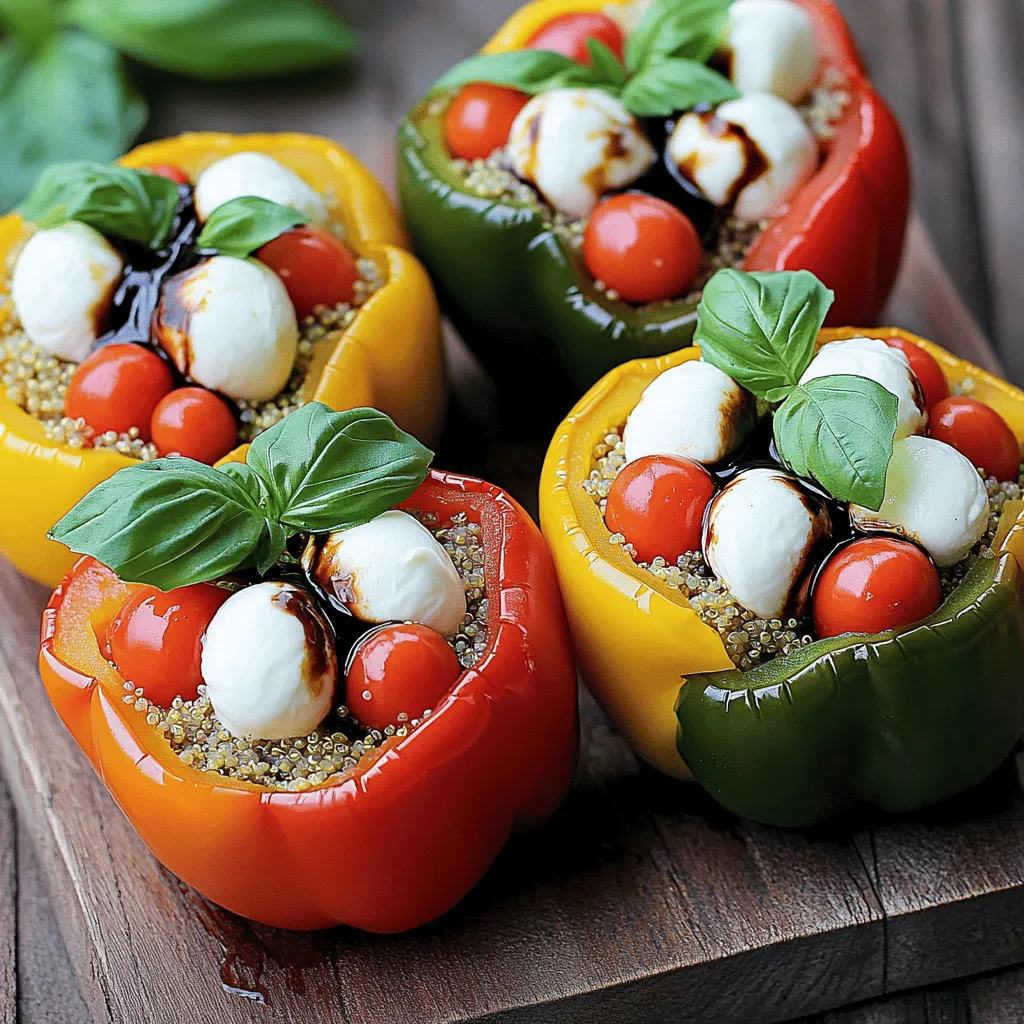
Looking for a tasty and healthy meal? Try my Caprese Quinoa Stuffed Peppers! This dish combines fresh flavors and colorful veggies, making it perfect for a quick dinner. It’s filled with nutritious quinoa, juicy tomatoes, and creamy mozzarella. Whether you’re a busy parent or a cooking novice, this easy recipe is here to help you impress your family or friends. Let’s dive into the ingredients and get cooking!
Why I Love This Recipe
- Fresh Ingredients: This recipe utilizes vibrant, fresh produce like bell peppers, cherry tomatoes, and basil, which not only enhances the flavor but also adds a burst of color to your plate.
- Healthy and Nutritious: Quinoa is a fantastic source of protein and fiber, making these stuffed peppers a wholesome and satisfying meal option.
- Easy to Make: With simple steps and minimal preparation time, this recipe is perfect for busy weeknights or casual gatherings.
- Customizable: You can easily modify the filling by adding your favorite vegetables or proteins, making it versatile for different dietary preferences.
Ingredients
List of main ingredients
To make Caprese Quinoa Stuffed Peppers, you need:
– 4 medium bell peppers (red, yellow, or green)
– 1 cup quinoa, rinsed
– 2 cups vegetable broth
– 1 cup cherry tomatoes, halved
– 1 cup fresh mozzarella balls, halved
– 1 cup fresh basil leaves, chopped
– 2 tablespoons balsamic glaze
– 2 tablespoons olive oil
– Salt and pepper to taste
Optional ingredients for customization
You can add flavor or change things up with:
– 1 teaspoon dried oregano
– Crushed red pepper flakes for heat
– Spinach or kale for extra greens
– Grated Parmesan cheese for a richer taste
Recommended substitutes and variations
If you need alternatives, consider these:
– Use brown rice or farro in place of quinoa.
– Try any type of cheese if mozzarella is not available.
– Replace balsamic glaze with lemon juice for a zestier kick.
– Choose zucchini or eggplant if you want a different veggie base.
These ingredients help make a meal that is tasty and good for you.

Step-by-Step Instructions
Preparing the bell peppers
Start by preheating your oven to 375°F (190°C). Take your bell peppers, cut off the tops, and remove the seeds and membranes. You want them clean for stuffing. Place the peppers upright in a baking dish. This will help them hold the filling.
Cooking the quinoa
In a medium saucepan, combine 1 cup of rinsed quinoa and 2 cups of vegetable broth. Bring this mixture to a boil. Once it boils, reduce the heat, cover, and let it simmer. After about 15 minutes, check if the quinoa is fluffy and the liquid is gone. If it is, you’re ready to move on.
Mixing the filling and assembling peppers
In a large mixing bowl, combine the cooked quinoa, halved cherry tomatoes, and mozzarella balls. Add in the chopped basil, balsamic glaze, olive oil, salt, and pepper. If you like, toss in 1 teaspoon of dried oregano. Mix gently until everything is well combined. Now, spoon the mixture into each bell pepper. Pack it tightly to fit as much filling as you can.
Baking instructions
Cover the baking dish with aluminum foil. Bake in the preheated oven for 25 minutes. After that, remove the foil and let them bake for another 10 to 15 minutes. This helps the peppers become tender and gives a nice caramelized top. Once done, let them cool for a few minutes before you serve. You can add more basil leaves on top for a fresh look.
Pro Tips
- Choose Colorful Peppers: Opt for a mix of red, yellow, and green bell peppers for a vibrant presentation and varied flavor.
- Cook Quinoa Perfectly: Rinse the quinoa thoroughly before cooking to remove its natural bitterness and achieve a fluffier texture.
- Customize the Filling: Feel free to add other ingredients like spinach, black beans, or corn to the quinoa mixture for added nutrition and flavor.
- Serve with Style: Drizzle extra balsamic glaze over the stuffed peppers right before serving to enhance both flavor and presentation.
Tips & Tricks
How to achieve the perfect quinoa texture
To get fluffy quinoa, rinse it well. This removes the bitter coating called saponin. Cook the quinoa in vegetable broth for better flavor. Bring it to a boil, then reduce the heat. Cover and let it simmer for about 15 minutes. Once done, let it sit for a few minutes before fluffing with a fork. This will help it stay light and airy.
Suggestions for enhancing flavor
For more flavor, add fresh herbs like parsley or thyme. You can try adding a teaspoon of dried oregano for a savory kick. A splash of lemon juice can brighten the dish. If you like spice, add some red pepper flakes. This will give your stuffed peppers a nice heat. Mix these ingredients into the quinoa before stuffing the peppers.
Presentation and garnishing tips
For a stunning presentation, place the stuffed peppers on a rustic wooden board. Drizzle extra balsamic glaze over the top for a glossy look. Garnish with fresh basil leaves for a pop of color. You can also sprinkle some grated cheese on top before baking. This adds a nice touch and a bit of extra flavor.
Variations
Different protein options
You can easily add protein to your Caprese quinoa stuffed peppers. If you want a heartier meal, try adding cooked chicken. Shred the chicken and mix it with the quinoa filling. For a meat-free option, use black beans or chickpeas. Both add protein and texture. Just rinse and drain them before adding to your mixture.
Vegetarian and vegan adaptations
This recipe is naturally vegetarian. To make it vegan, simply swap the mozzarella for a plant-based cheese. You can also skip the cheese altogether and boost flavor with extra basil and balsamic glaze. This keeps the dish fresh and vibrant while still being tasty.
Seasonal ingredient swaps
Feel free to switch up the ingredients based on what’s in season. In summer, add fresh zucchini or corn for a sweet crunch. In fall, consider diced butternut squash or even roasted pumpkin. These swaps keep your dish exciting and full of flavors throughout the year.
Storage Info
Best practices for storing leftovers
You can store leftovers in an airtight container. Let the peppers cool fully before sealing. This helps keep moisture in check. They will stay fresh for about 3 to 4 days in the fridge.
Reheating methods
To reheat, place a stuffed pepper on a microwave-safe plate. Heat for 1 to 2 minutes on high. Check if it’s hot in the center. You can also reheat in the oven. Preheat to 350°F (175°C) and bake for about 10 minutes. Cover with foil to keep them moist.
Freezing instructions for longer storage
If you want to freeze them, prepare the peppers as usual. After baking, let them cool completely. Wrap each pepper tightly in plastic wrap, then foil. Store in a freezer-safe bag. They can last up to 3 months in the freezer. To use, thaw overnight in the fridge. Reheat as mentioned above.
FAQs
Can I use other types of peppers?
Yes, you can use other types of peppers. Bell peppers are great, but try poblano or Anaheim peppers for a twist. They add a smoky flavor. You can even opt for mini sweet peppers for fun bites. Just make sure they hold the filling well.
How long can I store stuffed peppers in the fridge?
You can store stuffed peppers in the fridge for about three to four days. Make sure they cool completely before sealing them in an airtight container. This helps keep them fresh and tasty. Reheat them in the oven or microwave when you’re ready to eat.
What can I serve with Caprese Quinoa Stuffed Peppers?
Serve your stuffed peppers with a fresh salad or garlic bread. A simple side of greens pairs well too. You might also enjoy them with a light soup. The flavors blend nicely and create a balanced meal.
Is this recipe gluten-free?
Yes, this recipe is gluten-free. Quinoa is a great gluten-free grain. You can enjoy this dish without worry. Always check your vegetable broth to ensure it’s also gluten-free. This way, you can savor every bite without any concerns.
You learned about the ingredients, cooking steps, and tips for making great stuffed peppers. I shared ideas for protein options and storage info. Remember, while this recipe is flexible, it still packs flavor. Feel free to customize based on your taste. Whether you enjoy it fresh or as leftovers, it can fit any meal. Experiment with different ingredients for fun results. Now, get started and bring this tasty dish to your table!