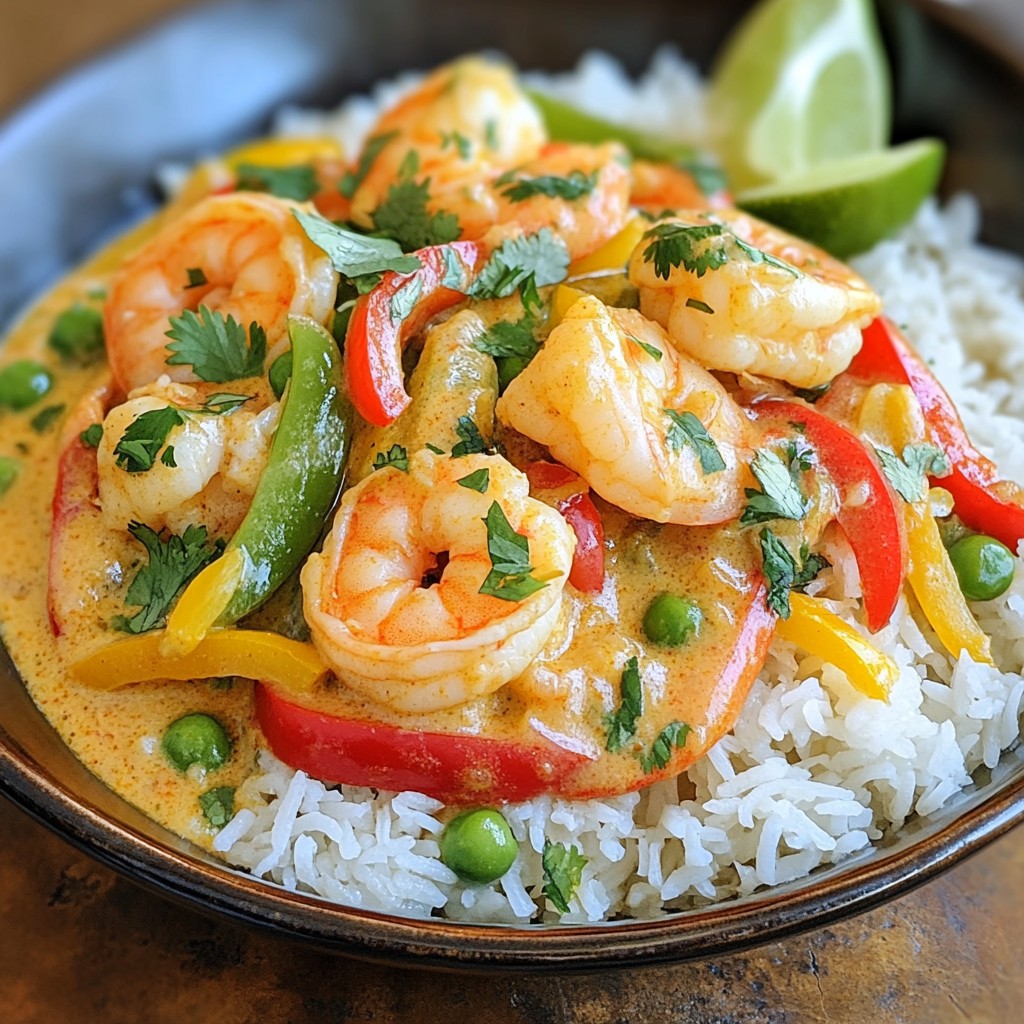
Looking for a quick and tasty dinner idea? Coconut Curry Shrimp is your answer! This dish blends juicy shrimp with creamy coconut milk for a meal that's bursting with flavor. Using simple ingredients, I’ll show you how to whip up this delicious dinner in just a few easy steps. Your taste buds will thank you, and you'll impress everyone at the table. Ready to dive in? Let’s get cooking!
Why I Love This Recipe
- Quick and Easy: This dish can be prepared in just 30 minutes, making it perfect for weeknight dinners or last-minute gatherings.
- Rich Flavors: The combination of coconut milk and red curry paste creates a creamy, flavorful sauce that elevates the shrimp to another level.
- Colorful and Nutritious: With vibrant vegetables like bell peppers and snap peas, this dish is not only visually appealing but also packed with nutrients.
- Customizable: Easily adjust the spice level or substitute proteins to suit your preference, making it a versatile recipe for everyone.
Ingredients
Main Ingredients
- 1 lb large shrimp, peeled and deveined
- 1 can (13.5 oz) coconut milk
- 2 tablespoons red curry paste
- 1 tablespoon vegetable oil
Vegetables and Aromatics
- 1 medium onion, finely chopped
- 3 cloves garlic, minced
- 1-inch piece ginger, grated
- 1 bell pepper, sliced (red or yellow)
- 1 cup snap peas, trimmed
Flavor Enhancements
- 2 tablespoons fish sauce (or soy sauce for vegetarian option)
- 1 tablespoon brown sugar
- Juice of 1 lime
- Fresh cilantro for garnish
- Salt and pepper to taste
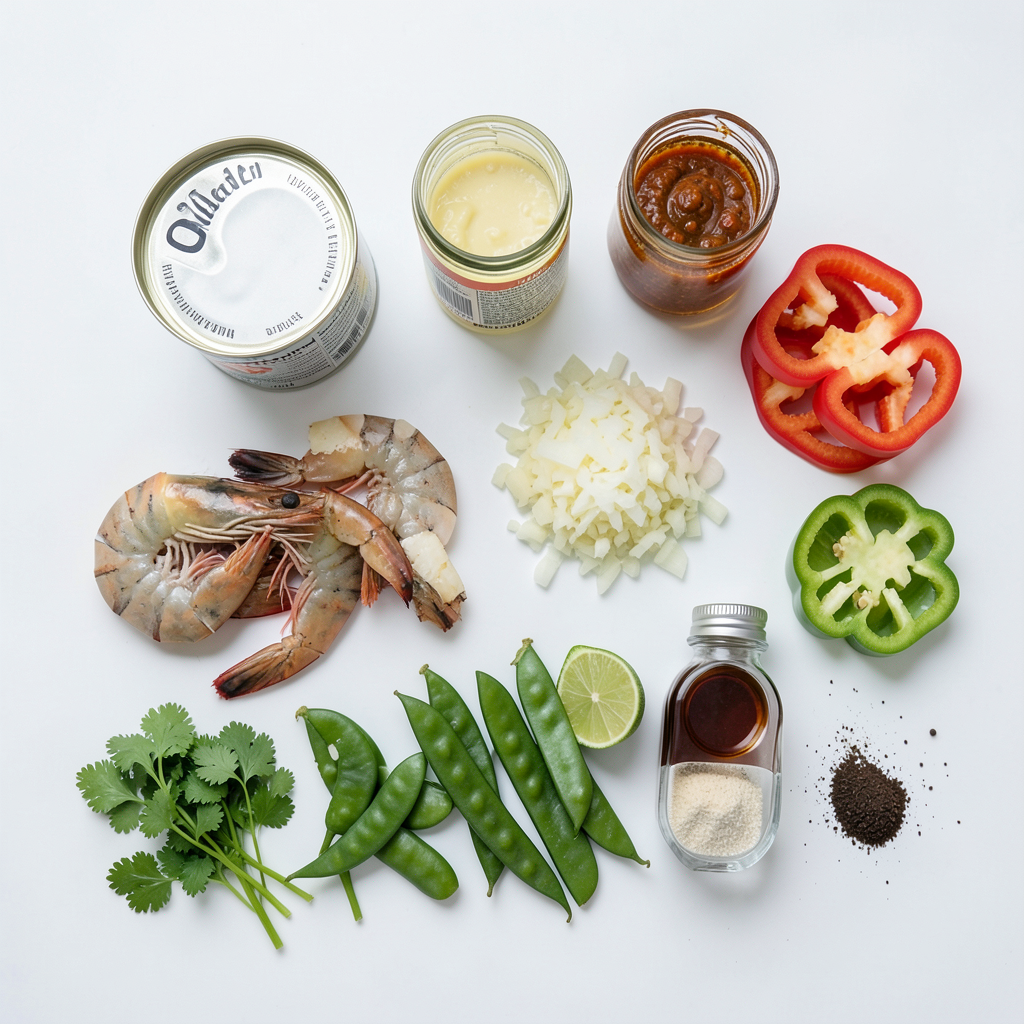
The main ingredients create a rich base for this dish. The shrimp provides protein and absorbs the curry's flavors. Coconut milk brings creaminess and a slight sweetness. Red curry paste adds depth and heat to the dish.
For the vegetables, I use onion, garlic, and ginger. These aromatics build a strong foundation of flavor. Bell peppers and snap peas add color and crunch.
To boost flavor, I include fish sauce and brown sugar. The fish sauce gives umami, while the sugar balances the spice. Lime juice adds brightness and freshness. Finally, cilantro adds a pop of color and a fresh taste.
These ingredients work together to make a dish that is not only easy to prepare but also full of flavor. Each bite is a delightful mix of creamy, spicy, and sweet.
Step-by-Step Instructions
Preparation Steps
- Heat vegetable oil in a skillet over medium heat.
- Sauté onion for 3-4 minutes until softened.
I love starting this dish with the smell of onion cooking. It adds a great base flavor. Make sure the heat is medium so the onion cooks evenly. You want it to be soft, not brown.
Cooking Process
- Add garlic and ginger, cooking for another 1-2 minutes until fragrant.
- Mix in red curry paste and cook for 2 minutes.
Next, I add garlic and ginger. They make the dish come alive with flavor. When you add the red curry paste, stir it well. Let it cook for a couple of minutes. This helps the flavors blend together.
Making the Curry Sauce
- Pour in coconut milk and combine until the sauce is creamy.
- Add bell pepper and snap peas, simmer for 5 minutes.
Now, pour in the coconut milk. Stir it until the sauce is smooth and creamy. Then, toss in the bell pepper and snap peas. Let it simmer for about five minutes. This step makes the veggies tender but still crisp.
Final Cooking Steps
- Add shrimp and cook until pink, about 3-5 minutes.
- Stir in fish sauce, brown sugar, and lime juice.
Finally, add the shrimp. Cook them until they turn pink, which takes about 3 to 5 minutes. This is when the dish really comes together. Don't forget to stir in the fish sauce, brown sugar, and lime juice for a balanced flavor.
Tips & Tricks
Perfecting the Dish
Choosing the right shrimp When making coconut curry shrimp, large shrimp work best. They hold up well during cooking. Look for shrimp that are bright and firm. Fresh shrimp adds great flavor. If using frozen shrimp, ensure they are completely thawed before cooking.
Cooking shrimp to the right doneness The key is to cook shrimp just until they turn pink. This usually takes about 3 to 5 minutes. Overcooked shrimp can become tough and rubbery. Keep an eye on them to avoid this.
Flavor Enhancements
Adjusting spice levels using curry paste If you like it mild, use less red curry paste. Start with one tablespoon, then taste and add more if needed. For a spicier kick, add extra paste. This gives the dish a nice heat level.
Adding more vegetables for a healthy boost Feel free to add more veggies like carrots or broccoli. This not only adds nutrients but also color. A mix of vegetables makes the dish more vibrant and appealing.
Serving Suggestions
Serving over jasmine rice or quinoa Coconut curry shrimp pairs well with jasmine rice or quinoa. Both options absorb the sauce nicely. The rice or quinoa adds a nice base to the dish.
Garnishing with lime wedges and cilantro A squeeze of lime adds brightness. Fresh cilantro on top makes it look pretty and adds flavor. These small touches make the dish even more enjoyable.
Pro Tips
- Fresh Ingredients: Always use fresh shrimp and vegetables for the best flavor and texture in your coconut curry.
- Adjusting Spice Level: If you prefer a spicier dish, add more red curry paste or include some chopped fresh chili peppers.
- Coconut Milk Alternatives: For a lighter version, you can use light coconut milk or a combination of coconut milk and vegetable broth.
- Make Ahead: This dish can be made ahead of time and reheated, allowing the flavors to meld even further.
Variations
Dietary Adaptations
You can easily tweak this dish to fit different diets. For a vegetarian or vegan version, use tofu instead of shrimp. Tofu soaks up the flavors well and adds nice texture. For those avoiding gluten, substitute fish sauce with soy sauce. This keeps the dish flavorful while meeting dietary needs.
Flavor Variations
The curry paste is key to the flavor. You can try different types of curry pastes like green or yellow. Each paste has a unique taste that changes the dish. You can also add spices like cumin or coriander for extra depth. These spices will infuse warmth and enhance the curry's complexity.
Other Ingredient Substitutions
If shrimp isn’t your thing, you can swap it for chicken or any firm fish. Both options will work well with the curry sauce. You can also use seasonal vegetables to keep things fresh. Think zucchini in summer or pumpkin in fall. This keeps your dish vibrant and interesting all year round.
Storage Info
Refrigeration Guidelines
To store leftover coconut curry shrimp, let it cool first. Transfer the shrimp to a container with a tight lid. This keeps moisture in and prevents odors from other foods. I recommend using glass or BPA-free plastic containers. They seal well and are safe for food storage. Leftovers will stay fresh for up to three days in the fridge.
Freezing Instructions
You can freeze cooked coconut curry shrimp for later use. Allow it to cool completely before placing it in an airtight container or freezer bag. Be sure to remove as much air as possible. This helps prevent freezer burn. For best flavor and texture, use the shrimp within three months. When you're ready to eat, thaw it overnight in the fridge.
Reheating Tips
To reheat, use the microwave or stovetop. If using the microwave, heat in short bursts, stirring often. This prevents hot spots and keeps the shrimp juicy. If you prefer the stovetop, warm it in a skillet over low heat. Add a splash of coconut milk or water to keep the sauce creamy. This helps preserve the dish's rich flavor and texture. Enjoy your delicious leftovers!
FAQs
What is coconut curry shrimp made of?
Coconut curry shrimp uses simple yet flavorful ingredients. Here’s what you need:
- 1 lb large shrimp, peeled and deveined: This is the star of the dish. Shrimp cooks quickly and absorbs flavors well.
- 1 can (13.5 oz) coconut milk: This gives the curry a creamy texture and rich taste.
- 2 tablespoons red curry paste: This adds spice and depth to the sauce.
- 1 tablespoon vegetable oil: This is used to sauté the veggies.
- 1 medium onion, finely chopped: This adds sweetness and flavor.
- 3 cloves garlic, minced: Garlic gives a strong aroma and taste.
- 1-inch piece ginger, grated: Ginger adds warmth and a bit of spice.
- 1 bell pepper, sliced (red or yellow): This adds color and crunch.
- 1 cup snap peas, trimmed: Snap peas add freshness.
- 2 tablespoons fish sauce (or soy sauce for vegetarian option): This enhances umami flavor.
- 1 tablespoon brown sugar: This balances the spice with sweetness.
- Juice of 1 lime: Lime adds brightness.
- Fresh cilantro for garnish: This adds a fresh touch.
- Salt and pepper to taste: These enhance all the flavors.
Can I use frozen shrimp for this recipe?
Yes, you can use frozen shrimp. Just make sure to thaw it first. You can do this by placing it in the fridge overnight. If you’re in a hurry, run cold water over the shrimp for a few minutes. Thawing helps the shrimp cook evenly. Frozen shrimp can taste just as good as fresh if cooked properly.
How spicy is coconut curry shrimp?
Coconut curry shrimp can vary in spice level. The red curry paste you choose affects the heat. Some brands are milder, while others pack a punch. If you’re unsure, start with a smaller amount. You can always add more later. Adjusting spice is easy, making this dish fun for all spice levels.
What can I serve with coconut curry shrimp?
This dish pairs well with several sides. Here are my top picks:
- Cooked jasmine rice: The fluffy rice soaks up the curry sauce.
- Quinoa: A healthy grain option that adds protein.
- Naan bread: Perfect for scooping up the curry.
- Steamed vegetables: Broccoli or zucchini add color and nutrients.
- Lime wedges: A squeeze of lime brightens every bite.
Choose what you love to make this dish your own!
This coconut curry shrimp recipe is simple and full of flavor. You learned about the key ingredients, cooking steps, and tips to perfect the dish. Exploring variations lets you customize it to fit your taste or diet. Remember, cooking is about creativity and enjoyment! I hope you try this recipe and make it your own. Enjoy the rich flavors and warmth of your homemade coconut curry shrimp. Happy cooking!