

Looking for a warm, comforting soup that’s both rich and easy to make? Try this creamy cauliflower potato soup. Packed with flavor and simple ingredients, it’s perfect for dinner or lunch. Whether you’re cooking for yourself or a crowd, this recipe is a crowd-pleaser. Dive in with me, and let’s create a delicious bowl of goodness that warms your heart and fills your belly!
Why I Love This Recipe
- Comforting Flavor: This soup is the perfect blend of creamy and savory, making it a comforting dish for any occasion.
- Healthy Ingredients: Packed with cauliflower and potatoes, this recipe is nutritious without sacrificing taste.
- Easy to Make: With simple steps and minimal prep time, this soup is a breeze to whip up on a busy day.
- Versatile Options: You can easily customize this recipe by adding your favorite herbs or spices for an extra kick!
Ingredients
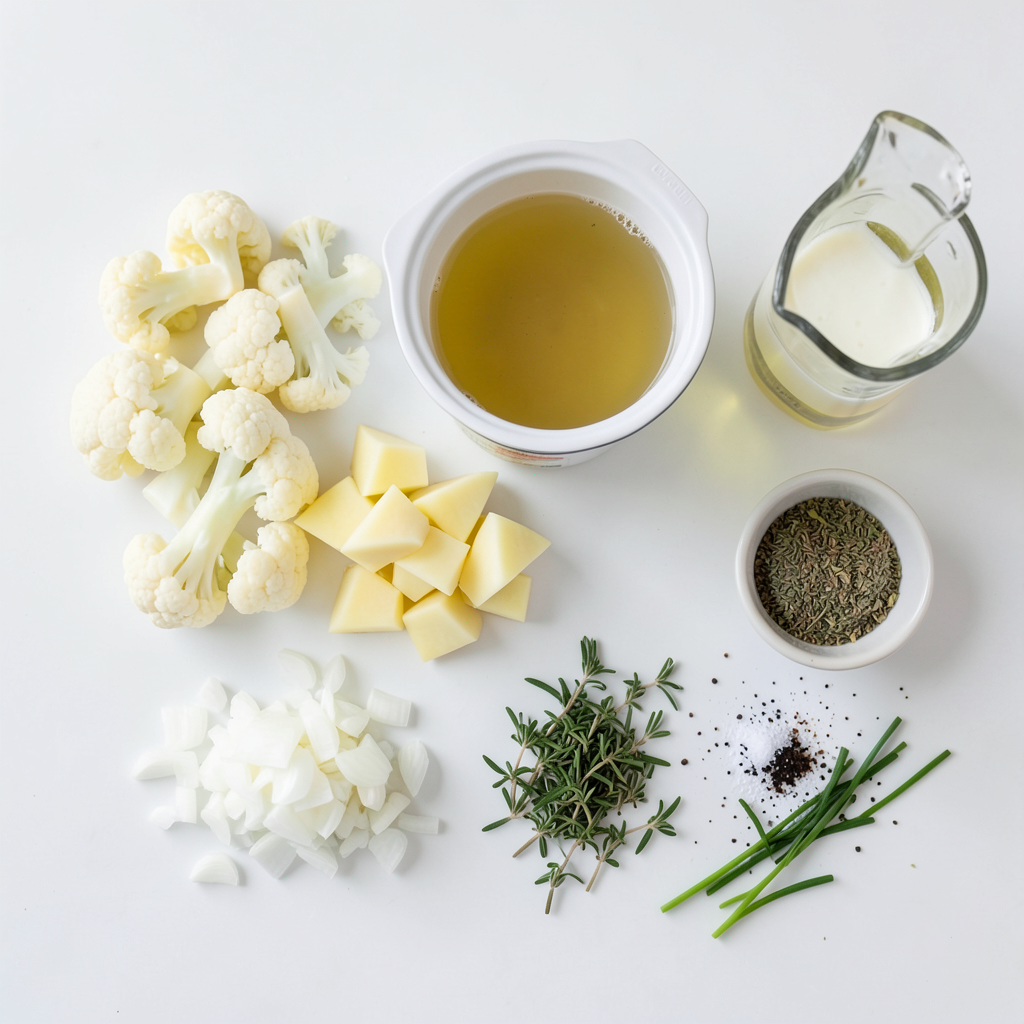
Detailed List of Ingredients
- 1 medium head of cauliflower, chopped into florets
- 2 medium potatoes, peeled and diced
- 1 onion, chopped
- 3 cloves garlic, minced
- 4 cups vegetable broth
- 1 cup coconut milk (or heavy cream for a non-vegan option)
- 2 tablespoons olive oil
- 1 teaspoon dried thyme
- Salt and pepper to taste
- Fresh chives or parsley for garnish
In this recipe, each ingredient plays a key role. The cauliflower and potatoes form the soup's base. They bring a creamy texture and a subtle flavor. The onion and garlic add depth; their sweetness shines through when sautéed.
Vegetable broth keeps the soup rich but light. It adds heartiness without overpowering the veggies. Coconut milk or heavy cream gives the soup its creamy finish. You can choose based on your dietary needs.
Olive oil is essential for sautéing. It helps develop flavors in the onion and garlic. Dried thyme gives a hint of earthiness, tying everything together.
Finally, salt and pepper enhance the taste. Fresh chives or parsley add a burst of color and freshness when you serve. Each bite will be a delightful experience!
You can adjust any ingredient to fit your taste. Want a sharper flavor? Add more garlic or use a stronger broth. Want it richer? Use more cream or coconut milk. Enjoy making this soup your own!
Step-by-Step Instructions
Preparation Steps
Sautéing the Aromatics Start by heating two tablespoons of olive oil in a large pot over medium heat. Once hot, add the chopped onion. Cook it for about five minutes until it turns soft and clear. Next, stir in three minced garlic cloves. Cook this for one more minute to release the garlic's great smell.
Cooking the Vegetables Now, add two diced potatoes and one medium head of chopped cauliflower to the pot. Stir everything together well. Pour in four cups of vegetable broth, bringing the mix to a boil. After it boils, lower the heat and cover the pot. Let it simmer for 20 to 25 minutes until the veggies are tender.
Blending for Creaminess When the veggies are soft, take the pot off the heat. Use an immersion blender to blend the soup until it’s smooth and creamy. If you don't have one, carefully transfer the soup to a blender in small batches. Blend and return it to the pot afterward.
Final Seasoning and Heating Now, stir in one cup of coconut milk or heavy cream, depending on your choice. Add one teaspoon of dried thyme and season with salt and pepper to your taste. Heat the soup gently for five more minutes to let the flavors mix. Once done, it’s ready to serve!
Tips & Tricks
Making it Creamier
Using Coconut Milk vs Heavy Cream Coconut milk gives a light and sweet flavor. It is a great choice for vegan diets. Heavy cream makes the soup rich and thick. Choose based on your taste or diet needs.
Adding Nutritional Yeast for Extra Flavor Nutritional yeast adds a cheesy taste without using dairy. It boosts the soup's flavor and nutrition. Just a few tablespoons will enhance the taste greatly.
Tips for Achieving the Right Texture Blend the soup until smooth. Use an immersion blender for ease. If you want a chunkier soup, blend only half. Adjust the texture until you find your favorite.
Healthier Substitutions
Low-Sodium Broth Options Look for low-sodium vegetable broth. It lowers salt without sacrificing flavor. You can also make your own broth with veggies and spices.
Dairy-Free Alternatives If you want a dairy-free soup, stick to coconut milk or almond milk. Both options add creaminess and work well in this recipe.
Incorporating More Vegetables Add other veggies like carrots or spinach. They boost nutrition and flavor. Just chop them small and cook with the cauliflower and potatoes.
Pro Tips
- Use Fresh Ingredients: Fresh vegetables enhance the flavor of your soup, so opt for seasonal produce whenever possible.
- Adjust Consistency: For a thicker soup, reduce the amount of broth; for a thinner soup, add more broth or coconut milk until desired consistency is reached.
- Flavor Boost: Experiment with additional herbs and spices like rosemary or smoked paprika to give your soup an extra layer of flavor.
- Storage Tips: This soup can be stored in the fridge for up to 3 days or frozen for up to 3 months. Reheat gently to preserve creaminess.
Variations
Vegan Adaptations
Plant-Based Milk Options For a vegan version, use plant-based milk instead of heavy cream. Coconut milk works well. It adds creaminess with a hint of sweetness. Almond milk or oat milk can also work, but they may change the flavor a bit. Use unsweetened varieties to keep the taste balanced.
Gluten-Free Variations This soup is naturally gluten-free. The main ingredients are vegetables and broth, so there’s no need to worry. Ensure your vegetable broth is gluten-free. Always check labels to avoid any hidden gluten.
Flavor Enhancements
Adding Spices like Nutmeg or Paprika You can enhance the soup's flavor by adding spices. A pinch of nutmeg brings warmth and depth. Paprika adds a nice smokiness. Start with a small amount, then taste and adjust. These spices can really change the soup’s profile.
Incorporating Cheese for a Richer Flavor If you are not vegan, adding cheese can make this soup even richer. Cheddar or Parmesan work well. Stir in the cheese after blending for a velvety texture. It adds a savory note that complements the cauliflower and potatoes beautifully.
Storage Info
Best Practices for Storing Leftovers
- Refrigeration Tips: First, let the soup cool down. Once cool, transfer the soup to an airtight container. It stays fresh for 3 to 5 days in the fridge. Make sure to label the container with the date. This way, you know when to use it.
- Freezing Instructions: To freeze, use a freezer-safe container. Leave some space at the top because the soup expands as it freezes. It can last for up to 3 months. When ready to enjoy, thaw it overnight in the fridge.
Reheating Suggestions
- Microwave vs Stovetop: You can reheat in the microwave for quick meals. Heat in short bursts, stirring in between. For stovetop, use a pot on low heat. Stir often to prevent sticking.
- Maintaining Creaminess During Reheating: To keep the soup creamy, add a splash of coconut milk or cream while reheating. This helps restore its smooth texture. Stir well to mix everything together.
FAQs
Common Questions
Can I make this soup ahead of time? Yes, you can make this soup ahead of time. It tastes even better the next day. Just store it in an airtight container. When you are ready to eat, reheat it on the stove or in the microwave.
How long does creamy cauliflower potato soup last in the fridge? This soup lasts about 4 to 5 days in the fridge. Make sure to keep it in a sealed container. Check for freshness before you eat it.
What can I serve with this soup? This soup pairs well with crusty bread or a green salad. You can also add a sprinkle of cheese on top for extra flavor.
Can I use frozen cauliflower or potatoes? Yes, you can use frozen cauliflower and potatoes. Just add them directly to the pot. Cooking time may be a bit longer, but they will still taste great.
How can I adjust the recipe for larger servings? To make more servings, double the ingredients. Use a larger pot to cook everything. This soup is easy to scale up for gatherings or meal prep.
This blog post covered a creamy cauliflower potato soup, from ingredients to serving tips. You learned how to sauté, cook, and blend for the best flavors. I shared helpful tricks for creaminess and healthier swaps. You can also make vegan and gluten-free versions, and I provided best storage methods.
Enjoy experimenting with this soup! It’s easy to make and fun to customize. Start mixing ingredients to find your perfect flavor. Happy cooking!