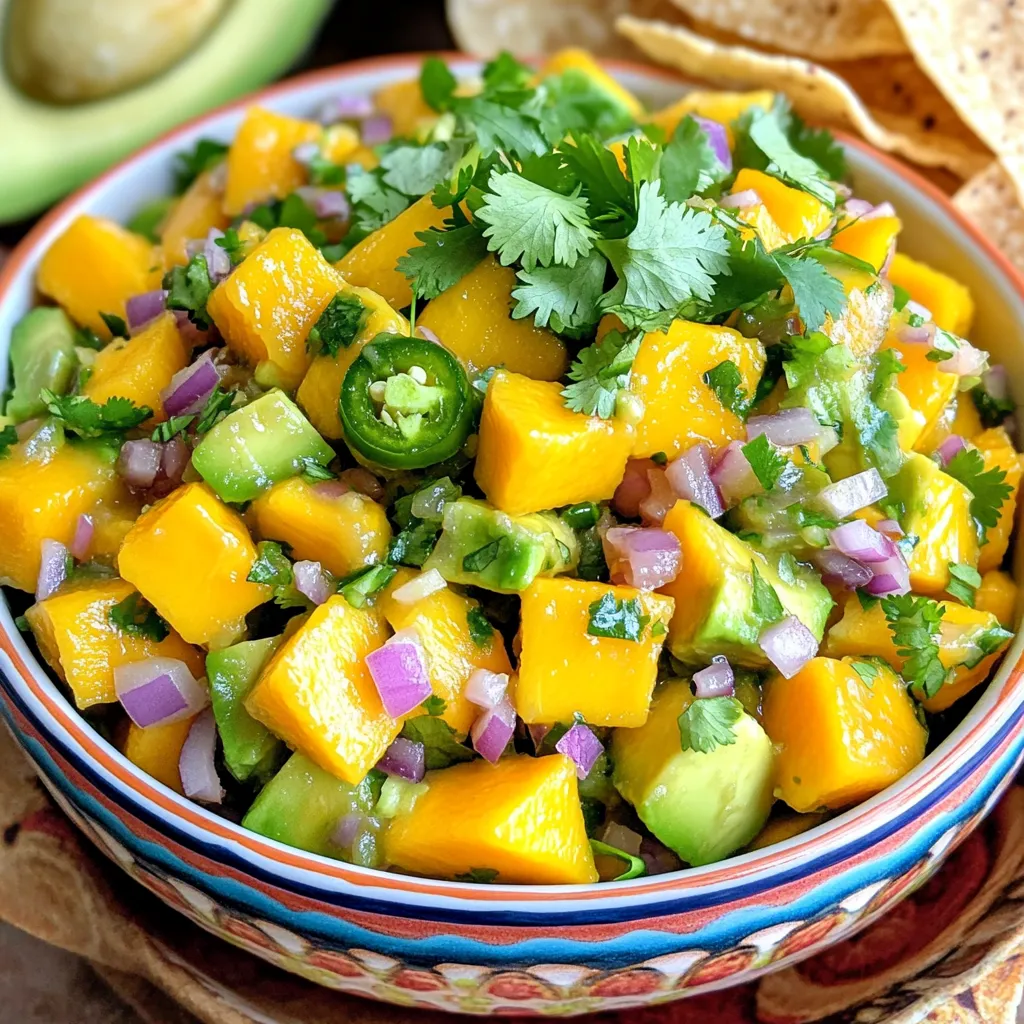
Looking for a fresh twist on your salsa game? This Mango Avocado Salsa recipe packs a punch with ripe mango, creamy avocado, and a zesty kick from lime juice. It’s perfect for parties or a simple snack with tortilla chips. With just a few ingredients and easy steps, you’ll impress friends and family in no time. Ready to take your taste buds on a tropical journey? Let’s dive in!
Why I Love This Recipe
- Fresh and Flavorful: This salsa combines sweet mango and creamy avocado, creating a refreshing burst of flavor in every bite.
- Quick and Easy: With just a handful of ingredients and minimal prep time, this recipe is perfect for busy days or last-minute gatherings.
- Versatile Dish: Serve it as a dip, a topping for grilled meats, or even a salad. This salsa fits perfectly into any meal.
- Health Boost: Packed with vitamins and healthy fats, this salsa not only tastes great but is also good for you!
Ingredients
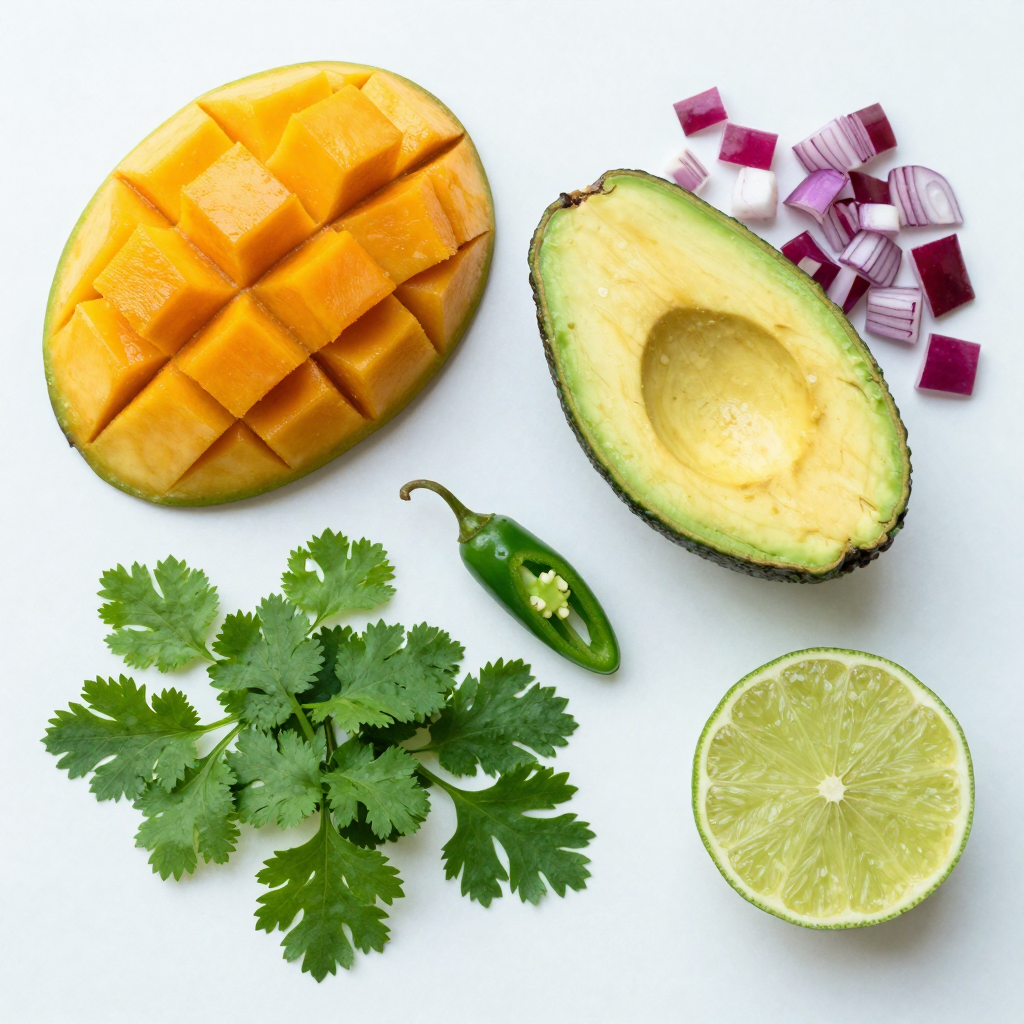
To make a fresh and tasty mango avocado salsa, you need just a few simple ingredients. Here’s what you will need:
– 1 ripe mango, diced
– 2 ripe avocados, diced
– 1 small red onion, finely chopped
– 1 jalapeño pepper, deseeded and minced
– 1/4 cup fresh cilantro, chopped
– 2 tablespoons lime juice
– Salt and pepper to taste
Each ingredient plays a key role in the flavor and texture of the salsa. The ripe mango adds sweetness and a juicy bite. Ripe avocados bring creaminess. Red onion gives a mild crunch and bite. The jalapeño adds a touch of heat. Fresh cilantro offers a bright herbal note. Lime juice gives the salsa its zesty kick. Finally, salt and pepper enhance all the flavors.
Choosing ripe fruits is vital. A ripe mango feels soft when you gently squeeze it. Avocados should also yield slightly to pressure. This ensures your salsa will be delicious and fresh. Enjoy the process of gathering these ingredients. Each one contributes to a vibrant and flavorful dish.
Step-by-Step Instructions
Preparing the Ingredients
Dicing the mango and avocados
First, grab a ripe mango. Cut off the sides, then scoop the flesh out. Dice the mango into small pieces. Next, take two ripe avocados. Cut them in half, remove the pit, and scoop out the flesh. Dice the avocados too, but be careful not to mash them.
Chopping the red onion and jalapeño
Now, take a small red onion. Chop it finely to add a nice crunch. For a bit of heat, grab a jalapeño pepper. Cut it open and remove the seeds. Mince the jalapeño into tiny pieces.
Measuring lime juice
Squeeze fresh lime juice into a measuring spoon. You need about two tablespoons. This will add a zesty flavor and keep the avocado fresh.
Combining the Ingredients
Mixing in a bowl
In a medium bowl, combine the diced mango and avocados. Add the chopped red onion and minced jalapeño. Next, stir in the chopped cilantro. Drizzle the lime juice on top.
Tips for avoiding mushy avocados
When mixing, be gentle. Use a spatula to fold the ingredients. This way, you won’t mash the avocado. If you want, you can add the avocado last to keep it firm.
Allowing to Marinate
Importance of letting flavors meld
Letting the salsa sit for a while is key. This helps the flavors mix well. The lime juice will soak in, making everything taste better.
Suggested marination time
I suggest letting it marinate for at least 10 minutes. This short wait is worth it! The salsa will be much tastier.
Pro Tips
- Choose Ripe Fruits: Make sure your mangoes and avocados are perfectly ripe for the best flavor and texture. They should give slightly when pressed gently.
- Adjust Heat Level: If you prefer a milder salsa, remove all seeds and membranes from the jalapeño. For more heat, leave some seeds in or add a pinch of cayenne pepper.
- Fresh Herbs Matter: Use fresh cilantro for a burst of flavor. If you’re not a cilantro fan, try using fresh parsley or basil as a substitute.
- Let It Rest: Allowing the salsa to sit for about 10 minutes before serving helps the flavors meld together, enhancing the overall taste.
Tips & Tricks
Best Practices for Cutting Fruit
To make your mango and avocado salsa shine, start with the right cuts. For mango, slice off the sides of the pit. Then, make cross-hatch cuts in the flesh without cutting through the skin. Scoop out the cubes with a spoon. For avocados, cut them in half, twist to remove the pit, and scoop out the flesh. Use a sharp knife for clean cuts. Always keep your fingers tucked to avoid any slips.
Safety Tips:
– Always use a cutting board to stabilize the fruit.
– Keep your knife sharp; a dull knife can slip and cause injury.
– Use a separate board for fruits and veggies to avoid cross-contamination.
Enhancing Flavor
To kick up the flavor, consider adding a pinch of cumin or smoked paprika. These spices can bring warmth and depth to your salsa. You can also add a touch of honey or agave to balance the sweetness of the mango. If you want more acidity, try adding extra lime juice. The key is to taste as you go and find the right balance of sweet and sour.
Serving Suggestions
Serve your mango avocado salsa with crispy tortilla chips for a crunchy contrast. It pairs well with grilled chicken, fish, or even tacos. You can also use it as a topping for a fresh salad or a zesty condiment for burgers. For a beautiful presentation, serve it in a colorful bowl, garnished with extra cilantro leaves on top.
Variations
Tropical Add-ins
You can get creative with mango avocado salsa! Try adding pineapple or kiwi for a sweet twist. Pineapple brings a juicy burst, while kiwi adds a tangy kick. You can also make it heartier by adding black beans. Black beans give protein and fiber, making it a filling dish.
Spicy Options
If you like heat, adjust the spice levels. Swap jalapeño for a hotter pepper, like serrano. You can also add a splash of hot sauce to give it an extra kick. Just be careful not to overpower the fresh flavors.
Healthy Swaps
Want a lighter salsa? Use lower-calorie alternatives like Greek yogurt instead of some avocado. You can also swap salt for fresh herbs like basil or parsley. These swaps keep the taste vibrant while cutting down on sodium.
Storage Info
How to Store Leftovers
To keep your mango avocado salsa fresh, store it in an airtight container. This helps prevent air from making the salsa brown. You can use glass or plastic containers. Make sure they seal well to lock in flavors. If you have a lot of salsa, divide it into smaller containers. This makes it easy to grab just what you need.
Shelf Life
Mango avocado salsa lasts about 2-3 days in the fridge. Always check for signs of spoilage. If the avocado turns brown or the salsa smells off, it’s best to toss it. Fresh ingredients can spoil quickly, so enjoy your salsa soon after making it.
Freezing Salsa
You can freeze mango avocado salsa, but the texture may change. To freeze, place it in a freezer-safe container. Leave some space at the top, as it will expand when frozen. When you want to use it, thaw it in the fridge overnight. The best way to enjoy frozen salsa is to use it in cooked dishes, like tacos or soups. This helps mask any texture changes and keeps the flavor bright.
FAQs
What Is Mango Avocado Salsa Used For?
Mango avocado salsa is a versatile dish. You can use it in many ways:
– As a dip with tortilla chips
– As a topping on grilled chicken
– To enhance fish tacos
– On tacos or burritos for extra flavor
– As a side dish for barbecues
This salsa adds freshness and color to any meal. The sweet mango and creamy avocado blend well with savory dishes.
Can I Make This Salsa Ahead of Time?
Yes, you can make mango avocado salsa ahead of time. It’s best to prepare it a few hours before serving. This gives flavors time to mix. Store it in an airtight container in the fridge.
However, if you make it too early, the avocados may brown. To prevent this, add lime juice right before serving.
How Do I Keep Avocados from Browning?
You can keep avocados from browning with a few easy tricks:
– Use lime juice, as its acidity slows browning.
– Store the salsa in an airtight container.
– Cover the surface with plastic wrap, touching the salsa.
These methods help keep your salsa looking fresh and vibrant.
Is Mango Avocado Salsa Healthy?
Mango avocado salsa is very healthy. It contains many nutritious ingredients:
– Mangoes are high in vitamins A and C.
– Avocados provide healthy fats and fiber.
– Red onions add antioxidants.
– Cilantro has anti-inflammatory properties.
This salsa is a great option for a light snack or a healthy side dish. Enjoy its fresh flavors while benefiting from its nutrients!
To make the perfect mango avocado salsa, use ripe fruits and fresh herbs. I shared simple steps for prep, mixing, and marinating. Remember to cut safely and try fun flavor twists. Store your salsa well and enjoy it for days. This dish is versatile and healthy, making it great for snacks or meals. Try making it ahead for parties or gatherings. Enjoy this tasty blend of flavors and share it with others. It’s easy, fresh, and sure to please everyone!