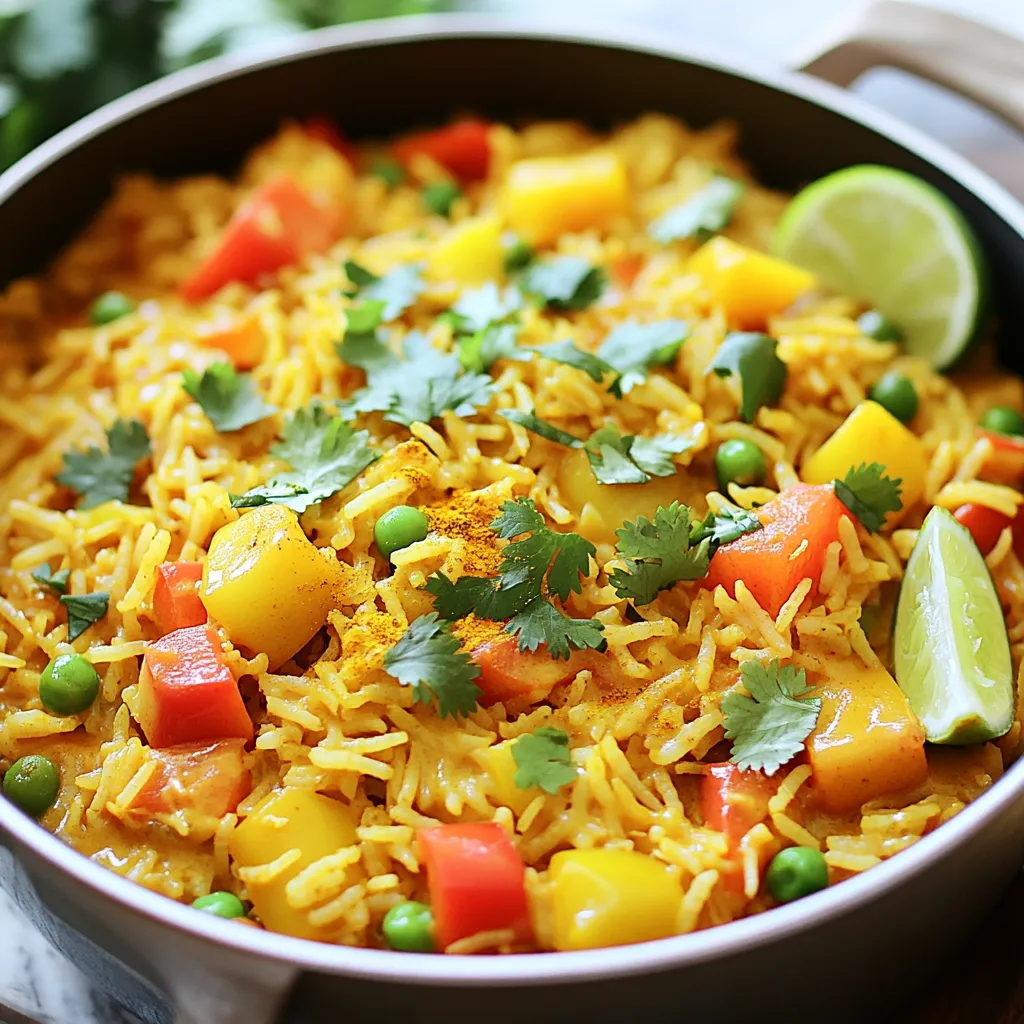
One Pot Coconut Curry Rice Flavorful and Simple Meal

Looking for a quick and tasty meal? One Pot Coconut Curry Rice is the answer! This recipe brings together rich flavors and simple steps for a dish you can enjoy any night. With just a few ingredients and a single pot, you’ll create a meal that’s both hearty and comforting. Join me as we dive into this easy recipe that’s perfect for busy days and cozy nights!
Why I Love This Recipe
- Quick and Easy: This recipe comes together in just one pot, making cleanup a breeze and dinner a quick affair.
- Flavorful and Aromatic: The combination of coconut milk and spices creates a rich and inviting aroma that fills your kitchen.
- Versatile: You can easily customize this dish with your favorite vegetables or proteins to suit your taste.
- Healthy and Nourishing: This coconut curry rice is packed with nutrients from the vegetables and wholesome ingredients.
Ingredients
List of Ingredients
To make One Pot Coconut Curry Rice, gather the following ingredients:
- 1 cup basmati rice
- 1 can (400 ml) coconut milk
- 1 ½ cups vegetable broth
- 1 tablespoon olive oil
- 1 medium onion, diced
- 3 cloves garlic, minced
- 1 tablespoon fresh ginger, grated
- 1 bell pepper (any color), diced
- 1 cup frozen peas
- 1 tablespoon curry powder
- 1 teaspoon turmeric
- 1 teaspoon cumin
- 1 tablespoon soy sauce (or tamari for gluten-free)
- Salt and pepper to taste
- Fresh cilantro for garnish
- Lime wedges for serving
Cooking Equipment Needed
For this recipe, you will need a few kitchen tools:
- A large pot with a lid
- A cutting board
- A knife for chopping
- Measuring cups and spoons
- A wooden spoon for stirring
These tools help in making the cooking process smooth and easy. With them, you can prepare this tasty dish in no time!

Step-by-Step Instructions
Preparing the Vegetables
Start by heating olive oil in a large pot over medium heat. Add the diced onion and cook for about 2-3 minutes. You want the onion to be soft and clear. Next, stir in the minced garlic and grated ginger. Cook this mix for one more minute until you smell the lovely aroma. Then, toss in the diced bell pepper and cook for another 2-3 minutes. This step adds color and flavor to your dish.
Now it’s time to spice things up! Sprinkle in the curry powder, turmeric, and cumin. Make sure to stir well to coat the veggies. Cook this mixture for about 30 seconds. You will start to smell the amazing spices.
Cooking the Rice
Next, rinse your basmati rice under cold water. Keep rinsing until the water runs clear. This step helps to remove excess starch and keeps the rice from becoming sticky. Add the rinsed rice to the pot and stir it in with the spices and vegetables.
Now pour in the coconut milk and vegetable broth. Add the soy sauce and season with salt and pepper. Stir everything well to combine. Bring the mixture to a boil, then lower the heat. Cover the pot and let it simmer for 15-20 minutes. This is when the rice cooks and absorbs all that wonderful flavor.
Finalizing the Dish
When the rice is almost done, stir in the frozen peas for the last five minutes. This way, they warm through without overcooking. Once the rice is tender, take the pot off the heat. Let it sit, covered, for five more minutes. This resting time helps the rice finish cooking.
Finally, fluff the rice with a fork. Serve it hot, garnished with fresh cilantro and lime wedges. The lime adds a zesty kick. Enjoy your One Pot Coconut Curry Rice!
Pro Tips
- Rinse the Rice: Rinsing basmati rice under cold water until the water runs clear helps remove excess starch, ensuring that the rice is fluffy and not sticky when cooked.
- Adjust the Spice Level: If you prefer a spicier curry, feel free to add red pepper flakes or a chopped chili pepper when sautéing the vegetables.
- Fresh Herbs Matter: Garnishing with fresh cilantro not only adds a pop of color but also enhances the flavor of the dish with its bright, herbal notes.
- Perfectly Cooked Rice: Once the rice has absorbed the liquid, letting it sit covered for a few minutes allows it to steam, resulting in a perfectly cooked and fluffy texture.
Tips & Tricks
Perfecting the Rice Texture
To get the best rice, rinse it well before adding it to the pot. This will remove extra starch and help it cook evenly. Use a fine mesh strainer and run cold water over the rice until the water runs clear. This step is key for fluffy rice. Keep an eye on the pot while it cooks. If you see it bubbling too much, lower the heat. You want a gentle simmer.
Enhancing Flavor with Herbs and Spices
Using fresh herbs can really boost the taste of your curry rice. Chop some cilantro and sprinkle it on top before you serve. For more flavor, you can add a squeeze of lime juice right before eating. This adds a zesty kick. Don’t be afraid to play with spices too. If you want a richer flavor, try adding more curry powder or even some chili flakes for heat.
Serving Suggestions
This dish pairs well with many sides. Serve it with a fresh salad or some roasted veggies. You can also enjoy it with naan or pita bread. If you like protein, top it with grilled chicken or shrimp. This adds a nice texture and taste. For a complete meal, consider making a yogurt sauce to drizzle over the top. It adds creaminess that balances the spices.

Variations
Protein Additions
You can add protein to make your dish heartier. Chicken, shrimp, or tofu work well. For chicken, use about 1 pound, cut into bite-sized pieces. Cook it after the onion and before adding the vegetables. For shrimp, add 1 pound during the last 5 minutes of cooking. If using tofu, try 1 block, drained and cubed. Add it with the rice for extra flavor.
Vegetable Substitutes
Feel free to swap vegetables based on what you have. Carrots, zucchini, or spinach are great options. For carrots, slice 1-2 into thin rounds and add them with the onions. For zucchini, chop 1 medium-sized one and mix it in with the bell pepper. If you like greens, toss in 2 cups of spinach during the last few minutes of cooking.
Spice Level Adjustments
To adjust the heat, change the amount of curry powder or add fresh chilies. If you want mild heat, use 1 tablespoon of curry powder. For more spice, try 2 tablespoons. You can also add chopped jalapeños or serranos to taste. If you prefer less spice, use sweet curry powder or omit it altogether. Always adjust to your taste!
Storage Info
Refrigeration Guidelines
Store your One Pot Coconut Curry Rice in an airtight container. Let it cool first. Place it in the fridge within two hours of cooking. It will stay fresh for about 3 to 4 days. When you’re ready to eat, give it a good stir.
Freezing Instructions
You can freeze this dish too! Use a freezer-safe container for best results. Make sure it is cool before you pack it away. It should last for about 2 to 3 months in the freezer. When you want to eat it, thaw it overnight in the fridge.
Reheating Tips
To reheat, use the microwave or a pot on the stove. If using the microwave, heat in 1-minute intervals. Stir often to make sure it heats evenly. If using a pot, add a splash of water or broth to keep it moist. Heat on low until warm. Enjoy your meal!
FAQs
Can I use brown rice instead of basmati?
Yes, you can use brown rice. Brown rice adds a nutty flavor and more fiber. You will need to adjust the cooking time. Brown rice takes longer to cook than basmati. Plan for about 40-50 minutes of cooking time. Also, add more liquid, about 2 cups of broth for each cup of rice.
Is One Pot Coconut Curry Rice vegan?
Yes, this dish is vegan. It uses coconut milk and vegetable broth. All the ingredients are plant-based. You can enjoy it without any animal products. It’s a great choice for those who follow a vegan diet.
How do I make this dish spicier?
To add spice, use more curry powder or add chili flakes. You can also add fresh chopped chilies. For a smoky flavor, try adding smoked paprika. Taste as you go to find your perfect heat level.
What can I serve with One Pot Coconut Curry Rice?
You can serve this dish with a side salad or roasted vegetables. Naan bread goes well too. For extra protein, add chickpeas or tofu. A cool yogurt sauce can balance the spice nicely.
You learned about the key ingredients, cooking steps, and tips for One Pot Coconut Curry Rice. We explored how to prepare vegetables and cook rice to get the perfect texture. You can enhance flavors with herbs or adjust spice levels to your liking. Don’t forget the storage tips for leftovers. This dish is simple and versatile for any meal. Try making it your own with different proteins or veggies. Enjoy a tasty meal that you can easily adapt and share!
One Pot Coconut Curry Rice
Ingredients
1 cup basmati rice
1 can (400 ml) coconut milk
1 ½ cups vegetable broth
1 tablespoon olive oil
1 medium onion, diced
3 cloves garlic, minced
1 tablespoon fresh ginger, grated
1 bell pepper (any color), diced
1 cup frozen peas
1 tablespoon curry powder
1 teaspoon turmeric
1 teaspoon cumin
1 tablespoon soy sauce (or tamari for gluten-free)
Salt and pepper to taste
Fresh cilantro for garnish
Lime wedges for serving
Instructions
In a large pot, heat the olive oil over medium heat. Add the diced onion and sauté for about 2-3 minutes until translucent.
Stir in the minced garlic and grated ginger, cooking for an additional minute until fragrant.
Add the diced bell pepper to the pot and cook for another 2-3 minutes, stirring occasionally.
Sprinkle in the curry powder, turmeric, and cumin, stirring well to coat the vegetables. Cook for about 30 seconds to release the spices’ aromas.
Rinse the basmati rice under cold water until the water runs clear. Add the rinsed rice to the pot and stir to combine with the spices and vegetables.
Pour in the coconut milk and vegetable broth, followed by the soy sauce. Season with salt and pepper to taste.
Bring the mixture to a boil, then reduce the heat to low, cover, and simmer for 15-20 minutes, or until the rice is cooked and has absorbed the liquid.
Once the rice is done, stir in the frozen peas for the last 5 minutes of cooking, allowing them to heat through.
Remove from heat and let sit, covered, for 5 minutes before fluffing with a fork.
Serve hot, garnished with freshly chopped cilantro and lime wedges on the side for an extra zesty flavor.
Prep Time, Total Time, Servings: 10 min | 35 min | Serves 4

One Pot Coconut Curry Rice
Ingredients
- 1 cup basmati rice
- 1 can coconut milk (400 ml)
- 1.5 cups vegetable broth
- 1 tablespoon olive oil
- 1 medium onion, diced
- 3 cloves garlic, minced
- 1 tablespoon fresh ginger, grated
- 1 bell pepper diced (any color)
- 1 cup frozen peas
- 1 tablespoon curry powder
- 1 teaspoon turmeric
- 1 teaspoon cumin
- 1 tablespoon soy sauce (or tamari for gluten-free)
- to taste salt and pepper
- fresh cilantro for garnish
- lime wedges for serving
Instructions
- In a large pot, heat the olive oil over medium heat. Add the diced onion and sauté for about 2-3 minutes until translucent.
- Stir in the minced garlic and grated ginger, cooking for an additional minute until fragrant.
- Add the diced bell pepper to the pot and cook for another 2-3 minutes, stirring occasionally.
- Sprinkle in the curry powder, turmeric, and cumin, stirring well to coat the vegetables. Cook for about 30 seconds to release the spices' aromas.
- Rinse the basmati rice under cold water until the water runs clear. Add the rinsed rice to the pot and stir to combine with the spices and vegetables.
- Pour in the coconut milk and vegetable broth, followed by the soy sauce. Season with salt and pepper to taste.
- Bring the mixture to a boil, then reduce the heat to low, cover, and simmer for 15-20 minutes, or until the rice is cooked and has absorbed the liquid.
- Once the rice is done, stir in the frozen peas for the last 5 minutes of cooking, allowing them to heat through.
- Remove from heat and let sit, covered, for 5 minutes before fluffing with a fork.
- Serve hot, garnished with freshly chopped cilantro and lime wedges on the side for an extra zesty flavor.


![- 1 cup long-grain white rice - 2 cups vegetable broth - 1/4 cup fresh cilantro, finely chopped - 2 tablespoons lime juice - Zest of 1 lime - 1 tablespoon olive oil - 1 teaspoon garlic powder - 1/2 teaspoon cumin - Salt and pepper to taste - Additional herbs (e.g., parsley, green onions) - Jalapeños for heat - Avocado for creaminess Cilantro lime rice is simple yet packed with flavor. This dish shines with its fresh ingredients. The long-grain white rice serves as the base. I like using vegetable broth instead of water for extra taste. Fresh cilantro adds a vibrant kick. The lime juice and zest give it a refreshing twist. Garlic powder and cumin round out the taste beautifully. You can customize it with optional ingredients. Add more herbs for depth. If you like spice, toss in jalapeños. For a creamy touch, include avocado. Follow the [Full Recipe] to see how to combine these ingredients perfectly. Enjoy how easy it is to make this dish your own! 1. Rinse the rice Start by rinsing 1 cup of long-grain white rice under cold water. Do this until the water runs clear. Rinsing helps remove excess starch. This simple step keeps the rice fluffy and light. 2. Combine rice and broth Next, take the rinsed rice and put it in a medium saucepan. Add 2 cups of vegetable broth to the pan. This broth adds rich flavor to the rice. 1. Bring to a boil Place the saucepan on the stove over medium-high heat. Bring the mixture to a boil. Watch it closely so it doesn’t overflow. 2. Reduce heat and simmer Once it boils, reduce the heat to low. Cover the pot and let it simmer. Cook for 18 to 20 minutes. The rice will become tender, and the broth will be absorbed. 1. Fluff and mix in additional ingredients After cooking, remove the pot from heat. Keep it covered for 5 more minutes to let the rice steam. Then, fluff the rice gently using a fork. Add 1 tablespoon of olive oil, 2 tablespoons of lime juice, and the zest of 1 lime. Sprinkle in 1 teaspoon of garlic powder and 1/2 teaspoon of cumin. Add salt and pepper to taste. 2. Taste and adjust seasoning Finally, stir in 1/4 cup of finely chopped fresh cilantro. Mix well so all the flavors blend. Taste your rice and adjust the seasoning if needed. You can add more lime juice or salt based on your preference. This is how you can create a bright, zesty Cilantro Lime Rice that pairs perfectly with many dishes. For the full recipe, check the earlier section! To make fluffy rice, rinsing is key. Rinsing removes extra starch. This helps prevent the rice from being sticky. Just put the rice in a fine mesh strainer. Run cold water over it until the water runs clear. After cooking, let the rice steam. Once you take the pot off the heat, keep it covered. Let it sit for 5 more minutes. This extra time lets the rice absorb steam. The result is light, fluffy rice. You can make this rice even better with a few tweaks. Try adding lime zest. The zest gives a bright flavor that pops in your mouth. You can also add spices like chili powder or smoked paprika. These will give it a new twist that you’ll love. Many people overcook their rice. This makes it mushy and unappetizing. Always check the rice a few minutes before the suggested cooking time. Another mistake is not tasting as you cook. Tasting helps you adjust flavors. If you find it needs more salt or lime juice, add a bit. Always trust your taste buds! For the full recipe, check out the complete instructions provided above. {{image_2}} You can swap rice for quinoa in this recipe. Quinoa cooks faster than rice. Use 1 cup of quinoa and 2 cups of vegetable broth. Bring it to a boil, then reduce heat. Cook for 15 minutes until tender. Fluff it like rice, and mix in the lime and cilantro. This gives a nutty flavor and is also gluten-free. Try adding coconut milk for a creamy twist. Use 1 cup of coconut milk and 1 cup of broth. This makes the rice rich and sweet. When mixing, adjust the lime juice to balance the sweetness. Coconut cilantro rice works great with spicy dishes. For a kick, add chili powder or fresh chilies. Mix in 1 teaspoon of chili powder when you add the spices. You can also swap the vegetable broth with spicy broth. The heat boosts the flavor and adds excitement to your meal. For more details, check the Full Recipe. To keep your cilantro lime rice fresh, use these tips: - Refrigeration tips: Let the rice cool to room temperature. Then, place it in the fridge. Store it in an airtight container. This keeps moisture in and prevents it from drying out. Your rice can last for about 4 to 5 days in the fridge. - Best containers for storage: Use glass or plastic containers with tight lids. These help keep the rice fresh. Label the containers with the date you made the rice. This way, you can keep track of how long it has been stored. Want to save some for later? Follow these steps to freeze your rice: - How to freeze portions efficiently: Divide the rice into smaller portions. This makes it easier to thaw later. Use freezer bags or containers. Remove as much air as possible before sealing. This helps to prevent freezer burn. - Reheating methods: To reheat, let the rice thaw in the fridge overnight. If you're in a hurry, you can microwave it straight from the freezer. Add a splash of water to keep it moist. Heat in short bursts, stirring in between, until warm. Enjoy your tasty cilantro lime rice anytime! To make great cilantro lime rice, start by rinsing the rice. This removes extra starch and makes the rice fluffy. Use two cups of vegetable broth for cooking. It adds a nice flavor. After cooking, let the rice steam for five more minutes. This step makes a big difference. Then, mix in lime juice, zest, and chopped cilantro. Taste it before serving. Adjust the salt and lime juice to your liking. Yes, this dish is already vegan! It uses vegetable broth and olive oil. If you want to add more flavor, try using different spices. You can also add veggies like bell peppers or corn. They will mix well with the rice. This way, you can create a tasty, colorful dish. Cilantro lime rice can last about four to five days in the fridge. Store it in an airtight container. If it starts to smell sour or looks dry, it's time to toss it. To keep it fresh, reheat only the portion you want to serve. You can use brown rice, but it takes longer to cook. Brown rice needs about 45 minutes to become tender. The flavor will be nuttier and more earthy. Adjust the vegetable broth to three cups for better results. Brown rice is a great choice for added nutrients. Cilantro lime rice is simple and full of flavor. You learned how to prepare it with key ingredients like rice, vegetable broth, and lime. The step-by-step instructions ensure you get fluffy rice every time. Tips on storing and variations let you customize and enjoy this dish later. Remember, cooking is all about trial and error. Don’t be afraid to experiment with flavors. Enjoy making and sharing your cilantro lime rice!](https://dailydishlab.com/wp-content/uploads/2025/06/503ca899-6dce-4c01-b610-1df73e26138f-768x768.webp)

![- 1 can (15 oz) chickpeas, drained and rinsed - 2 tablespoons olive oil - 1 teaspoon smoked paprika - 1 teaspoon garlic powder - 1 teaspoon cumin - Salt and pepper to taste - 1 cup quinoa, rinsed - 2 cups vegetable broth - 1 medium avocado, sliced - 1 cup cherry tomatoes, halved - 1 small cucumber, diced - 1 cup spinach or mixed greens - 2 tablespoons tahini - 1 tablespoon lemon juice - Fresh herbs (parsley or cilantro) for garnish Chickpeas are the star of this dish. They add protein and fiber. They also take on flavors well. Roasting them makes them crispy and delicious. Olive oil helps the chickpeas brown nicely. It also adds a rich taste. Use high-quality olive oil for the best flavor. Smoked paprika gives a lovely, smoky flavor. It pairs well with the spices. Garlic powder adds a savory depth. Cumin brings warmth and earthiness. Quinoa serves as a great base. It is gluten-free and full of nutrients. It has a slight nutty taste that complements the other ingredients. Avocado adds creaminess. It also provides healthy fats. Cherry tomatoes bring sweetness and freshness. They add a nice pop of color. Cucumber adds crunch and mild flavor. Spinach or mixed greens provide vitamins and minerals. They also add a nice green touch. Tahini and lemon juice create a tangy dressing. It ties all the flavors together beautifully. When choosing chickpeas, look for those without dents or bulges. Canned chickpeas should be firm, not mushy. For olive oil, choose extra virgin for the best taste. It should have a rich, fruity aroma. Pick ripe avocados that yield slightly when pressed. They should not be hard or overly soft. For tomatoes, choose firm, shiny ones without blemishes. Select cucumbers that are dark green and firm. For greens, look for vibrant, crisp leaves. Avoid any with browning or wilting. When choosing tahini, look for a smooth texture. It should have a nutty aroma. Always check the expiration date. First, preheat your oven to 400°F (200°C). While it heats, drain and rinse the chickpeas. Pat them dry with a paper towel. This helps them crisp up nicely. In a bowl, mix the chickpeas with olive oil, smoked paprika, garlic powder, cumin, salt, and pepper. Toss until all the chickpeas are well coated. Spread them in a single layer on a baking sheet lined with parchment paper. Bake for 25-30 minutes, shaking the pan halfway through. Look for a golden brown color and a crispy texture. While the chickpeas bake, it’s time to cook the quinoa. Rinse 1 cup of quinoa under cold water. In a saucepan, combine the rinsed quinoa and 2 cups of vegetable broth. Bring it to a boil over medium heat. Then, reduce the heat to low. Cover the pot and let it simmer for about 15 minutes. Once done, fluff the quinoa with a fork. Make sure all the broth has absorbed. Now comes the fun part—assembling your Buddha bowl! Start with a base of fluffy quinoa. Next, layer in a handful of spinach or mixed greens. Add the halved cherry tomatoes and diced cucumber on top. Don’t forget the star of the dish: your crispy chickpeas! Place them generously over the greens. Finally, slice your avocado and arrange it on top. Drizzle with tahini dressing made from mixing tahini and lemon juice. Add a splash of water if needed. Garnish with fresh herbs like parsley or cilantro for a burst of flavor. Enjoy this vibrant and healthy meal! For the complete recipe, refer to the [Full Recipe]. To make your chickpeas crispy, start by draining and rinsing them well. Pat them dry with a towel. If they are wet, they won’t crisp up. Toss them in olive oil and your favorite spices. I like smoked paprika and garlic powder. Spread them in a single layer on a baking sheet. Bake them at 400°F for about 25 to 30 minutes. Shake the pan halfway for even cooking. The result? Crunchy, golden chickpeas that add great texture to your bowl. Cooking quinoa is simple if you follow a few tips. First, rinse the quinoa under cold water. This removes any bitterness. Use a ratio of 1 cup quinoa to 2 cups vegetable broth. Bring it to a boil, then reduce the heat. Cover the pan and let it simmer for about 15 minutes. Check for fluffiness and make sure all the broth is absorbed. Fluff with a fork before serving. This will give you light and fluffy quinoa, perfect for your Buddha bowl. When making tahini sauce, mix tahini and lemon juice in a bowl. If it seems too thick, add a little water to thin it out. Stir until you reach a smooth and creamy texture. The sauce should be easy to drizzle over your bowl. This adds a rich, nutty flavor that complements the other ingredients. Adjust the water based on your preference. A good tahini sauce makes your Crispy Chickpea Buddha Bowl even more enjoyable. {{image_2}} You can swap some ingredients to make this bowl even healthier. Use brown rice instead of quinoa for extra fiber. If you want fewer carbs, try cauliflower rice. Add more veggies like bell peppers or carrots for color and crunch. Instead of olive oil, try avocado oil. It has a high smoke point and adds a nice flavor. You can boost protein by adding chicken, tofu, or tempeh to your bowl. If you like chicken, grill or roast it with some spices. For a vegetarian option, marinate tofu or tempeh in soy sauce and bake until golden. This makes your bowl more filling and adds layers of taste. Enhance flavors by using different spices and seasonings. Try adding curry powder for a warm taste. A pinch of chili powder adds a nice kick. Fresh herbs like basil or mint can brighten the dish. You can even mix in a splash of soy sauce or hot sauce for an extra punch. For the full recipe, check out the instructions above! To keep your Crispy Chickpea Buddha Bowl fresh, first cool the leftovers. Place them in a container with a tight lid. Store in the fridge for up to three days. Keep the tahini sauce separate until you are ready to eat. This helps maintain the crunchiness of the chickpeas. You can freeze the chickpeas and quinoa. First, let them cool completely. Then, place them in freezer bags. Remove as much air as you can before sealing. This prevents freezer burn. They can last up to three months. When you are ready to eat, thaw them in the fridge overnight. For best results, use glass containers. They do not retain odors and are safe for the microwave. Choose containers that fit your portion size. If you plan to freeze, select freezer-safe containers. This way, you can enjoy your Buddha bowl whenever you like. A Buddha bowl is a colorful dish. It has a mix of grains, veggies, and protein. You can find these bowls in many restaurants. They are great for a healthy meal. The idea is to fill a bowl with healthy food. Each bowl is unique and can change daily. Yes, you can make this recipe vegan. The main ingredients are already plant-based. Use chickpeas, quinoa, and veggies. The tahini sauce is also vegan. Just skip any animal products like cheese. This makes it a perfect dish for everyone. You can store the Crispy Chickpea Buddha Bowl for up to four days. Keep it in an airtight container. Place it in the fridge to keep it fresh. The chickpeas will stay crispy for a short time. They are best eaten right after baking. You can add many toppings to your bowl. Here are some ideas: - Roasted sweet potatoes - Grated carrots - Sliced radishes - Hummus - Seeds like pumpkin or sunflower These add flavor and nutrients to your meal. Yes, this recipe is gluten-free. The main ingredients, chickpeas and quinoa, do not have gluten. Always check labels on packaged items. Some sauces or dressings might contain gluten. This bowl is a great choice for those who avoid gluten. For the detailed cooking process, check the Full Recipe. This blog post covered how to make a Crispy Chickpea Buddha Bowl. We looked at key ingredients, step-by-step instructions, and tips for perfect results. You learned about variations and how to store your bowl for later. I hope this inspire you to create your own Buddha Bowl at home. With fresh ingredients and some tasty swaps, you can make it just right. Enjoy experimenting with flavors and textures, and remember to share your delicious creations!](https://dailydishlab.com/wp-content/uploads/2025/06/f4e12441-0b70-45ef-b3b3-f6f2a153c11f-768x768.webp)