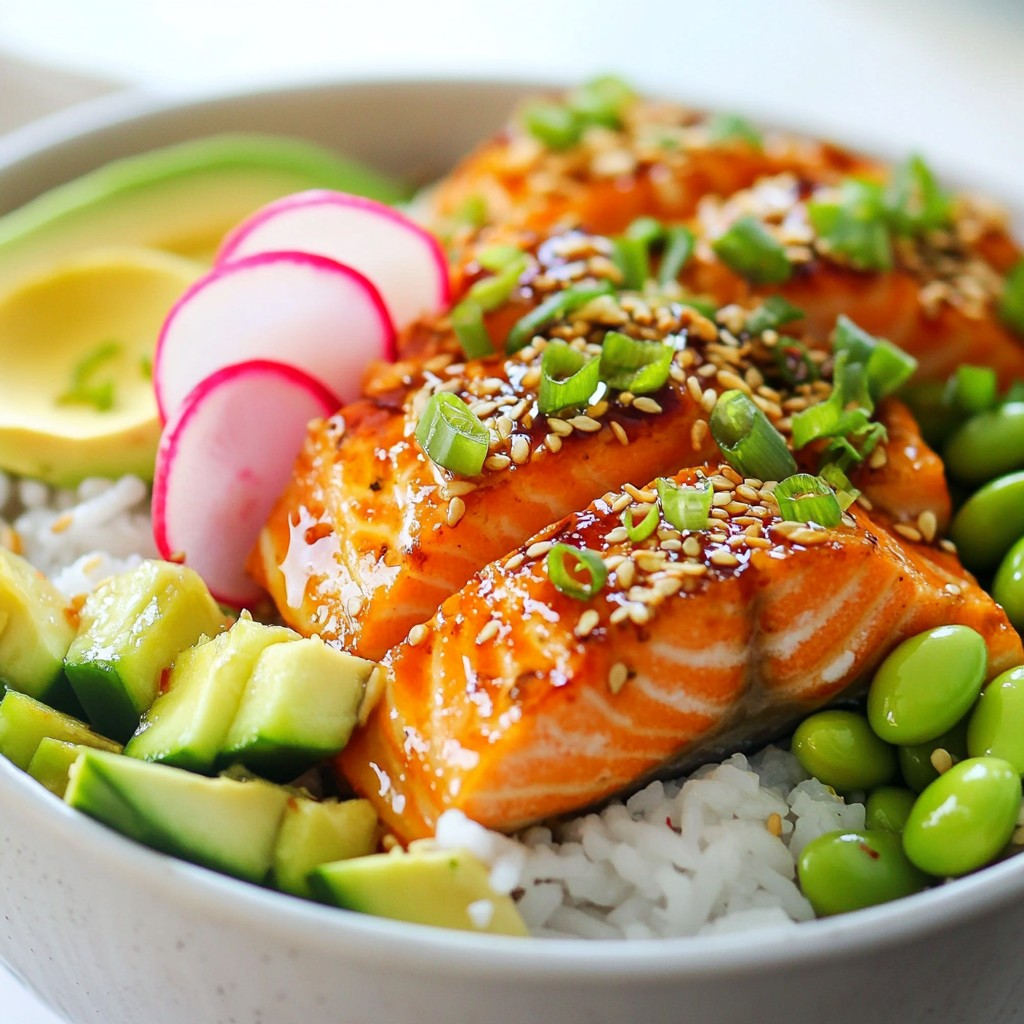
Looking for a fresh and tasty meal? Dive into my Sesame Crusted Salmon Poke Bowl! This dish packs flavor and is easy to make. With simple ingredients like salmon, sushi rice, and fresh veggies, you'll be ready in no time. I’ll guide you through preparing each part, so you can impress anyone at your dinner table. Let’s get started on this delicious adventure!
Why I Love This Recipe
- Delicious Flavor Profile: The combination of savory sesame and fresh vegetables creates a delightful taste that is both satisfying and refreshing.
- Quick and Easy Preparation: This recipe is simple to make, perfect for a weeknight dinner or a quick lunch option.
- Healthy Ingredients: Packed with omega-3 fatty acids from salmon and a variety of vitamins from the vegetables, this poke bowl is a nutritious choice.
- Customizable: You can easily swap out ingredients based on personal preferences, making it versatile for everyone!
Ingredients
Main Ingredients
- 2 salmon fillets (5 oz each)
- 1 cup sushi rice
- 1 avocado, sliced
- 1 cup cucumber, thinly sliced
- 1/2 cup radishes, thinly sliced
- 1/4 cup edamame (shelled)
- 2 green onions, chopped
Condiments and Seasonings
- 1 tablespoon soy sauce (or tamari for gluten-free)
- 1 tablespoon sesame oil
- 1/4 cup sesame seeds (white and black mixed)
- Pickled ginger, for garnish
- Sea salt, to taste
- Optional: chili flakes, for spice
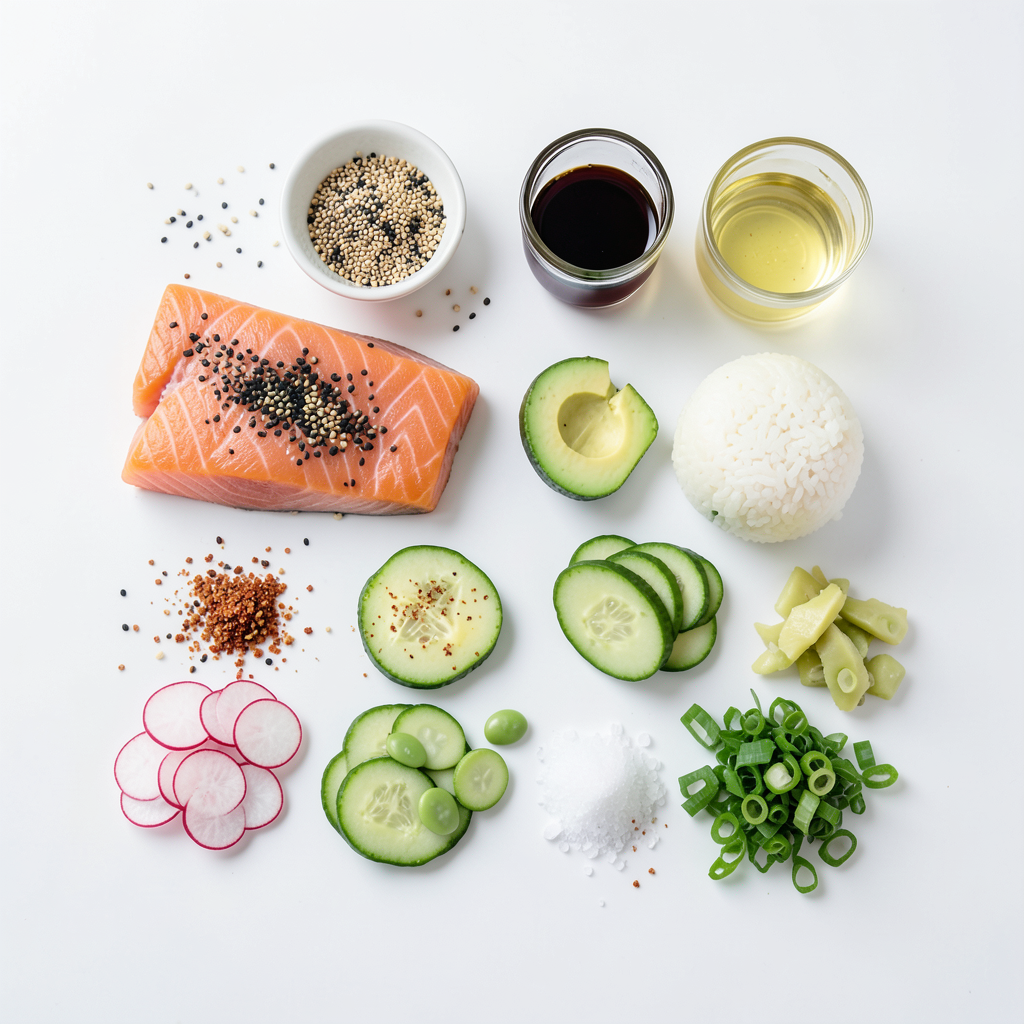
This sesame crusted salmon poke bowl is colorful, fresh, and packed with flavor. You need just a few key ingredients to create this dish. The salmon fillets are the star, offering a rich taste. Sushi rice gives a perfect base that holds the toppings well. Fresh veggies add crunch and nutrition.
For flavor, soy sauce gives a salty bite, while sesame oil adds depth. The sesame seeds create a tasty crust on the salmon. You can use pickled ginger as a zesty garnish. If you like heat, add chili flakes for an extra kick. This dish is both simple and satisfying, perfect for any meal!
Step-by-Step Instructions
Preparing the Sushi Rice
Rinse one cup of sushi rice under cold water. Keep rinsing until the water is clear. This step removes excess starch. In a medium pot, combine the rinsed rice and 1 1/4 cups water. Bring the mixture to a boil. Then, lower the heat, cover the pot, and cook for 18 to 20 minutes. After cooking, let the rice sit covered for 10 minutes. This resting time helps the rice become fluffy.
Preparing the Salmon
While the rice cools, it's time to work on the salmon. Heat one tablespoon of sesame oil in a skillet over medium heat. Brush each salmon fillet with one tablespoon of soy sauce. This adds flavor and helps the seeds stick. Next, coat each side of the fillets with 1/4 cup of mixed sesame seeds. The mix of black and white seeds adds a nice crunch.
Cooking the Salmon
Now, place the salmon fillets in the hot skillet. Cook each fillet for about 3 to 4 minutes on each side. You want the salmon to be cooked through and have a golden crust. Keep an eye on it to prevent burning. After cooking, let the salmon rest for a couple of minutes. This helps keep it juicy when you slice it.
Assembling the Poke Bowl
Grab your serving bowls. Start with a base of sushi rice. Use a spoon to scoop the rice into the bowl evenly. Next, arrange your sliced salmon on top of the rice. Then, add sliced avocado, cucumber, radishes, and edamame around the salmon. This creates a colorful and tasty bowl.
Garnishing and Serving
Finally, it's time to add the finishing touches. Sprinkle chopped green onions on top of the poke bowl. Add a serving of pickled ginger on the side. If you like, drizzle more soy sauce over the bowl. For an extra kick, sprinkle some chili flakes. This gives your meal a nice flavor boost. Enjoy your Sesame Crusted Salmon Poke Bowl!
Tips & Tricks
Perfecting the Sushi Rice
To make sushi rice well, rinse it often. Rinse until the water runs clear. This removes extra starch and helps the rice stay fluffy. A common mistake is cooking with too much water. Use a 1:1.25 ratio of rice to water. If you don’t have sushi rice, you can use short-grain rice or jasmine rice. Both give a nice texture, though not quite the same.
Salmon Cooking Tips
To check if salmon is cooked, look for a light pink color inside. It should flake easily with a fork. Cook it to an internal temperature of 145°F. You can grill, bake, or pan-sear salmon. Pan-searing gives a nice crispy crust. Use medium heat and don’t crowd the pan to ensure even cooking.
Customization Options
You can switch the salmon for other proteins. Chicken, shrimp, or tofu work great too. For veggies, try adding bell peppers, carrots, or radish sprouts. Each adds a different crunch and flavor. Feel free to mix and match to make your poke bowl unique!
Pro Tips
- Freshness is Key: Always use the freshest salmon possible for the best flavor and texture. Look for bright, vibrant color and a clean, fresh smell.
- Perfectly Cooked Salmon: To achieve the ideal doneness, aim for a medium-rare center. The salmon should flake easily but still have a slight translucency in the middle.
- Customize Your Toppings: Feel free to mix and match your favorite poke bowl toppings. Try adding seaweed salad, mango, or pickled vegetables for added flavor.
- Presentation Matters: Arranging your ingredients neatly not only looks appealing but also enhances the eating experience. Use separate sections for each topping to create a colorful and inviting bowl.
Variations
Vegetarian Option
You can make this poke bowl meat-free by using tofu instead of salmon. Firm tofu works best. Press the tofu to remove extra liquid. Cube it and marinate it in a mix of soy sauce and sesame oil.
For vegetables, consider using:
- Carrots, thinly sliced
- Bell peppers, chopped
- Zucchini, spiralized
These swaps keep the meal fresh and tasty.
Spicy Sesame Crusted Salmon Poke Bowl
To add some heat, mix chili flakes into your sesame seeds. This gives the salmon a nice kick. You can also drizzle sriracha or a spicy mayo over the bowl before serving.
Sauce options for extra flavor include:
- Spicy soy sauce
- Wasabi-infused dressing
These sauces enhance the taste and make your bowl pop.
Low-Carb Variations
If you're watching carbs, try riced cauliflower instead of sushi rice. It cooks quickly and can absorb flavors well.
For protein, you can add:
- Grilled chicken
- Shrimp
- Canned tuna
This way, you keep the meal filling without the extra carbs.
Storage Info
Storing Leftovers
To keep your leftover poke bowl fresh, place it in an airtight container. Use a container that fits the amount of food. This helps prevent air from getting in. You can store it in the fridge for up to two days. The salmon and veggies may lose some crunch after a day. To keep the flavor, add the green onions just before eating.
Reheating Instructions
When reheating salmon, use low heat to keep it moist. The best method is to use a skillet. Heat it on low and add a splash of water. Cover the skillet to create steam. This helps the salmon warm without drying out. Avoid reheating in the microwave as it can make the fish rubbery. You can serve the poke bowl cold, too—it's still delicious!
FAQs
What is a poke bowl?
A poke bowl is a Hawaiian dish. It features diced raw fish, often salmon or tuna. The fish sits on a base of rice, usually sushi rice. Toppings can include vegetables, seaweed, and sauces. Poke bowls are colorful and healthy. They let you mix flavors and textures. This dish has roots in Hawaiian fishing culture. Today, it’s popular worldwide.
Can I use frozen salmon?
Yes, you can use frozen salmon for this recipe. It’s a great option if fresh fish is not available. Make sure to thaw it properly before cooking. Place the salmon in the refrigerator overnight or submerge it in cold water for quicker thawing. Cooking frozen salmon may take a bit longer, so check for doneness. The fish should flake easily and be opaque.
What can I substitute for sushi rice?
If you can’t find sushi rice, try short-grain rice as a substitute. This rice has a similar sticky texture. You can also use brown rice for a healthier option. Keep in mind that brown rice takes longer to cook. Another option is cauliflower rice, which is low-carb and gluten-free. Just note that the flavor and texture will differ.
How can I make this dish gluten-free?
To make this poke bowl gluten-free, use tamari instead of soy sauce. Tamari is a gluten-free soy sauce alternative. Ensure that your sesame oil is pure and gluten-free. For sushi rice, all varieties are typically gluten-free. Always check labels to be safe. You can enjoy this dish without gluten while keeping it tasty!
In this blog post, we covered how to create a delicious salmon poke bowl. We discussed key ingredients like salmon, sushi rice, and various vegetables. You learned step-by-step how to prepare the rice, cook the salmon, and assemble the bowl. We also shared tips for customization and storage.
Remember, you can tweak this dish to fit your taste. Whether you stick to the basics or try a twist, enjoy making and sharing these bowls with others. Your culinary adventure starts here!