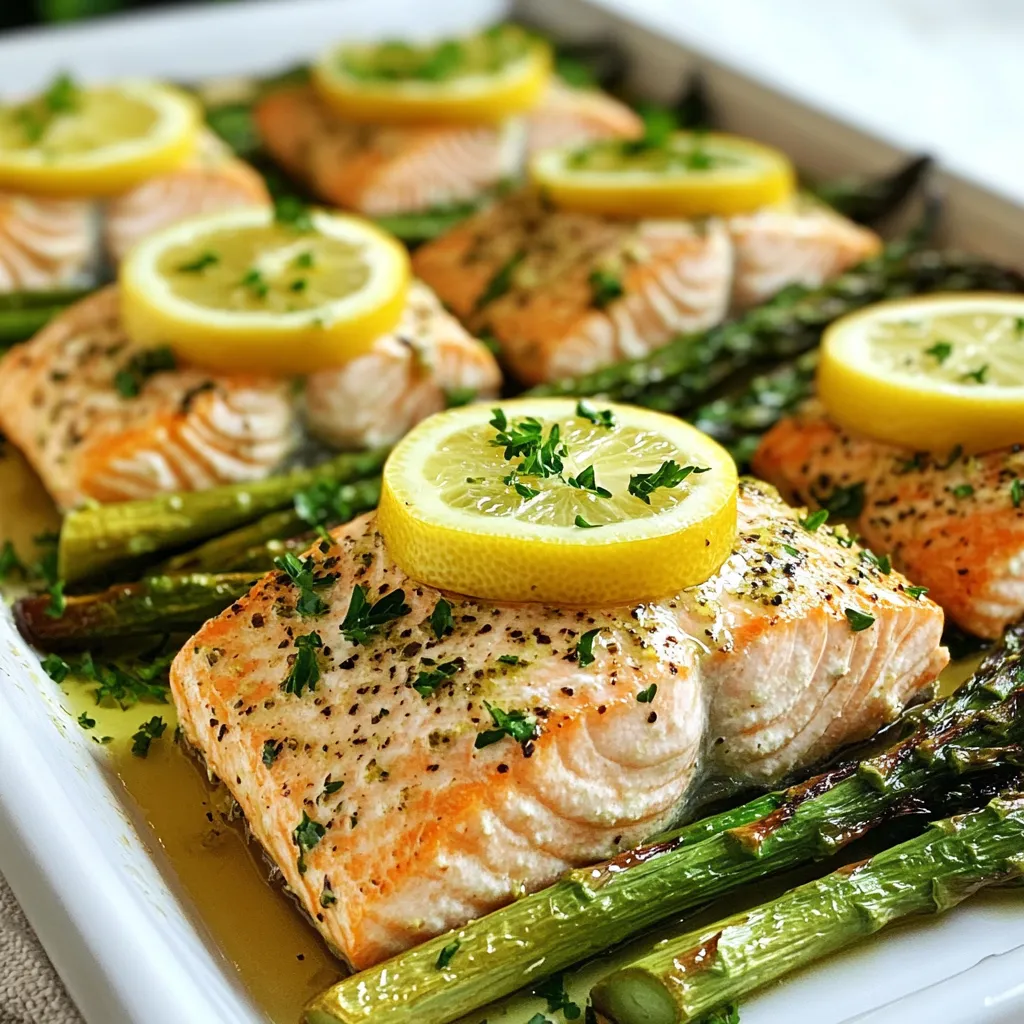
Sheet Pan Lemon Herb Salmon and Asparagus Delight

To make Sheet Pan Lemon Herb Salmon and Asparagus, you need simple and fresh ingredients. Each one adds flavor and nutrition to the dish. Here’s what you will need: - 4 salmon fillets (6 oz each) - 1 bunch asparagus, trimmed - 2 tablespoons olive oil - 2 tablespoons fresh lemon juice - 1 tablespoon lemon zest - 3 cloves garlic, minced - 1 teaspoon dried oregano - 1 teaspoon dried thyme - Salt and pepper to taste - Lemon slices, for garnish - Fresh parsley, for garnish These ingredients work together to create a bright and tasty meal. The salmon offers healthy fats and protein. Asparagus adds crunch and vitamins. The lemon and herbs make everything pop with flavor. You can find these ingredients at your local grocery store. {{ingredient_image_1}} First, I preheat the oven to 400°F (200°C). This heat will cook the salmon well. I line a large sheet pan with parchment paper. This step makes cleanup easy and helps the food not stick. Next, I make the lemon herb mixture. In a small bowl, I whisk together: - 2 tablespoons of olive oil - 2 tablespoons of fresh lemon juice - 1 tablespoon of lemon zest - 3 cloves of garlic, minced - 1 teaspoon of dried oregano - 1 teaspoon of dried thyme - Salt and pepper to taste This mixture adds bright flavor to the salmon. Now, I arrange the food on the sheet pan. I place the salmon fillets on one side of the pan. Each fillet gets a generous brush of the lemon herb mixture. On the other side, I add the trimmed asparagus. I drizzle the remaining mixture over the asparagus and season it with more salt and pepper. I place the sheet pan in the hot oven and bake for 15-20 minutes. The salmon should flake easily with a fork, and the asparagus should be tender. For a golden touch, I broil the salmon and asparagus for an extra 2-3 minutes. This gives it a nice color and adds flavor. After baking, I remove the pan and garnish the salmon with lemon slices and freshly chopped parsley. To check if your salmon is done, look for a few signs. The flesh should turn from bright pink to a pale pink color. Use a fork to gently poke the thickest part of the fillet. If it flakes easily, it is ready. The flaking test is simple. Take a fork and gently press down on the salmon. If it separates easily, you achieved perfect doneness. If it resists, give it a few more minutes in the oven. Want to kick up the flavor? Try adding spices like paprika or cumin. These will give your dish a warm, savory twist. You can also add a touch of red pepper flakes for heat. Herbs are another great way to enhance flavor. Instead of oregano and thyme, you can use dill or basil. These herbs pair well with both salmon and asparagus. Garnishing makes your dish pop. Sprinkle fresh parsley over the salmon just before serving. Add lemon slices on top for a bright touch. They also give a fresh aroma and flavor. For serving, place the salmon and asparagus on a large platter. This makes it easy for everyone to help themselves. You can also serve with a side of rice or a fresh salad for a complete meal. Pro Tips Fresh Ingredients: Always use fresh salmon and asparagus for the best flavor and texture. Fresh ingredients can elevate the dish significantly. Marinade Time: If you have extra time, let the salmon marinate in the lemon herb mixture for 30 minutes before cooking. This helps to infuse more flavor. Even Cooking: Make sure to cut the asparagus to a uniform size for even cooking. Thicker stalks may need a few extra minutes in the oven. Garnish for Presentation: Don't skip the garnish! A sprinkle of fresh parsley and lemon slices not only add color but also enhance the dish's overall appeal. {{image_2}} You can switch salmon for other fish. Try trout or cod for a different taste. Both options work well with the lemon herb mix. You can also swap asparagus for green beans or broccoli. These veggies add nice crunch and flavor. Adding citrus fruits can boost flavor. Try oranges or limes for a twist. You can also use spices like paprika or cumin for warmth. Marinating the salmon makes it more tasty. Let it soak in the lemon herb mix for at least 30 minutes before cooking. To make this dish gluten-free, check your seasonings. Most are safe, but always read labels. For low-carb versions, skip the lemon slices and use more veggies. Cauliflower or zucchini are great choices for a filling meal. After enjoying your meal, you may have some leftovers. To store your salmon and asparagus, start by letting them cool to room temperature. Then, place them in an airtight container. Store in the refrigerator for up to three days. If you want to keep them longer, you can freeze your leftovers. Wrap each portion tightly in plastic wrap and then place in a freezer bag. This way, the meal stays fresh for about three months. When you're ready to eat your leftovers, reheating is key. The best way to reheat salmon is in the oven. Preheat your oven to 350°F (175°C). Place the salmon and asparagus on a baking sheet. Cover with foil to keep moisture in. Heat for about 10-15 minutes, or until warmed through. To keep the flavor and texture, avoid using the microwave. Microwaving can make the salmon dry and rubbery. Always check if the salmon is warm in the center before serving. Enjoy your meal just like it was fresh out of the oven! It takes about 15-20 minutes to cook salmon on a sheet pan at 400°F (200°C). The salmon is ready when it flakes easily with a fork. Cooking times may vary slightly depending on the thickness of the fillets. Yes, you can use frozen salmon. Just make sure to thaw it first for even cooking. You can thaw it overnight in the fridge or place it in cold water for quicker results. Adjust the cooking time as needed since frozen salmon may take a few extra minutes to cook. You can pair salmon with many vegetables. Some great options include: - Broccoli - Green beans - Brussels sprouts - Bell peppers - Carrots These veggies add flavor and color to your meal, making it healthy and vibrant. To check if the salmon is fully cooked, use a fork to gently flake it at the thickest part. If it flakes easily and looks opaque, it is done. The ideal internal temperature for cooked salmon is 145°F (63°C). A meat thermometer can help you check this accurately. This guide covered how to cook tasty salmon with asparagus on a sheet pan. We discussed the needed ingredients and prep steps to get started. You learned how to mix the lemon herb mixture and arrange everything on the pan. Tips on perfect cooking and serving ideas added more flavor. Lastly, we explored tasty variations and how to store leftovers. Enjoy this easy recipe anytime. With simple steps, you can make a delicious meal that impresses. Now, get cooking!

WANT TO SAVE THIS RECIPE?

Ready for a quick and tasty meal? Sheet Pan Lemon Herb Salmon and Asparagus is easy to make! In just a few steps, you can serve a flavorful dish that pleases everyone at the table. With fresh salmon, bright lemon, and crisp asparagus, this recipe packs a punch. Let’s dive into the ingredients and see how you can create this delightful meal today!

Why I Love This Recipe

  1. Quick and Easy: This sheet pan recipe is perfect for busy weeknights, taking just 25-30 minutes from prep to table.
  2. Flavor Explosion: The combination of fresh lemon, herbs, and garlic creates a vibrant and zesty flavor that elevates the salmon and asparagus.
  3. Healthy and Nutritious: Salmon is packed with omega-3 fatty acids, while asparagus adds fiber and essential vitamins, making this dish a wholesome option.
  4. Minimal Cleanup: Baking everything on a single sheet pan means less mess and easier cleanup, allowing you to enjoy your meal without stress.

Ingredients

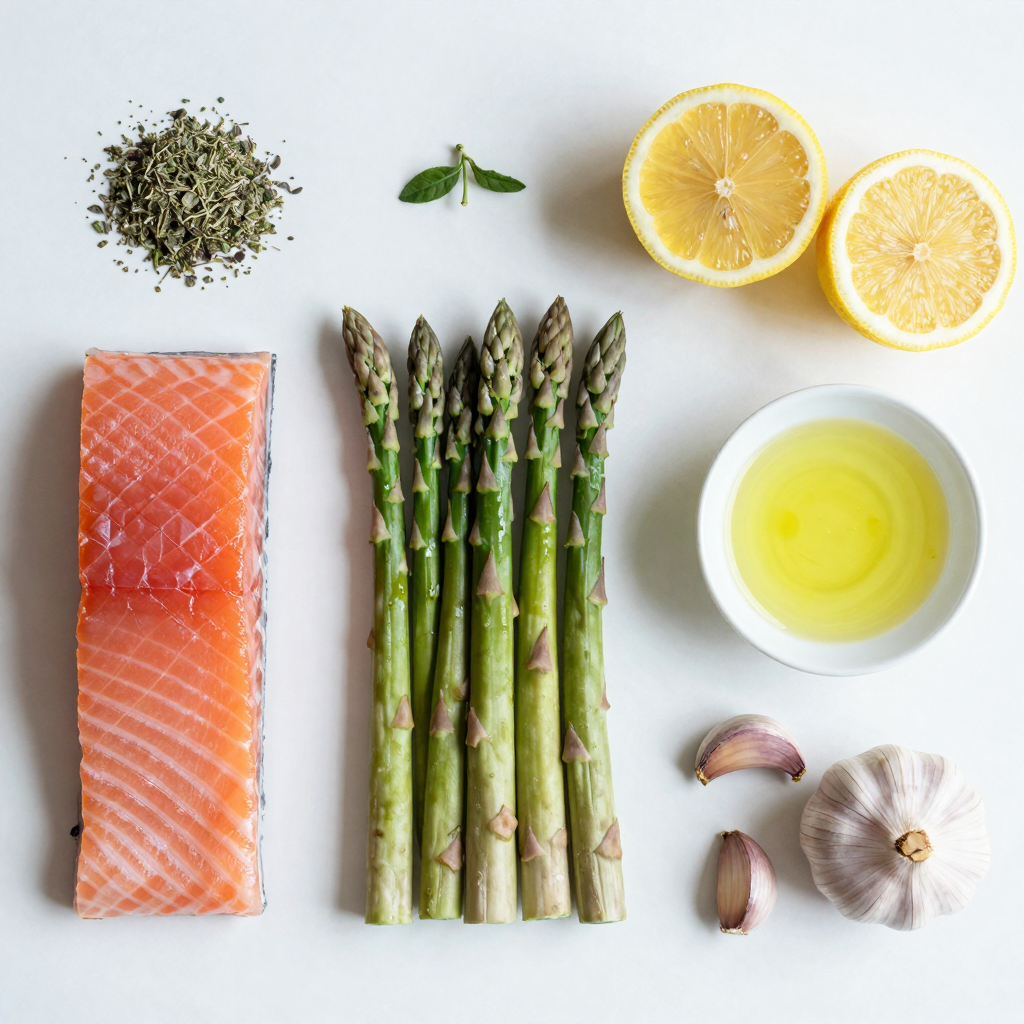
To make Sheet Pan Lemon Herb Salmon and Asparagus, you need simple and fresh ingredients. Each one adds flavor and nutrition to the dish. Here’s what you will need:

  • 4 salmon fillets (6 oz each)
  • 1 bunch asparagus, trimmed
  • 2 tablespoons olive oil
  • 2 tablespoons fresh lemon juice
  • 1 tablespoon lemon zest
  • 3 cloves garlic, minced
  • 1 teaspoon dried oregano
  • 1 teaspoon dried thyme
  • Salt and pepper to taste
  • Lemon slices, for garnish
  • Fresh parsley, for garnish

These ingredients work together to create a bright and tasty meal. The salmon offers healthy fats and protein. Asparagus adds crunch and vitamins. The lemon and herbs make everything pop with flavor. You can find these ingredients at your local grocery store.
Step-by-Step Instructions

Prepping the Ingredients

First, I preheat the oven to 400°F (200°C). This heat will cook the salmon well. I line a large sheet pan with parchment paper. This step makes cleanup easy and helps the food not stick.

Making the Lemon Herb Mixture

Next, I make the lemon herb mixture. In a small bowl, I whisk together:

  • 2 tablespoons of olive oil
  • 2 tablespoons of fresh lemon juice
  • 1 tablespoon of lemon zest
  • 3 cloves of garlic, minced
  • 1 teaspoon of dried oregano
  • 1 teaspoon of dried thyme
  • Salt and pepper to taste

This mixture adds bright flavor to the salmon.

Arranging on the Sheet Pan

Now, I arrange the food on the sheet pan. I place the salmon fillets on one side of the pan. Each fillet gets a generous brush of the lemon herb mixture. On the other side, I add the trimmed asparagus. I drizzle the remaining mixture over the asparagus and season it with more salt and pepper.

Baking the Dish

I place the sheet pan in the hot oven and bake for 15-20 minutes. The salmon should flake easily with a fork, and the asparagus should be tender. For a golden touch, I broil the salmon and asparagus for an extra 2-3 minutes. This gives it a nice color and adds flavor. After baking, I remove the pan and garnish the salmon with lemon slices and freshly chopped parsley.

Tips & Tricks

Achieving the Perfect Salmon

To check if your salmon is done, look for a few signs. The flesh should turn from bright pink to a pale pink color. Use a fork to gently poke the thickest part of the fillet. If it flakes easily, it is ready.

The flaking test is simple. Take a fork and gently press down on the salmon. If it separates easily, you achieved perfect doneness. If it resists, give it a few more minutes in the oven.

Enhancing Flavor

Want to kick up the flavor? Try adding spices like paprika or cumin. These will give your dish a warm, savory twist. You can also add a touch of red pepper flakes for heat.

Herbs are another great way to enhance flavor. Instead of oregano and thyme, you can use dill or basil. These herbs pair well with both salmon and asparagus.

Presentation Tips

Garnishing makes your dish pop. Sprinkle fresh parsley over the salmon just before serving. Add lemon slices on top for a bright touch. They also give a fresh aroma and flavor.

For serving, place the salmon and asparagus on a large platter. This makes it easy for everyone to help themselves. You can also serve with a side of rice or a fresh salad for a complete meal.

Pro Tips

  1. Fresh Ingredients: Always use fresh salmon and asparagus for the best flavor and texture. Fresh ingredients can elevate the dish significantly.
  2. Marinade Time: If you have extra time, let the salmon marinate in the lemon herb mixture for 30 minutes before cooking. This helps to infuse more flavor.
  3. Even Cooking: Make sure to cut the asparagus to a uniform size for even cooking. Thicker stalks may need a few extra minutes in the oven.
  4. Garnish for Presentation: Don’t skip the garnish! A sprinkle of fresh parsley and lemon slices not only add color but also enhance the dish’s overall appeal.

Variations

Ingredient Swaps

You can switch salmon for other fish. Try trout or cod for a different taste. Both options work well with the lemon herb mix. You can also swap asparagus for green beans or broccoli. These veggies add nice crunch and flavor.

Flavor Infusions

Adding citrus fruits can boost flavor. Try oranges or limes for a twist. You can also use spices like paprika or cumin for warmth. Marinating the salmon makes it more tasty. Let it soak in the lemon herb mix for at least 30 minutes before cooking.

Dietary Adjustments

To make this dish gluten-free, check your seasonings. Most are safe, but always read labels. For low-carb versions, skip the lemon slices and use more veggies. Cauliflower or zucchini are great choices for a filling meal.

Storage Info

Leftover Storage

After enjoying your meal, you may have some leftovers. To store your salmon and asparagus, start by letting them cool to room temperature. Then, place them in an airtight container. Store in the refrigerator for up to three days. If you want to keep them longer, you can freeze your leftovers. Wrap each portion tightly in plastic wrap and then place in a freezer bag. This way, the meal stays fresh for about three months.

Reheating Guidelines

When you’re ready to eat your leftovers, reheating is key. The best way to reheat salmon is in the oven. Preheat your oven to 350°F (175°C). Place the salmon and asparagus on a baking sheet. Cover with foil to keep moisture in. Heat for about 10-15 minutes, or until warmed through.

To keep the flavor and texture, avoid using the microwave. Microwaving can make the salmon dry and rubbery. Always check if the salmon is warm in the center before serving. Enjoy your meal just like it was fresh out of the oven!

FAQs

How long does it take to cook salmon on a sheet pan?

It takes about 15-20 minutes to cook salmon on a sheet pan at 400°F (200°C). The salmon is ready when it flakes easily with a fork. Cooking times may vary slightly depending on the thickness of the fillets.

Can I use frozen salmon for this recipe?

Yes, you can use frozen salmon. Just make sure to thaw it first for even cooking. You can thaw it overnight in the fridge or place it in cold water for quicker results. Adjust the cooking time as needed since frozen salmon may take a few extra minutes to cook.

What vegetables can I pair with salmon?

You can pair salmon with many vegetables. Some great options include:

  • Broccoli
  • Green beans
  • Brussels sprouts
  • Bell peppers
  • Carrots

These veggies add flavor and color to your meal, making it healthy and vibrant.

How to tell if the salmon is fully cooked?

To check if the salmon is fully cooked, use a fork to gently flake it at the thickest part. If it flakes easily and looks opaque, it is done. The ideal internal temperature for cooked salmon is 145°F (63°C). A meat thermometer can help you check this accurately.

This guide covered how to cook tasty salmon with asparagus on a sheet pan. We discussed the needed ingredients and prep steps to get started. You learned how to mix the lemon herb mixture and arrange everything on the pan. Tips on perfect cooking and serving ideas added more flavor. Lastly, we explored tasty variations and how to store leftovers. Enjoy this easy recipe anytime. With simple steps, you can make a delicious meal that impresses. Now, get cookin
To make Sheet Pan Lemon Herb Salmon and Asparagus, you need simple and fresh ingredients. Each one adds flavor and nutrition to the dish. Here’s what you will need: - 4 salmon fillets (6 oz each) - 1 bunch asparagus, trimmed - 2 tablespoons olive oil - 2 tablespoons fresh lemon juice - 1 tablespoon lemon zest - 3 cloves garlic, minced - 1 teaspoon dried oregano - 1 teaspoon dried thyme - Salt and pepper to taste - Lemon slices, for garnish - Fresh parsley, for garnish These ingredients work together to create a bright and tasty meal. The salmon offers healthy fats and protein. Asparagus adds crunch and vitamins. The lemon and herbs make everything pop with flavor. You can find these ingredients at your local grocery store. {{ingredient_image_1}} First, I preheat the oven to 400°F (200°C). This heat will cook the salmon well. I line a large sheet pan with parchment paper. This step makes cleanup easy and helps the food not stick. Next, I make the lemon herb mixture. In a small bowl, I whisk together: - 2 tablespoons of olive oil - 2 tablespoons of fresh lemon juice - 1 tablespoon of lemon zest - 3 cloves of garlic, minced - 1 teaspoon of dried oregano - 1 teaspoon of dried thyme - Salt and pepper to taste This mixture adds bright flavor to the salmon. Now, I arrange the food on the sheet pan. I place the salmon fillets on one side of the pan. Each fillet gets a generous brush of the lemon herb mixture. On the other side, I add the trimmed asparagus. I drizzle the remaining mixture over the asparagus and season it with more salt and pepper. I place the sheet pan in the hot oven and bake for 15-20 minutes. The salmon should flake easily with a fork, and the asparagus should be tender. For a golden touch, I broil the salmon and asparagus for an extra 2-3 minutes. This gives it a nice color and adds flavor. After baking, I remove the pan and garnish the salmon with lemon slices and freshly chopped parsley. To check if your salmon is done, look for a few signs. The flesh should turn from bright pink to a pale pink color. Use a fork to gently poke the thickest part of the fillet. If it flakes easily, it is ready. The flaking test is simple. Take a fork and gently press down on the salmon. If it separates easily, you achieved perfect doneness. If it resists, give it a few more minutes in the oven. Want to kick up the flavor? Try adding spices like paprika or cumin. These will give your dish a warm, savory twist. You can also add a touch of red pepper flakes for heat. Herbs are another great way to enhance flavor. Instead of oregano and thyme, you can use dill or basil. These herbs pair well with both salmon and asparagus. Garnishing makes your dish pop. Sprinkle fresh parsley over the salmon just before serving. Add lemon slices on top for a bright touch. They also give a fresh aroma and flavor. For serving, place the salmon and asparagus on a large platter. This makes it easy for everyone to help themselves. You can also serve with a side of rice or a fresh salad for a complete meal. Pro Tips Fresh Ingredients: Always use fresh salmon and asparagus for the best flavor and texture. Fresh ingredients can elevate the dish significantly. Marinade Time: If you have extra time, let the salmon marinate in the lemon herb mixture for 30 minutes before cooking. This helps to infuse more flavor. Even Cooking: Make sure to cut the asparagus to a uniform size for even cooking. Thicker stalks may need a few extra minutes in the oven. Garnish for Presentation: Don't skip the garnish! A sprinkle of fresh parsley and lemon slices not only add color but also enhance the dish's overall appeal. {{image_2}} You can switch salmon for other fish. Try trout or cod for a different taste. Both options work well with the lemon herb mix. You can also swap asparagus for green beans or broccoli. These veggies add nice crunch and flavor. Adding citrus fruits can boost flavor. Try oranges or limes for a twist. You can also use spices like paprika or cumin for warmth. Marinating the salmon makes it more tasty. Let it soak in the lemon herb mix for at least 30 minutes before cooking. To make this dish gluten-free, check your seasonings. Most are safe, but always read labels. For low-carb versions, skip the lemon slices and use more veggies. Cauliflower or zucchini are great choices for a filling meal. After enjoying your meal, you may have some leftovers. To store your salmon and asparagus, start by letting them cool to room temperature. Then, place them in an airtight container. Store in the refrigerator for up to three days. If you want to keep them longer, you can freeze your leftovers. Wrap each portion tightly in plastic wrap and then place in a freezer bag. This way, the meal stays fresh for about three months. When you're ready to eat your leftovers, reheating is key. The best way to reheat salmon is in the oven. Preheat your oven to 350°F (175°C). Place the salmon and asparagus on a baking sheet. Cover with foil to keep moisture in. Heat for about 10-15 minutes, or until warmed through. To keep the flavor and texture, avoid using the microwave. Microwaving can make the salmon dry and rubbery. Always check if the salmon is warm in the center before serving. Enjoy your meal just like it was fresh out of the oven! It takes about 15-20 minutes to cook salmon on a sheet pan at 400°F (200°C). The salmon is ready when it flakes easily with a fork. Cooking times may vary slightly depending on the thickness of the fillets. Yes, you can use frozen salmon. Just make sure to thaw it first for even cooking. You can thaw it overnight in the fridge or place it in cold water for quicker results. Adjust the cooking time as needed since frozen salmon may take a few extra minutes to cook. You can pair salmon with many vegetables. Some great options include: - Broccoli - Green beans - Brussels sprouts - Bell peppers - Carrots These veggies add flavor and color to your meal, making it healthy and vibrant. To check if the salmon is fully cooked, use a fork to gently flake it at the thickest part. If it flakes easily and looks opaque, it is done. The ideal internal temperature for cooked salmon is 145°F (63°C). A meat thermometer can help you check this accurately. This guide covered how to cook tasty salmon with asparagus on a sheet pan. We discussed the needed ingredients and prep steps to get started. You learned how to mix the lemon herb mixture and arrange everything on the pan. Tips on perfect cooking and serving ideas added more flavor. Lastly, we explored tasty variations and how to store leftovers. Enjoy this easy recipe anytime. With simple steps, you can make a delicious meal that impresses. Now, get cooking!

Zesty Sheet Pan Lemon Herb Salmon & Asparagus

A delicious and easy sheet pan meal featuring salmon and asparagus, flavored with lemon and herbs.
Prep Time 10 minutes
Cook Time 20 minutes
Total Time 30 minutes
Course Main Course
Cuisine American
Servings 4
Calories 350 kcal

Ingredients


  • 4 fillets salmon (6 oz each)
  • 1 bunch asparagus, trimmed
  • 2 tablespoons olive oil
  • 2 tablespoons fresh lemon juice
  • 1 tablespoon lemon zest
  • 3 cloves garlic, minced
  • 1 teaspoon dried oregano
  • 1 teaspoon dried thyme
  • to taste salt and pepper
  • for garnish lemon slices
  • for garnish fresh parsley

Instructions


  • Preheat your oven to 400°F (200°C).
  • Line a large sheet pan with parchment paper for easy cleanup.
  • In a small bowl, whisk together olive oil, lemon juice, lemon zest, minced garlic, dried oregano, dried thyme, salt, and pepper.
  • Place the salmon fillets on one side of the sheet pan. Brush each fillet generously with the lemon herb mixture.
  • On the other side of the pan, arrange the trimmed asparagus. Drizzle the remaining lemon herb mixture over the asparagus and season with additional salt and pepper.
  • Place the sheet pan in the preheated oven and bake for 15-20 minutes, or until the salmon flakes easily with a fork and the asparagus is tender.
  • For an extra touch, broil the salmon and asparagus for an additional 2-3 minutes at the end of baking time to achieve a nice golden color.
  • Remove the sheet pan from the oven and garnish the salmon with lemon slices and freshly chopped parsley before serving.

Notes

For a crispy finish, broil for an additional 2-3 minutes.
Keyword asparagus, herb, lemon, salmon, sheet pan
To make Sheet Pan Lemon Herb Salmon and Asparagus, you need simple and fresh ingredients. Each one adds flavor and nutrition to the dish. Here’s what you will need: - 4 salmon fillets (6 oz each) - 1 bunch asparagus, trimmed - 2 tablespoons olive oil - 2 tablespoons fresh lemon juice - 1 tablespoon lemon zest - 3 cloves garlic, minced - 1 teaspoon dried oregano - 1 teaspoon dried thyme - Salt and pepper to taste - Lemon slices, for garnish - Fresh parsley, for garnish These ingredients work together to create a bright and tasty meal. The salmon offers healthy fats and protein. Asparagus adds crunch and vitamins. The lemon and herbs make everything pop with flavor. You can find these ingredients at your local grocery store. {{ingredient_image_1}} First, I preheat the oven to 400°F (200°C). This heat will cook the salmon well. I line a large sheet pan with parchment paper. This step makes cleanup easy and helps the food not stick. Next, I make the lemon herb mixture. In a small bowl, I whisk together: - 2 tablespoons of olive oil - 2 tablespoons of fresh lemon juice - 1 tablespoon of lemon zest - 3 cloves of garlic, minced - 1 teaspoon of dried oregano - 1 teaspoon of dried thyme - Salt and pepper to taste This mixture adds bright flavor to the salmon. Now, I arrange the food on the sheet pan. I place the salmon fillets on one side of the pan. Each fillet gets a generous brush of the lemon herb mixture. On the other side, I add the trimmed asparagus. I drizzle the remaining mixture over the asparagus and season it with more salt and pepper. I place the sheet pan in the hot oven and bake for 15-20 minutes. The salmon should flake easily with a fork, and the asparagus should be tender. For a golden touch, I broil the salmon and asparagus for an extra 2-3 minutes. This gives it a nice color and adds flavor. After baking, I remove the pan and garnish the salmon with lemon slices and freshly chopped parsley. To check if your salmon is done, look for a few signs. The flesh should turn from bright pink to a pale pink color. Use a fork to gently poke the thickest part of the fillet. If it flakes easily, it is ready. The flaking test is simple. Take a fork and gently press down on the salmon. If it separates easily, you achieved perfect doneness. If it resists, give it a few more minutes in the oven. Want to kick up the flavor? Try adding spices like paprika or cumin. These will give your dish a warm, savory twist. You can also add a touch of red pepper flakes for heat. Herbs are another great way to enhance flavor. Instead of oregano and thyme, you can use dill or basil. These herbs pair well with both salmon and asparagus. Garnishing makes your dish pop. Sprinkle fresh parsley over the salmon just before serving. Add lemon slices on top for a bright touch. They also give a fresh aroma and flavor. For serving, place the salmon and asparagus on a large platter. This makes it easy for everyone to help themselves. You can also serve with a side of rice or a fresh salad for a complete meal. Pro Tips Fresh Ingredients: Always use fresh salmon and asparagus for the best flavor and texture. Fresh ingredients can elevate the dish significantly. Marinade Time: If you have extra time, let the salmon marinate in the lemon herb mixture for 30 minutes before cooking. This helps to infuse more flavor. Even Cooking: Make sure to cut the asparagus to a uniform size for even cooking. Thicker stalks may need a few extra minutes in the oven. Garnish for Presentation: Don't skip the garnish! A sprinkle of fresh parsley and lemon slices not only add color but also enhance the dish's overall appeal. {{image_2}} You can switch salmon for other fish. Try trout or cod for a different taste. Both options work well with the lemon herb mix. You can also swap asparagus for green beans or broccoli. These veggies add nice crunch and flavor. Adding citrus fruits can boost flavor. Try oranges or limes for a twist. You can also use spices like paprika or cumin for warmth. Marinating the salmon makes it more tasty. Let it soak in the lemon herb mix for at least 30 minutes before cooking. To make this dish gluten-free, check your seasonings. Most are safe, but always read labels. For low-carb versions, skip the lemon slices and use more veggies. Cauliflower or zucchini are great choices for a filling meal. After enjoying your meal, you may have some leftovers. To store your salmon and asparagus, start by letting them cool to room temperature. Then, place them in an airtight container. Store in the refrigerator for up to three days. If you want to keep them longer, you can freeze your leftovers. Wrap each portion tightly in plastic wrap and then place in a freezer bag. This way, the meal stays fresh for about three months. When you're ready to eat your leftovers, reheating is key. The best way to reheat salmon is in the oven. Preheat your oven to 350°F (175°C). Place the salmon and asparagus on a baking sheet. Cover with foil to keep moisture in. Heat for about 10-15 minutes, or until warmed through. To keep the flavor and texture, avoid using the microwave. Microwaving can make the salmon dry and rubbery. Always check if the salmon is warm in the center before serving. Enjoy your meal just like it was fresh out of the oven! It takes about 15-20 minutes to cook salmon on a sheet pan at 400°F (200°C). The salmon is ready when it flakes easily with a fork. Cooking times may vary slightly depending on the thickness of the fillets. Yes, you can use frozen salmon. Just make sure to thaw it first for even cooking. You can thaw it overnight in the fridge or place it in cold water for quicker results. Adjust the cooking time as needed since frozen salmon may take a few extra minutes to cook. You can pair salmon with many vegetables. Some great options include: - Broccoli - Green beans - Brussels sprouts - Bell peppers - Carrots These veggies add flavor and color to your meal, making it healthy and vibrant. To check if the salmon is fully cooked, use a fork to gently flake it at the thickest part. If it flakes easily and looks opaque, it is done. The ideal internal temperature for cooked salmon is 145°F (63°C). A meat thermometer can help you check this accurately. This guide covered how to cook tasty salmon with asparagus on a sheet pan. We discussed the needed ingredients and prep steps to get started. You learned how to mix the lemon herb mixture and arrange everything on the pan. Tips on perfect cooking and serving ideas added more flavor. Lastly, we explored tasty variations and how to store leftovers. Enjoy this easy recipe anytime. With simple steps, you can make a delicious meal that impresses. Now, get cooking!

Zesty Sheet Pan Lemon Herb Salmon & Asparagus

A flavorful and healthy dish featuring salmon and asparagus, seasoned with lemon and herbs, all cooked on a single sheet pan for easy cleanup.
Prep Time 10 minutes
Cook Time 20 minutes
Total Time 30 minutes
Course Main Course
Cuisine American
Servings 4 servings
Calories 350 kcal

Ingredients
  

  • 4 fillets salmon
  • 1 bunch asparagus
  • 2 tablespoons olive oil
  • 1 lemon zested and juiced
  • 2 teaspoons dried oregano
  • 2 teaspoons garlic powder
  • salt to taste salt
  • pepper to taste pepper

Instructions
 

  • Preheat the oven to 400°F (200°C).
  • On a large sheet pan, arrange the salmon fillets and asparagus.
  • Drizzle olive oil, lemon juice, and sprinkle lemon zest, oregano, garlic powder, salt, and pepper over the salmon and asparagus.
  • Toss the asparagus to coat evenly and place the pan in the oven.
  • Bake for 15-20 minutes, or until the salmon is cooked through and flakes easily with a fork.
  • Serve immediately, garnished with additional lemon slices if desired.

Notes

For best results, use fresh herbs and seasonal asparagus.
Keyword asparagus, easy, healthy, salmon, sheet pan

WANT TO SAVE THIS RECIPE?

Related Posts