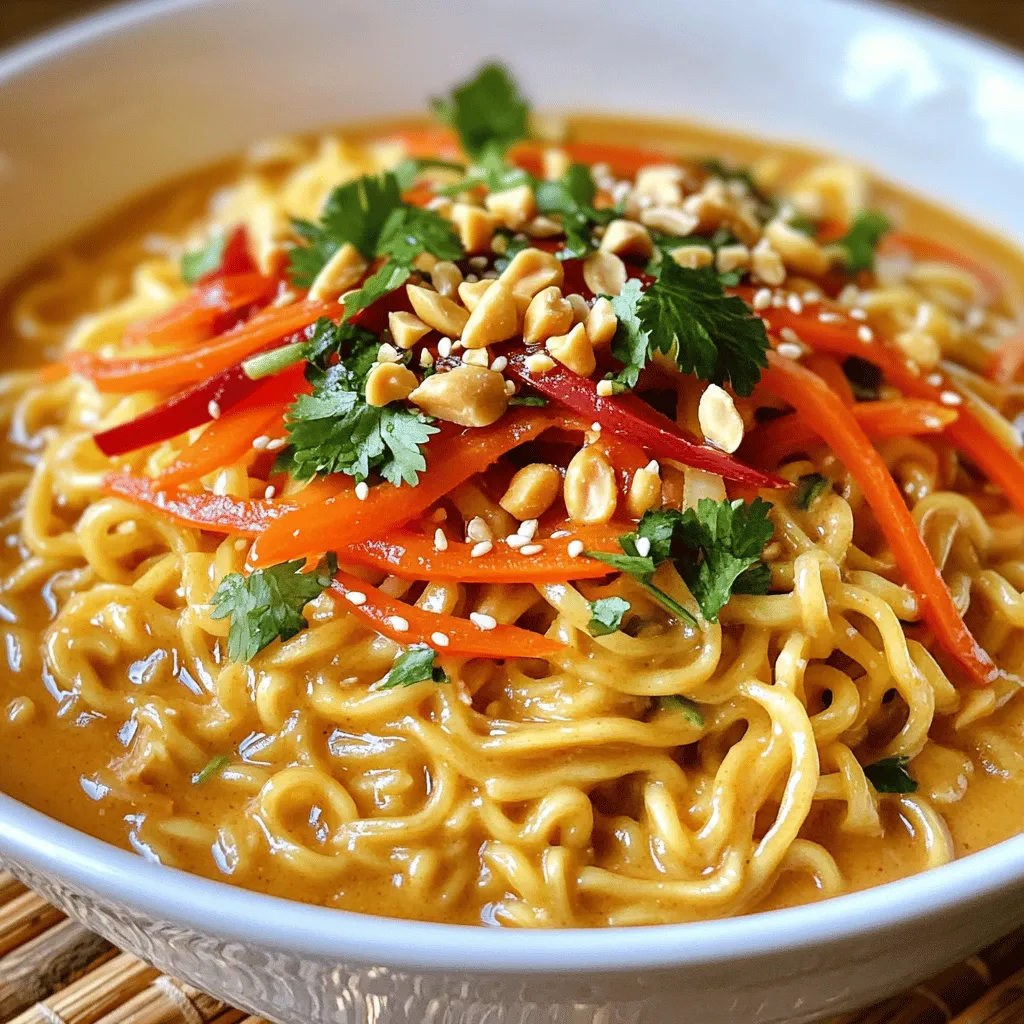
Spicy Thai Peanut Ramen Flavorful and Simple Dish

If you’re craving a dish that’s bold, creamy, and full of flavor, then my Spicy Thai Peanut Ramen is for you! This simple recipe brings together rich ingredients like coconut milk and peanut butter for a hearty meal that you’ll love. I’ll guide you through each step, from cooking the noodles to mixing in fresh veggies. Get ready for a delightful bowl of comfort that’s sure to impress!
Why I Love This Recipe
- Quick and Easy: This recipe can be prepared in just 25 minutes, making it perfect for busy weeknights.
- Flavor Explosion: The combination of creamy peanut butter, spicy sriracha, and tangy lime juice creates a mouthwatering sauce.
- Customizable: You can easily adjust the spice level and add any vegetables you have on hand for a personalized touch.
- Healthy and Nourishing: Packed with vegetables and healthy fats from coconut milk and peanut butter, this dish is as nutritious as it is delicious.
Ingredients
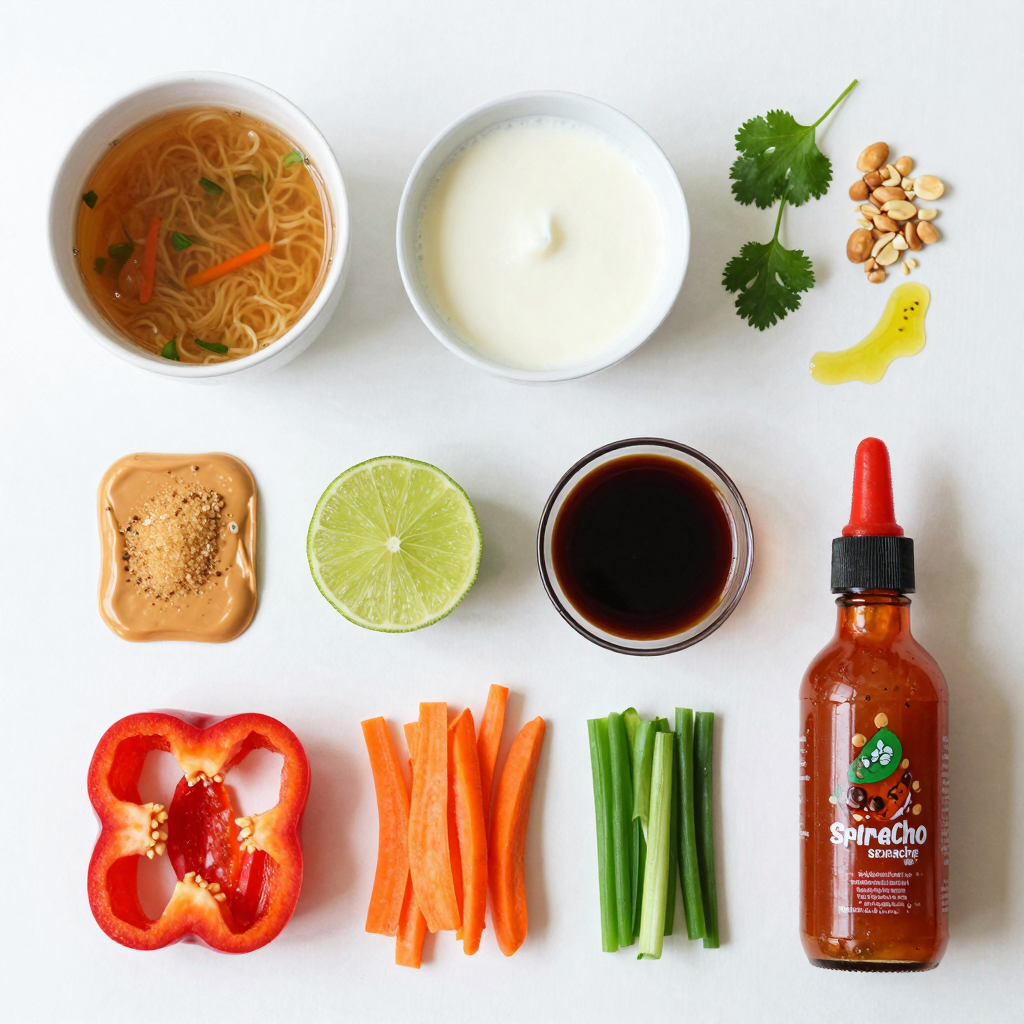
To make Spicy Thai Peanut Ramen, you will need some simple ingredients. Each one plays a key role in creating the rich, bold flavors of this dish. Here’s the full list:
- 200g ramen noodles
- 1 cup vegetable broth
- 1/2 cup coconut milk
- 2 tablespoons peanut butter (preferably creamy)
- 1 tablespoon soy sauce
- 1 tablespoon lime juice
- 1 tablespoon sriracha (adjust for spice preference)
- 1 teaspoon brown sugar
- 1 red bell pepper, thinly sliced
- 1 carrot, julienned
- 2 green onions, chopped
- 1/4 cup fresh cilantro, chopped (for garnish)
- Crushed peanuts (for garnish)
- Sesame oil (for drizzling)
The ramen noodles serve as the base. They soak up the spicy peanut sauce well. The vegetable broth and coconut milk create a creamy texture. Peanut butter adds a nutty taste. Soy sauce and lime juice give a nice balance of salt and acidity. Sriracha adds heat, but you can adjust this based on your taste.
The brown sugar enhances the flavors by adding a touch of sweetness. Fresh vegetables like red bell pepper and carrot add crunch and color. Green onions and cilantro give a fresh finish, while crushed peanuts add a nice crunch on top. Finally, sesame oil adds a rich, nutty aroma when drizzled before serving.
Each ingredient is easy to find, making this dish a great choice for a quick and tasty meal. Enjoy the burst of flavors in every bite!
Step-by-Step Instructions
Cooking the Ramen Noodles
First, grab a large pot and fill it with water. Bring the water to a boil. Add 200g of ramen noodles to the pot. Cook the noodles as the package says until they are al dente. This usually takes about 3-5 minutes. Once cooked, drain the noodles and set them aside.
Preparing the Spicy Peanut Sauce
Next, take a medium saucepan. Pour in 1 cup of vegetable broth and 1/2 cup of coconut milk. Add 2 tablespoons of creamy peanut butter, 1 tablespoon of soy sauce, and 1 tablespoon of lime juice. For a kick, mix in 1 tablespoon of sriracha. To balance the flavor, add 1 teaspoon of brown sugar. Whisk all the ingredients over medium heat. Keep stirring until the sauce is smooth. Let it simmer for about 3-5 minutes.
Sautéing the Vegetables
Now, use a separate skillet. Drizzle a little sesame oil into the pan and heat it over medium heat. Add the sliced red bell pepper and the julienned carrot. Sauté them for 2-3 minutes. You want them to be slightly soft but still crisp. Once ready, remove the skillet from the heat.
Combining Noodles and Sauce
In a large mixing bowl, place the cooked ramen noodles. Pour the spicy peanut sauce over the noodles. Toss everything together so the noodles are well-coated. Then, add the sautéed vegetables and gently mix them in. Your dish is almost ready to serve!
Pro Tips
- Adjust the Spice Level: Feel free to modify the amount of sriracha in the sauce to suit your taste. Start with less if you’re sensitive to heat, and add more as needed.
- Use Fresh Ingredients: Fresh vegetables not only enhance the flavor but also add a vibrant color to your dish. Try using seasonal veggies for the best results.
- Garnish Generously: Don’t skip the garnishes! Crushed peanuts, cilantro, and green onions add texture and freshness, elevating your ramen to the next level.
- Make It a Meal: For added protein, consider adding tofu, grilled chicken, or shrimp to your ramen. This will make the dish more filling and nutritious.
Tips & Tricks
Customizing Spice Level
To adjust the heat in your Spicy Thai Peanut Ramen, play with sriracha. Start with one tablespoon. If you want more heat, add more sriracha. You can also add chili flakes or fresh chilies for extra spice. Taste as you go! This way, you can make a dish everyone enjoys.
Choosing the Right Noodles
Ramen noodles give this dish its classic taste. You can use fresh or dried noodles. Fresh noodles cook quickly and have a nice texture. Dried noodles are fine too but check the package for cooking times. If you’re feeling adventurous, try rice noodles for a gluten-free option. They are also tasty!
Essential Cooking Techniques
Cooking the noodles properly is key. Boil water and cook them until just tender. Drain them and rinse with cold water. This keeps them from sticking. When making the sauce, whisk it well for a smooth mix. Simmer gently to blend flavors. Sautéing the veggies quickly keeps them crisp and colorful. Toss everything together gently to keep your noodles intact.

Variations
Adding Protein Options
You can boost your Spicy Thai Peanut Ramen with protein. Chicken, shrimp, or tofu works well. For chicken, grill or sauté it first. If you choose shrimp, cook until they turn pink. For tofu, press it to remove water, then sauté until golden. Add your chosen protein to the noodles and sauce before serving. This makes your dish heartier and more filling.
Vegetarian Alternatives
If you want a vegetarian dish, use tofu or tempeh. Both options soak up the sauce well and add texture. You can also add chickpeas for protein. Just drain and rinse canned chickpeas. Mix them in with the sautéed veggies. This keeps the dish meat-free while still being delicious and satisfying.
Gluten-Free Substitutes
For a gluten-free version, swap ramen noodles with rice noodles or quinoa. Both options work great with the sauce. Use tamari instead of soy sauce to keep it gluten-free. Check your peanut butter brand too. Some brands may add gluten. This way, you can enjoy this dish without worries about gluten.
Storage Info
How to Store Leftovers
To store leftovers, let the ramen cool down first. Use an airtight container. Place the noodles and vegetables in the container. Pour the sauce over them, but keep it separate if you can. This helps keep the noodles from getting soggy. Store in the fridge for up to three days.
Reheating Instructions
When you want to eat leftovers, heat them gently. You can use a microwave or a stovetop. If using a microwave, place the ramen in a bowl. Add a splash of water to keep it moist. Heat for one to two minutes, stirring halfway through. On the stovetop, warm it in a pan over low heat. Stir occasionally until heated through.
Freezing Tips
For freezing, use a freezer-safe container. It is best to freeze the noodles and sauce separately. This way, the texture stays nice when you thaw them. The ramen can last up to three months in the freezer. To use, thaw overnight in the fridge, then reheat as needed.
FAQs
What can I use instead of peanut butter?
You can use almond butter or sunflower seed butter. Both options give a nice flavor. You may want to adjust the amount for taste. If you want a nut-free option, sunflower seed butter works well. It gives a creamy texture and a bit of nutty taste.
Can I make this recipe vegan?
Yes, you can make this dish vegan! Use vegetable broth and check your soy sauce for vegan labeling. The coconut milk already makes it dairy-free, so you’re close. Just swap the peanut butter with a vegan option if needed.
How long does Spicy Thai Peanut Ramen last in the fridge?
Spicy Thai Peanut Ramen lasts about 3 to 5 days in the fridge. Store it in an airtight container for best results. The flavors can mix and get better over time. Just give it a good stir before serving again.
This blog post covered all you need for making delicious Spicy Thai Peanut Ramen. You learned about key ingredients like ramen noodles, coconut milk, and spicy peanut sauce. I shared step-by-step instructions for cooking your meal perfectly, along with tips for adjusting spice levels and using different noodles. You can even explore variations with protein or vegetarian options. Lastly, I provided storage tips to keep leftovers fresh. Get ready to enjoy a tasty bowl of ramen that’ll impress everyone!
Spicy Thai Peanut Ramen
Ingredients
200g ramen noodles
1 cup vegetable broth
1/2 cup coconut milk
2 tablespoons peanut butter (preferably creamy)
1 tablespoon soy sauce
1 tablespoon lime juice
1 tablespoon sriracha (adjust for spice preference)
1 teaspoon brown sugar
1 red bell pepper, thinly sliced
1 carrot, julienned
2 green onions, chopped
1/4 cup fresh cilantro, chopped (for garnish)
Crushed peanuts (for garnish)
Sesame oil (for drizzling)
Instructions
Cook the Noodles: In a large pot, bring water to a boil. Add the ramen noodles and cook according to package instructions until al dente. Drain and set aside.
Prepare the Sauce: In a medium saucepan, combine the vegetable broth, coconut milk, peanut butter, soy sauce, lime juice, sriracha, and brown sugar. Whisk over medium heat until smooth and well combined, allowing it to simmer gently for about 3-5 minutes.
Sauté the Vegetables: In a separate skillet, heat a drizzle of sesame oil over medium heat. Add the sliced red bell pepper and julienned carrot. Sauté for 2-3 minutes until slightly softened but still crisp. Remove from heat.
Combine Everything: In a large mixing bowl, place the cooked ramen noodles. Pour the spicy peanut sauce over the noodles and toss to combine so that the noodles are well-coated. Add the sautéed vegetables and gently mix in.
Serve: Portion the ramen into serving bowls. Garnish with chopped green onions, fresh cilantro, and a sprinkle of crushed peanuts on top. Drizzle a little more sesame oil for added flavor.
Prep Time: 15 minutes | Total Time: 25 minutes | Servings: 2-3

Spicy Thai Peanut Ramen
Ingredients
- 200 g ramen noodles
- 1 cup vegetable broth
- 1 2 coconut milk
- 2 tablespoons peanut butter (preferably creamy)
- 1 tablespoon soy sauce
- 1 tablespoon lime juice
- 1 tablespoon sriracha (adjust for spice preference)
- 1 teaspoon brown sugar
- 1 red bell pepper thinly sliced
- 1 carrot julienned
- 2 green onions chopped
- 1 4 cup fresh cilantro, chopped (for garnish)
- 1 serving crushed peanuts (for garnish)
- 1 drizzle sesame oil (for drizzling)
Instructions
- In a large pot, bring water to a boil. Add the ramen noodles and cook according to package instructions until al dente. Drain and set aside.
- In a medium saucepan, combine the vegetable broth, coconut milk, peanut butter, soy sauce, lime juice, sriracha, and brown sugar. Whisk over medium heat until smooth and well combined, allowing it to simmer gently for about 3-5 minutes.
- In a separate skillet, heat a drizzle of sesame oil over medium heat. Add the sliced red bell pepper and julienned carrot. Sauté for 2-3 minutes until slightly softened but still crisp. Remove from heat.
- In a large mixing bowl, place the cooked ramen noodles. Pour the spicy peanut sauce over the noodles and toss to combine so that the noodles are well-coated. Add the sautéed vegetables and gently mix in.
- Portion the ramen into serving bowls. Garnish with chopped green onions, fresh cilantro, and a sprinkle of crushed peanuts on top. Drizzle a little more sesame oil for added flavor.

![- Eggplants: You need 2 medium eggplants. Slice them into 1/4-inch rounds. This helps them cook evenly. - Marinara Sauce: Use 2 cups of marinara sauce. You can make it fresh or use store-bought. It adds rich flavor. - Cheese Types: You will need 2 cups of shredded mozzarella cheese and 1 cup of grated Parmesan cheese. These cheeses melt well and create a creamy texture. - Breading Components: Gather 1 cup of all-purpose flour, 3 large eggs (beaten), and 2 cups of breadcrumbs. Italian-style breadcrumbs add great taste. - Seasonings and Garnish: Use 1 teaspoon of dried oregano and 1 teaspoon of garlic powder. These spices boost the flavor. For garnish, fresh basil leaves add color and freshness. Don’t forget olive oil for frying and salt and pepper for taste. With these ingredients, you will create a layered delight that is both tasty and satisfying. For the complete recipe, check the Full Recipe section. Preparing the Eggplant First, slice your eggplants into 1/4-inch rounds. Lay them on a clean towel. Sprinkle salt over the slices and let them sit for 30 minutes. This helps draw out moisture and bitterness. After 30 minutes, rinse the eggplants and pat them dry with a paper towel. This step is key for tasty eggplant. Setting Up a Breading Station Now, gather three bowls for breading. In the first bowl, add all-purpose flour. In the second bowl, beat three large eggs. In the third bowl, mix breadcrumbs with one teaspoon of dried oregano, one teaspoon of garlic powder, salt, and pepper. This setup speeds up the process and keeps things neat. Frying the Eggplant Heat olive oil in a large skillet over medium heat. Take each eggplant slice and dip it into the flour, shaking off excess. Next, dip it into the beaten eggs, then coat it well with the breadcrumb mix. Fry the breaded slices in batches until they turn golden brown and crisp. This should take about 3-4 minutes on each side. Once done, drain them on paper towels to remove extra oil. Assembling the Layers Grab a greased baking dish to start layering. Spread a thin layer of marinara sauce on the bottom. Place a third of the fried eggplant slices over the sauce. Add half of the marinara sauce on top, followed by a third of the mozzarella cheese and half of the Parmesan cheese. Repeat these layers. Finish with a final layer of eggplant, then top it off with the remaining marinara sauce and cheeses. Baking Directions Preheat your oven to 375°F (190°C). Cover the baking dish with foil and bake it for 25 minutes. After that, remove the foil and bake it for another 15-20 minutes. You want the cheese to be bubbly and golden brown. Resting Time Once the baking is done, let the Eggplant Parmesan rest for about 10 minutes. This helps it set and makes it easier to serve. Enjoy the delicious layers of flavor and texture! If you want the full recipe, check the [Full Recipe]. Drawing Out Moisture To make your eggplant perfect, start by drawing out moisture. Slice the eggplants into 1/4-inch rounds. Lay them on a clean towel and sprinkle salt over them. Let them sit for about 30 minutes. This step helps to reduce bitterness and makes them less soggy. After 30 minutes, rinse and pat them dry with a paper towel. This process is key for a great texture. Achieving Optimal Crispiness For a crispy texture, make sure to coat the eggplant well. First, dip each slice in flour, then in beaten eggs, and finally in breadcrumbs. Use Italian-style breadcrumbs for extra flavor. Fry them in hot olive oil until they are golden brown. Frying in batches helps keep the oil hot. This step ensures every piece of eggplant turns out crispy and delicious. Pairing with Side Dishes Eggplant Parmesan pairs well with many sides. A fresh green salad with a lemon vinaigrette adds brightness. Garlic bread brings a nice crunch and flavor. You can also serve it with pasta for a hearty meal. These sides complement the rich flavors of the dish. Presentation Ideas For a beautiful presentation, layer your Eggplant Parmesan in a clear dish. This way, people can see the colorful layers. Garnish with fresh basil leaves on top for a pop of color. You can also drizzle some extra marinara sauce around the plate. This makes it look elegant and inviting. Over-salting the Eggplant Be careful with salt when preparing eggplant. While salting helps draw out moisture, too much salt can ruin the dish. Always taste the eggplant after rinsing. Adjust the salt in your marinara sauce to balance flavors. This way, you avoid a salty dish. Incorrect Layering Order When assembling the layers, follow the right order. Start with marinara sauce, then eggplant, and then cheese. Repeat this pattern. If you mix up the layers, the dish may not cook evenly. Following the proper layering keeps everything in place and ensures a tasty meal. {{image_2}} Substitutes for Cheese You can use plant-based cheese. Look for nut-based or soy-based options. They melt well and add flavor. Nutritional yeast is a great choice too. It adds a cheesy taste without dairy. Egg Replacement Options If you want to skip eggs, try using flaxseed meal. Mix one tablespoon of flaxseed with three tablespoons of water. Let it sit for five minutes. This mix works well as a binder. Gluten-Free Breadcrumbs You can find gluten-free breadcrumbs at stores. They are made from rice or corn. They work just like regular breadcrumbs, giving you that nice crunch. Flour Options Instead of all-purpose flour, use almond flour or chickpea flour. Both options give a nutty flavor and work well in the recipe. Adding Vegetables Add layers of zucchini or spinach for more taste. They boost nutrition and add color to the dish. You can also mix in roasted red peppers for a sweet twist. Using Different Sauces Besides marinara, try pesto or a white sauce. Each sauce brings a new flavor. This keeps the dish fresh and exciting. You can even mix sauces for a unique taste. How do you store leftovers? After enjoying your Eggplant Parmesan, let it cool to room temperature. Place any leftovers in an airtight container. Store it in the fridge for up to three days. What are the best practices for reheating? To reheat, preheat your oven to 350°F (175°C). Place the Eggplant Parmesan in an oven-safe dish. Cover it with foil to keep it moist. Heat for about 20 minutes. Check if it’s warm all the way through before serving. How do you freeze Eggplant Parmesan? If you want to store it longer, freezing is a great option. First, let the dish cool completely. Cut it into portions if you prefer smaller servings. Wrap each piece tightly in plastic wrap. Then, place them in a freezer-safe container. It can last for up to three months in the freezer. What are the thawing and reheating instructions? When you’re ready to eat, move the Eggplant Parmesan to the fridge. Let it thaw overnight. Reheat it in the oven at 350°F (175°C) for about 25-30 minutes. Remove the foil halfway through to help the top crisp up. Enjoy your delicious dish again! For the complete recipe, check out the Full Recipe. How do you prevent eggplants from turning brown? To stop eggplants from browning, sprinkle salt on the slices. This draws out moisture. After 30 minutes, rinse and pat them dry. This method keeps them fresh and tasty. Can eggplant parmesan be made ahead of time? Yes, you can make eggplant parmesan ahead of time. Prepare it, then cover and chill it in the fridge. When ready to bake, just heat it in the oven. This saves time on busy days. What’s the best cheese to use for eggplant parmesan? The best cheese for eggplant parmesan is mozzarella. It melts well and adds creaminess. Parmesan adds a nice salty flavor. Using both gives a rich taste. Calories and serving size One serving of eggplant parmesan has about 300-400 calories. This depends on how much cheese and sauce you use. A serving size is usually one slice. Health benefits of eggplant Eggplant is low in calories and high in fiber. It helps with digestion and keeps you full. It also has antioxidants that may protect your heart. Eating eggplant adds nutrients to your meals. For more recipes, check out the Full Recipe for Layered Delight Eggplant Parmesan. In this post, we explored making eggplant Parmesan from start to finish. We covered ingredients, step-by-step instructions, and tips for success. You learned about variations for vegan and gluten-free options. I hope you feel confident to try this dish. Remember to avoid common mistakes and pair it well with sides. Enjoy your cooking and savor each bite of this tasty meal!](https://dailydishlab.com/wp-content/uploads/2025/06/de34a9c5-902e-4f12-9462-c26c35663e43-768x768.webp)