
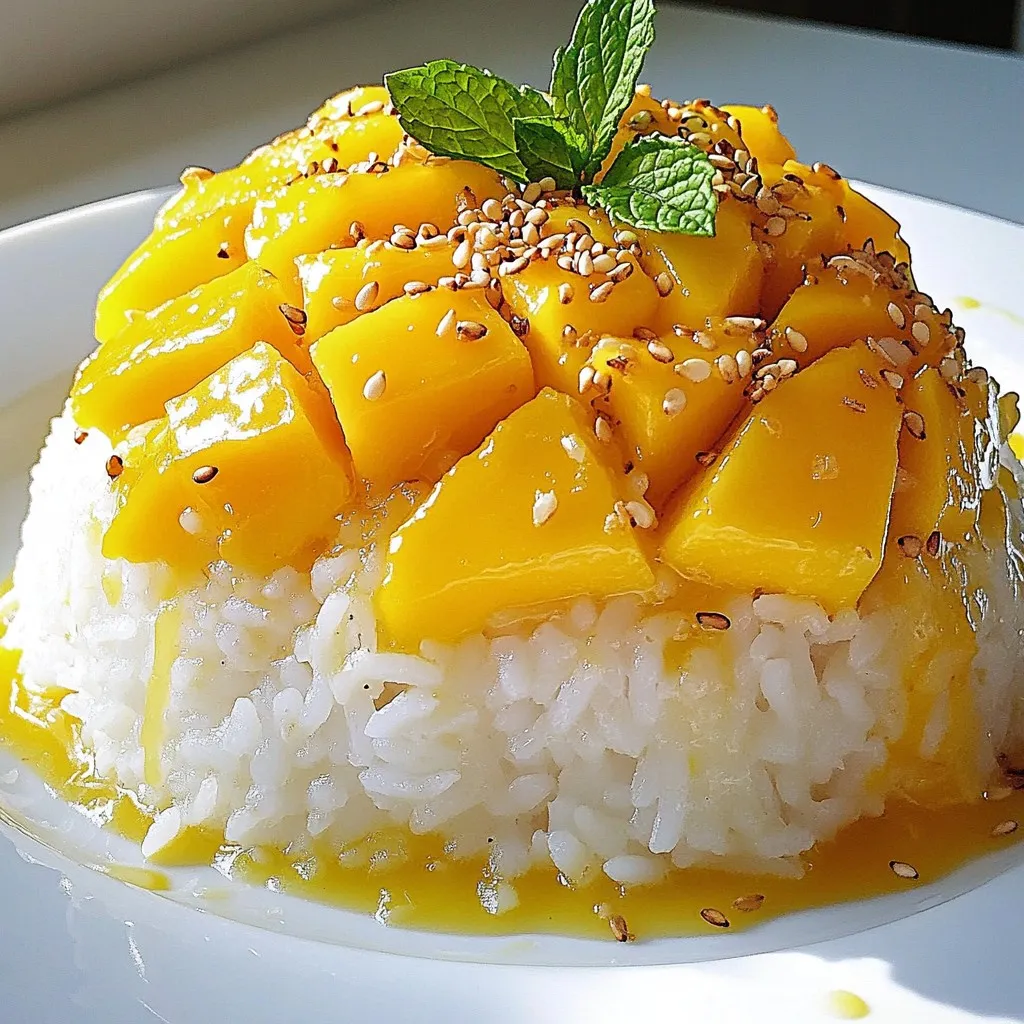
Thai Mango Sticky Rice Delightful Dessert Recipe

- 1 cup glutinous rice (sticky rice) - 1 ½ cups coconut milk - ½ cup sugar - ¼ teaspoon salt - 2 ripe mangoes, peeled and sliced - 1 tablespoon sesame seeds (for garnish) - Fresh mint leaves (for garnish) Gather these items before you start. Glutinous rice gives the dish its classic chewy texture. Coconut milk adds creaminess and sweetness. Sugar enhances the natural flavors. Salt balances the sweetness. Fresh mangoes bring a fruity burst. Sesame seeds and mint leaves add a nice touch to your plate. Each ingredient plays a key role in making this dessert shine. Make sure your mangoes are ripe. This will ensure they are sweet and juicy. Use fresh coconut milk for the best flavor. If you can, try to find the best quality ingredients. This will make your Thai mango sticky rice taste even better. {{ingredient_image_1}} - Rinse the glutinous rice. This removes extra starch. Keep rinsing until the water is clear. - Soak the rice. You should soak it for at least 4 hours. For best results, soak it overnight. - Steaming the rice is the next step. After draining, place the rice in a steamer. Use cheesecloth to line the steamer. Steam for about 20-25 minutes. The rice should be tender and sticky. - Mix coconut milk, sugar, and salt in a small pot. Heat this mixture on medium heat. Stir until the sugar dissolves. Avoid boiling the sauce; just warm it. - Once the rice is cooked, transfer it to a large bowl. Pour 1 cup of the warm coconut milk over the rice. Stir well to combine. Let it sit for around 20 minutes. This helps the rice absorb the coconut milk. - To serve, take a portion of sticky rice. Mold it into a small mound on your plate. - Top it with sliced mangoes. Drizzle some of the remaining coconut milk over the top. - Finish by sprinkling sesame seeds and adding fresh mint leaves for color. Enjoy your treat! To make the best Thai mango sticky rice, you need ripe mangoes. Ripe mangoes are soft to the touch but not mushy. They should have a sweet scent. Look for mangoes with a golden-yellow skin, often with a hint of red. The best varieties for this dish are Ataulfo and Haden. Ataulfo mangoes are small, smooth, and creamy. Haden mangoes are larger and very sweet. Both types will make your dessert shine. Getting sticky rice just right is key. Rinse it well under cold water until the water runs clear. This removes excess starch and helps it cook better. Soak the rice for at least 4 hours; overnight is even better. If you don’t have a steamer, you can use a pot. Just add a little water to the pot, place the rice in a heat-proof bowl, and cover it. Cook on low heat until the rice is soft and sticky. To spice things up, consider adding a pinch of cinnamon or a drop of vanilla to the coconut milk. This adds warmth and depth to the flavor. You can also use different sweeteners. Try honey or maple syrup instead of sugar. Each sweetener gives a unique taste that can change the dish’s vibe. Don't be afraid to experiment! Pro Tips Perfectly Soaked Rice: Soaking the glutinous rice for at least 4 hours helps to achieve the ideal sticky texture. For best results, soak it overnight. Steaming Technique: Use a bamboo steamer for an authentic touch. Make sure the water in the pot doesn’t touch the rice; this ensures even cooking. Coconut Milk Consistency: For a creamier sauce, let the coconut milk mixture cool slightly before adding it to the rice, allowing it to meld beautifully with the grains. Garnishing Tips: Fresh mint leaves not only add color but also a refreshing flavor. Toasted sesame seeds enhance the dish with a nutty crunch. {{image_2}} You can easily make this dish vegan. Substitute sugar with maple syrup or agave nectar. Use plant-based coconut milk if you want a richer taste. These swaps keep the creamy texture while being vegan-friendly. Thai mango sticky rice is naturally gluten-free. Just ensure your sugar and coconut milk are gluten-free as well. Most brands are safe, but always check the labels. This option lets everyone enjoy the dessert without worry. Pair Thai mango sticky rice with other desserts for a fun experience. It works well with coconut ice cream or fresh fruit salad. For a creative twist, serve it in a glass cup. Layer the sticky rice and mangoes. Add a drizzle of coconut milk on top for a beautiful look. Don't forget to sprinkle sesame seeds and mint leaves for color. Enjoy! To keep your Thai mango sticky rice fresh, store it in an airtight container. This will help prevent the rice from drying out. Place the container in the fridge where it stays good for about three days. If you can, separate the sticky rice from the mango. This keeps the mango from getting mushy. When you want to enjoy your leftover sticky rice, you can warm it up easily. The best way is to use a steamer. Just place the rice in the steamer for about 10 minutes. You can also microwave it. Cover the rice with a damp paper towel to keep it moist. Heat it in short bursts of 30 seconds until it’s warm. If you want to save your Thai mango sticky rice for later, you can freeze it. First, let the rice cool completely. Then, place it in a freezer-safe container or bag. Make sure to remove as much air as you can before sealing. It can stay in the freezer for up to a month. To thaw, move it to the fridge overnight or use the microwave. Just remember to reheat it well before serving! Thai mango sticky rice is a sweet dessert from Thailand. It features glutinous rice, ripe mango, and creamy coconut milk. The sticky rice absorbs the coconut milk, giving it a rich flavor. The ripe mango adds a sweet and juicy contrast. This dish is often served warm and is both comforting and delightful. You can prepare Thai mango sticky rice in advance. First, soak the glutinous rice for at least four hours or overnight. After cooking, let the rice cool. Store the rice and coconut sauce separately in airtight containers. When you're ready to serve, reheat the rice gently and assemble with mango and coconut sauce. Using regular rice changes the dish. Glutinous rice gives the dessert a unique sticky texture. Regular rice will not have the same chewy feel. The flavor will also differ, losing that rich coconut absorption. For the best results, stick to glutinous rice. You can add many garnishes to Thai mango sticky rice. Here are some ideas: - Sprinkle sesame seeds for crunch. - Add fresh mint leaves for color and flavor. - Try toasted coconut flakes for extra texture. - Drizzle with a bit of coconut cream for richness. These garnishes enhance the dish and make it visually stunning. Thai mango sticky rice is a delicious dessert made with glutinous rice, coconut milk, and ripe mangoes. You learned how to prepare the ingredients, cook the rice, and make the coconut sauce. I shared tips for selecting ripe mangoes and perfecting the sticky rice. You can enhance flavors or try variations for vegan or gluten-free options. Enjoy this sweet treat fresh or stored for later. Now, it’s time to impress your friends and family with your new cooking skills!

WANT TO SAVE THIS RECIPE?

If you crave a sweet, creamy treat, Thai Mango Sticky Rice is for you! This dish combines glutinous rice, rich coconut milk, and fresh mango for a delightful experience. I’ll share an easy recipe, tips for selecting ripe mangoes, and storage advice. Whether you’re a beginner or a pro, you can make this tasty dessert that warms the heart. Let’s dive into this delicious journey together!

Why I Love This Recipe

  1. Deliciously Sweet: This dessert perfectly balances the sweetness of ripe mangoes with the creamy coconut milk, creating a delightful flavor explosion.
  2. Easy to Make: With just a few simple ingredients and straightforward steps, anyone can whip up this delicious treat at home.
  3. Beautiful Presentation: The vibrant colors of mango, the white sticky rice, and the garnish make this dish visually stunning for any occasion.
  4. Perfect for Sharing: Serves four, making it a great dessert to share with family and friends during gatherings or celebrations.

Ingredients

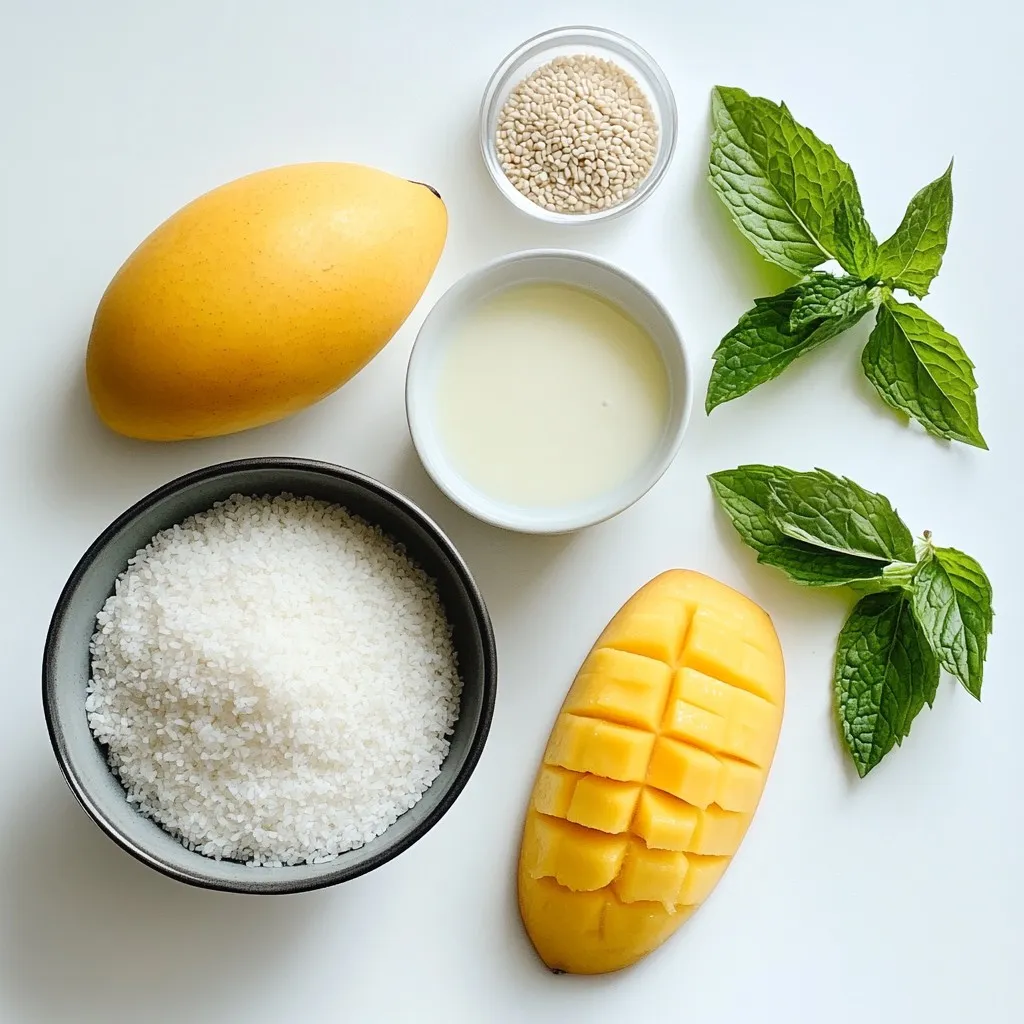
List of Required Ingredients

  • 1 cup glutinous rice (sticky rice)
  • 1 ½ cups coconut milk
  • ½ cup sugar
  • ¼ teaspoon salt
  • 2 ripe mangoes, peeled and sliced
  • 1 tablespoon sesame seeds (for garnish)
  • Fresh mint leaves (for garnish)

Gather these items before you start. Glutinous rice gives the dish its classic chewy texture. Coconut milk adds creaminess and sweetness. Sugar enhances the natural flavors. Salt balances the sweetness. Fresh mangoes bring a fruity burst. Sesame seeds and mint leaves add a nice touch to your plate. Each ingredient plays a key role in making this dessert shine.

Make sure your mangoes are ripe. This will ensure they are sweet and juicy. Use fresh coconut milk for the best flavor. If you can, try to find the best quality ingredients. This will make your Thai mango sticky rice taste even better.
Step-by-Step Instructions

Prepping the Rice

  • Rinse the glutinous rice. This removes extra starch. Keep rinsing until the water is clear.
  • Soak the rice. You should soak it for at least 4 hours. For best results, soak it overnight.

Cooking the Rice

  • Steaming the rice is the next step. After draining, place the rice in a steamer. Use cheesecloth to line the steamer. Steam for about 20-25 minutes. The rice should be tender and sticky.

Preparing the Coconut Sauce

  • Mix coconut milk, sugar, and salt in a small pot. Heat this mixture on medium heat. Stir until the sugar dissolves. Avoid boiling the sauce; just warm it.

Combining and Serving

  • Once the rice is cooked, transfer it to a large bowl. Pour 1 cup of the warm coconut milk over the rice. Stir well to combine. Let it sit for around 20 minutes. This helps the rice absorb the coconut milk.
  • To serve, take a portion of sticky rice. Mold it into a small mound on your plate.
  • Top it with sliced mangoes. Drizzle some of the remaining coconut milk over the top.
  • Finish by sprinkling sesame seeds and adding fresh mint leaves for color. Enjoy your treat!

Tips & Tricks

Selecting Ripe Mangoes

To make the best Thai mango sticky rice, you need ripe mangoes. Ripe mangoes are soft to the touch but not mushy. They should have a sweet scent. Look for mangoes with a golden-yellow skin, often with a hint of red.

The best varieties for this dish are Ataulfo and Haden. Ataulfo mangoes are small, smooth, and creamy. Haden mangoes are larger and very sweet. Both types will make your dessert shine.

Perfecting Sticky Rice

Getting sticky rice just right is key. Rinse it well under cold water until the water runs clear. This removes excess starch and helps it cook better. Soak the rice for at least 4 hours; overnight is even better.

If you don’t have a steamer, you can use a pot. Just add a little water to the pot, place the rice in a heat-proof bowl, and cover it. Cook on low heat until the rice is soft and sticky.

Flavor Enhancements

To spice things up, consider adding a pinch of cinnamon or a drop of vanilla to the coconut milk. This adds warmth and depth to the flavor.

You can also use different sweeteners. Try honey or maple syrup instead of sugar. Each sweetener gives a unique taste that can change the dish’s vibe. Don’t be afraid to experiment!

Pro Tips

  1. Perfectly Soaked Rice: Soaking the glutinous rice for at least 4 hours helps to achieve the ideal sticky texture. For best results, soak it overnight.
  2. Steaming Technique: Use a bamboo steamer for an authentic touch. Make sure the water in the pot doesn’t touch the rice; this ensures even cooking.
  3. Coconut Milk Consistency: For a creamier sauce, let the coconut milk mixture cool slightly before adding it to the rice, allowing it to meld beautifully with the grains.
  4. Garnishing Tips: Fresh mint leaves not only add color but also a refreshing flavor. Toasted sesame seeds enhance the dish with a nutty crunch.

Variations

Vegan Option

You can easily make this dish vegan. Substitute sugar with maple syrup or agave nectar. Use plant-based coconut milk if you want a richer taste. These swaps keep the creamy texture while being vegan-friendly.

Gluten-Free Version

Thai mango sticky rice is naturally gluten-free. Just ensure your sugar and coconut milk are gluten-free as well. Most brands are safe, but always check the labels. This option lets everyone enjoy the dessert without worry.

Serving Suggestions

Pair Thai mango sticky rice with other desserts for a fun experience. It works well with coconut ice cream or fresh fruit salad. For a creative twist, serve it in a glass cup. Layer the sticky rice and mangoes. Add a drizzle of coconut milk on top for a beautiful look. Don’t forget to sprinkle sesame seeds and mint leaves for color. Enjoy!

Storage Info

Storing Leftovers

To keep your Thai mango sticky rice fresh, store it in an airtight container. This will help prevent the rice from drying out. Place the container in the fridge where it stays good for about three days. If you can, separate the sticky rice from the mango. This keeps the mango from getting mushy.

Reheating Suggestions

When you want to enjoy your leftover sticky rice, you can warm it up easily. The best way is to use a steamer. Just place the rice in the steamer for about 10 minutes. You can also microwave it. Cover the rice with a damp paper towel to keep it moist. Heat it in short bursts of 30 seconds until it’s warm.

Freezing Instructions

If you want to save your Thai mango sticky rice for later, you can freeze it. First, let the rice cool completely. Then, place it in a freezer-safe container or bag. Make sure to remove as much air as you can before sealing. It can stay in the freezer for up to a month. To thaw, move it to the fridge overnight or use the microwave. Just remember to reheat it well before serving!

FAQs

What is Thai Mango Sticky Rice?

Thai mango sticky rice is a sweet dessert from Thailand. It features glutinous rice, ripe mango, and creamy coconut milk. The sticky rice absorbs the coconut milk, giving it a rich flavor. The ripe mango adds a sweet and juicy contrast. This dish is often served warm and is both comforting and delightful.

How to make Thai Mango Sticky Rice ahead of time?

You can prepare Thai mango sticky rice in advance. First, soak the glutinous rice for at least four hours or overnight. After cooking, let the rice cool. Store the rice and coconut sauce separately in airtight containers. When you’re ready to serve, reheat the rice gently and assemble with mango and coconut sauce.

Can I use regular rice instead of glutinous rice?

Using regular rice changes the dish. Glutinous rice gives the dessert a unique sticky texture. Regular rice will not have the same chewy feel. The flavor will also differ, losing that rich coconut absorption. For the best results, stick to glutinous rice.

What can I garnish Thai Mango Sticky Rice with?

You can add many garnishes to Thai mango sticky rice. Here are some ideas:

  • Sprinkle sesame seeds for crunch.
  • Add fresh mint leaves for color and flavor.
  • Try toasted coconut flakes for extra texture.
  • Drizzle with a bit of coconut cream for richness.

These garnishes enhance the dish and make it visually stunning.

Thai mango sticky rice is a delicious dessert made with glutinous rice, coconut milk, and ripe mangoes. You learned how to prepare the ingredients, cook the rice, and make the coconut sauce. I shared tips for selecting ripe mangoes and perfecting the sticky rice. You can enhance flavors or try variations for vegan or gluten-free options.

Enjoy this sweet treat fresh or stored for later. Now, it’s time to impress your friends and family with your new cooking skill
- 1 cup glutinous rice (sticky rice) - 1 ½ cups coconut milk - ½ cup sugar - ¼ teaspoon salt - 2 ripe mangoes, peeled and sliced - 1 tablespoon sesame seeds (for garnish) - Fresh mint leaves (for garnish) Gather these items before you start. Glutinous rice gives the dish its classic chewy texture. Coconut milk adds creaminess and sweetness. Sugar enhances the natural flavors. Salt balances the sweetness. Fresh mangoes bring a fruity burst. Sesame seeds and mint leaves add a nice touch to your plate. Each ingredient plays a key role in making this dessert shine. Make sure your mangoes are ripe. This will ensure they are sweet and juicy. Use fresh coconut milk for the best flavor. If you can, try to find the best quality ingredients. This will make your Thai mango sticky rice taste even better. {{ingredient_image_1}} - Rinse the glutinous rice. This removes extra starch. Keep rinsing until the water is clear. - Soak the rice. You should soak it for at least 4 hours. For best results, soak it overnight. - Steaming the rice is the next step. After draining, place the rice in a steamer. Use cheesecloth to line the steamer. Steam for about 20-25 minutes. The rice should be tender and sticky. - Mix coconut milk, sugar, and salt in a small pot. Heat this mixture on medium heat. Stir until the sugar dissolves. Avoid boiling the sauce; just warm it. - Once the rice is cooked, transfer it to a large bowl. Pour 1 cup of the warm coconut milk over the rice. Stir well to combine. Let it sit for around 20 minutes. This helps the rice absorb the coconut milk. - To serve, take a portion of sticky rice. Mold it into a small mound on your plate. - Top it with sliced mangoes. Drizzle some of the remaining coconut milk over the top. - Finish by sprinkling sesame seeds and adding fresh mint leaves for color. Enjoy your treat! To make the best Thai mango sticky rice, you need ripe mangoes. Ripe mangoes are soft to the touch but not mushy. They should have a sweet scent. Look for mangoes with a golden-yellow skin, often with a hint of red. The best varieties for this dish are Ataulfo and Haden. Ataulfo mangoes are small, smooth, and creamy. Haden mangoes are larger and very sweet. Both types will make your dessert shine. Getting sticky rice just right is key. Rinse it well under cold water until the water runs clear. This removes excess starch and helps it cook better. Soak the rice for at least 4 hours; overnight is even better. If you don’t have a steamer, you can use a pot. Just add a little water to the pot, place the rice in a heat-proof bowl, and cover it. Cook on low heat until the rice is soft and sticky. To spice things up, consider adding a pinch of cinnamon or a drop of vanilla to the coconut milk. This adds warmth and depth to the flavor. You can also use different sweeteners. Try honey or maple syrup instead of sugar. Each sweetener gives a unique taste that can change the dish’s vibe. Don't be afraid to experiment! Pro Tips Perfectly Soaked Rice: Soaking the glutinous rice for at least 4 hours helps to achieve the ideal sticky texture. For best results, soak it overnight. Steaming Technique: Use a bamboo steamer for an authentic touch. Make sure the water in the pot doesn’t touch the rice; this ensures even cooking. Coconut Milk Consistency: For a creamier sauce, let the coconut milk mixture cool slightly before adding it to the rice, allowing it to meld beautifully with the grains. Garnishing Tips: Fresh mint leaves not only add color but also a refreshing flavor. Toasted sesame seeds enhance the dish with a nutty crunch. {{image_2}} You can easily make this dish vegan. Substitute sugar with maple syrup or agave nectar. Use plant-based coconut milk if you want a richer taste. These swaps keep the creamy texture while being vegan-friendly. Thai mango sticky rice is naturally gluten-free. Just ensure your sugar and coconut milk are gluten-free as well. Most brands are safe, but always check the labels. This option lets everyone enjoy the dessert without worry. Pair Thai mango sticky rice with other desserts for a fun experience. It works well with coconut ice cream or fresh fruit salad. For a creative twist, serve it in a glass cup. Layer the sticky rice and mangoes. Add a drizzle of coconut milk on top for a beautiful look. Don't forget to sprinkle sesame seeds and mint leaves for color. Enjoy! To keep your Thai mango sticky rice fresh, store it in an airtight container. This will help prevent the rice from drying out. Place the container in the fridge where it stays good for about three days. If you can, separate the sticky rice from the mango. This keeps the mango from getting mushy. When you want to enjoy your leftover sticky rice, you can warm it up easily. The best way is to use a steamer. Just place the rice in the steamer for about 10 minutes. You can also microwave it. Cover the rice with a damp paper towel to keep it moist. Heat it in short bursts of 30 seconds until it’s warm. If you want to save your Thai mango sticky rice for later, you can freeze it. First, let the rice cool completely. Then, place it in a freezer-safe container or bag. Make sure to remove as much air as you can before sealing. It can stay in the freezer for up to a month. To thaw, move it to the fridge overnight or use the microwave. Just remember to reheat it well before serving! Thai mango sticky rice is a sweet dessert from Thailand. It features glutinous rice, ripe mango, and creamy coconut milk. The sticky rice absorbs the coconut milk, giving it a rich flavor. The ripe mango adds a sweet and juicy contrast. This dish is often served warm and is both comforting and delightful. You can prepare Thai mango sticky rice in advance. First, soak the glutinous rice for at least four hours or overnight. After cooking, let the rice cool. Store the rice and coconut sauce separately in airtight containers. When you're ready to serve, reheat the rice gently and assemble with mango and coconut sauce. Using regular rice changes the dish. Glutinous rice gives the dessert a unique sticky texture. Regular rice will not have the same chewy feel. The flavor will also differ, losing that rich coconut absorption. For the best results, stick to glutinous rice. You can add many garnishes to Thai mango sticky rice. Here are some ideas: - Sprinkle sesame seeds for crunch. - Add fresh mint leaves for color and flavor. - Try toasted coconut flakes for extra texture. - Drizzle with a bit of coconut cream for richness. These garnishes enhance the dish and make it visually stunning. Thai mango sticky rice is a delicious dessert made with glutinous rice, coconut milk, and ripe mangoes. You learned how to prepare the ingredients, cook the rice, and make the coconut sauce. I shared tips for selecting ripe mangoes and perfecting the sticky rice. You can enhance flavors or try variations for vegan or gluten-free options. Enjoy this sweet treat fresh or stored for later. Now, it’s time to impress your friends and family with your new cooking skills!

Sweet & Creamy Thai Mango Sticky Rice

A delicious Thai dessert made with sticky rice, coconut milk, and ripe mangoes.
Prep Time 4 hours
Cook Time 30 minutes
Total Time 4 hours 30 minutes
Course Dessert
Cuisine Thai
Servings 4
Calories 300 kcal

Ingredients
  

  • 1 cup glutinous rice (sticky rice)
  • 1.5 cups coconut milk
  • 0.5 cup sugar
  • 0.25 teaspoon salt
  • 2 ripe mangoes, peeled and sliced
  • 1 tablespoon sesame seeds (for garnish)
  • 1 bunch fresh mint leaves (for garnish)

Instructions
 

  • Rinse the glutinous rice under cold water until the water runs clear. Soak the rice in water for at least 4 hours or overnight.
  • Drain the rice and steam it in a bamboo or metal steamer lined with cheesecloth for about 20-25 minutes, or until the rice is tender and sticky.
  • Meanwhile, in a small saucepan, combine the coconut milk, sugar, and salt. Heat gently over medium heat until the sugar is dissolved; do not let it boil.
  • Once the rice is cooked, transfer it to a large bowl and pour about 1 cup of the warm coconut milk mixture over the rice. Stir well to combine, then let it sit for about 20 minutes to absorb the coconut milk.
  • To serve, take a portion of the sticky rice and mold it into a small mound on a plate.
  • Top with sliced mangoes and drizzle some of the remaining coconut milk over the top.
  • Sprinkle with sesame seeds and garnish with fresh mint leaves for a pop of color.

Notes

For best results, soak the rice overnight.
Keyword dessert, mango, sticky rice, Thai

WANT TO SAVE THIS RECIPE?

Related Posts