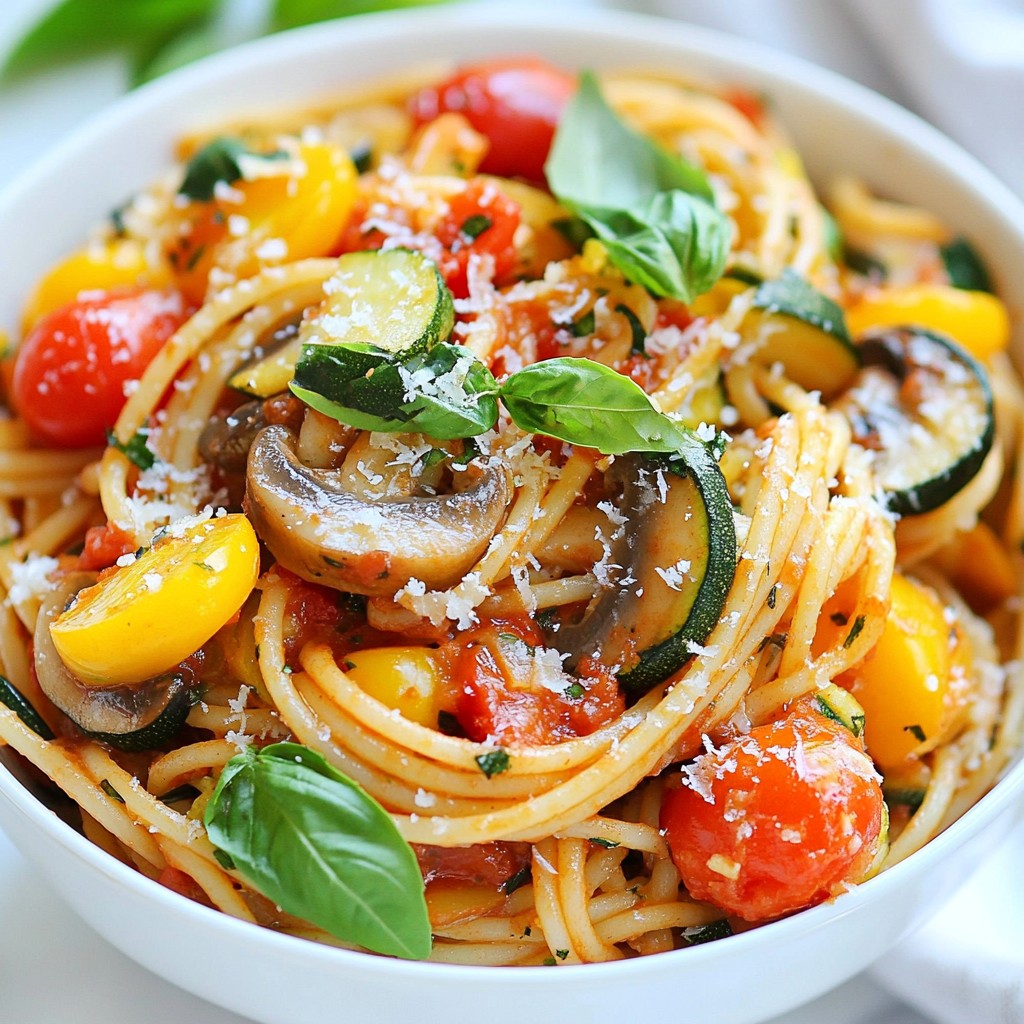
Are you ready to elevate your pasta game? My Veggie Packed Marinara Pasta is both simple and bursting with flavor. Packed with fresh veggies and a rich sauce, it’s the perfect dish for any night. In this article, I’ll guide you through easy steps, ingredient options, and handy tips to customize your meal. Let’s dive in and create a wholesome meal that everyone will love!
Why I Love This Recipe
- Nutritious and Wholesome: This pasta dish is loaded with colorful vegetables, making it a great way to incorporate more nutrients into your diet.
- Quick and Easy: With a total prep and cook time of just 30 minutes, this recipe is perfect for busy weeknights.
- Customizable: You can easily swap out vegetables based on what you have on hand, making it versatile and accommodating to any taste.
- Delicious Flavor: The combination of fresh and dried herbs creates a rich and satisfying marinara that pairs perfectly with the pasta.
Ingredients
Main Ingredients for Veggie Packed Marinara Pasta
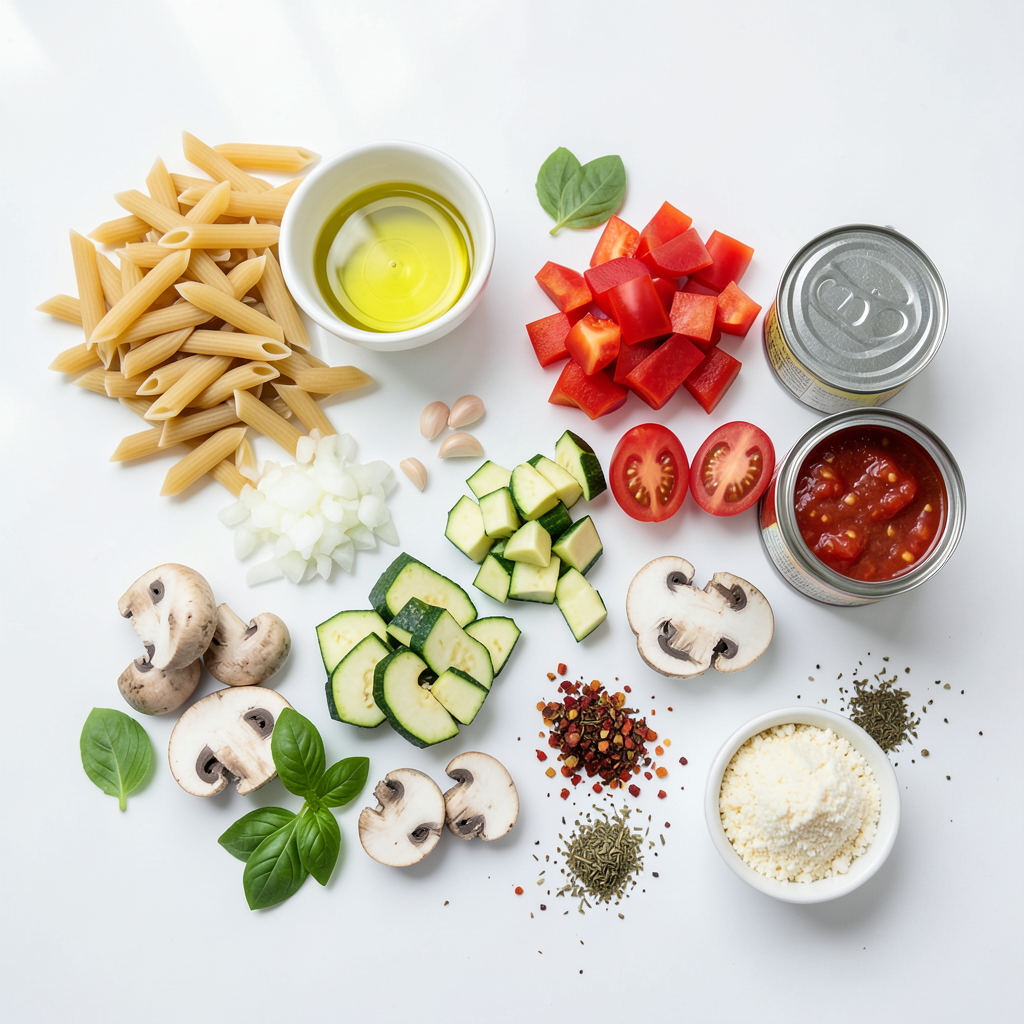
For this dish, you will need the following main ingredients:
- 8 oz whole wheat pasta (spaghetti or penne)
- 2 tablespoons olive oil
- 1 medium onion, chopped
- 3 garlic cloves, minced
- 1 red bell pepper, diced
- 1 zucchini, diced
- 1 cup mushrooms, sliced
- 1 cup cherry tomatoes, halved
- 1 can (14 oz) crushed tomatoes (no added salt)
- 1 teaspoon dried oregano
- 1 teaspoon dried basil
- ½ teaspoon red pepper flakes (optional)
- Salt and pepper to taste
These ingredients create a tasty and healthy base for your pasta. Whole wheat pasta adds fiber and nutrients. The veggies bring color and flavor, while crushed tomatoes add a rich sauce.
Optional Ingredients for Customization
You can customize your dish with these optional ingredients:
- Other vegetables like spinach, carrots, or eggplant can add more texture.
- A splash of balsamic vinegar can give a tangy twist.
- Meat or meat alternatives can make the dish more filling.
- Different herbs like thyme or parsley can change the flavor profile.
Mix and match these to fit your taste!
Suggested Garnishes
Garnishing adds that final touch to your dish. Here are some suggestions:
- Fresh basil leaves bring a burst of freshness.
- Grated Parmesan cheese adds a savory depth.
- A drizzle of good olive oil can enhance the taste.
- Crushed red pepper can add extra heat.
These garnishes make your pasta visually appealing and elevate its flavor. Enjoy your cooking adventure!
Step-by-Step Instructions
Cooking the Pasta Perfectly
To start, fill a large pot with water. Add a good amount of salt. Bring the water to a rolling boil. Once boiling, toss in 8 oz of whole wheat pasta. You can use spaghetti or penne. Cook it according to the package directions. Aim for al dente texture. This means the pasta should still have a slight bite. Once ready, drain the pasta in a colander. Save ½ cup of the pasta water for later. Set the pasta aside while you prepare the sauce.
Sautéing the Vegetables
Now, let’s sauté the veggies. Grab a large skillet and add 2 tablespoons of olive oil. Heat the oil over medium heat. When it’s warm, add 1 chopped medium onion. Cook for 3-4 minutes until it softens. Next, stir in 3 minced garlic cloves and 1 diced red bell pepper. Cook these for another 2-3 minutes. You want the bell pepper to soften a bit.
Then, add more veggies. Toss in 1 diced zucchini, 1 cup of sliced mushrooms, and 1 cup of halved cherry tomatoes. Sauté everything for about 5-7 minutes. The goal is to make the veggies tender but not mushy.
Combining Marinara and Pasta
Now, it's time to make the sauce. Pour in 1 can of crushed tomatoes. Mix in 1 teaspoon of dried oregano and 1 teaspoon of dried basil. If you like some heat, add ½ teaspoon of red pepper flakes. Stir everything well. Let the sauce simmer for about 10 minutes. This will help the flavors blend nicely.
After simmering, mix in the cooked pasta. If the sauce looks too thick, add some reserved pasta water to adjust the texture. Don’t forget to season with salt and pepper to taste.
Finally, serve the pasta in bowls. Garnish with fresh basil leaves. If you like, sprinkle some grated Parmesan cheese on top. Enjoy your delicious veggie-packed marinara pasta!
Tips & Tricks
How to Enhance Flavor
To boost the taste of your veggie packed marinara pasta, use fresh herbs. Fresh basil adds a bright flavor. You can also try parsley or thyme. For a little heat, red pepper flakes work well. A splash of balsamic vinegar can add depth. Lastly, don't forget to season with salt and pepper while cooking.
Cooking Time Adjustments for Different Pasta Types
If you use whole wheat pasta, follow the package directions. Usually, cooking takes about 8 to 10 minutes. For gluten-free pasta, check the box for specific times, as they often cook faster. For thicker pasta like rigatoni, you may need 2 extra minutes. Always taste your pasta before draining to check for doneness.
How to Avoid Overcooking Vegetables
To keep your veggies crisp, cook them on medium heat. Start with onions and garlic, then add peppers. After a few minutes, add zucchini and mushrooms. Cook these just until tender, about 5 to 7 minutes. If you notice veggies turning mushy, reduce heat. Remove from the skillet once they are bright and fresh.
Pro Tips
- Customize Your Veggies: Feel free to substitute any of the vegetables with your favorites or whatever you have on hand for a personalized touch.
- Add Protein: For a heartier meal, consider adding cooked chicken, shrimp, or chickpeas to the marinara for extra protein.
- Fresh Herbs Matter: Using fresh basil instead of dried can elevate the dish's flavor significantly; add it just before serving for the best taste.
- Save Pasta Water: Always reserve some pasta water before draining; it helps adjust the sauce consistency and adds extra flavor.
Variations
Adding Protein: Meat or Meat Alternatives
You can boost the protein in veggie packed marinara pasta easily. Adding ground meat, like beef or turkey, gives a hearty touch. Brown the meat in the skillet before adding onion and garlic. This step adds depth to your sauce. For a lighter option, consider using chicken breast cut into small pieces.
If you prefer plant-based options, try lentils or chickpeas. These options add protein without meat. You can also use tofu or tempeh for a vegetarian twist. Just cube them, sauté until golden, and mix into the sauce.
Using Different Vegetables
Feel free to play with the veggies in this dish. You can swap zucchini for eggplant or add chopped spinach for color and nutrients. Carrots or broccoli work well too. Just remember to cut them into small pieces. This way, they cook evenly and blend into the sauce.
Seasonal vegetables can also inspire your choices. Use butternut squash in fall or asparagus in spring. Each veggie adds its unique flavor and texture, making your dish exciting every time.
Gluten-Free or Low-Carb Adaptations
If you need a gluten-free option, use gluten-free pasta. Many brands offer great alternatives that taste just as good. Quinoa or brown rice pasta are both excellent choices.
For a low-carb version, try spiralized vegetables, like zucchini or carrots, instead of pasta. You can create "zoodles" by spiralizing zucchini. This method keeps the dish light and fresh while still delivering delicious marinara flavors.
Experiment with these variations to find your favorite mix. Each change can lead to a new and tasty experience!
Storage Info
How to Store Leftover Pasta
Store leftover veggie packed marinara pasta in an airtight container. Make sure it cools first. Place it in the fridge. It will stay fresh for up to three days. Avoid leaving it out at room temperature to prevent spoilage.
Reheating Tips
To reheat, use the microwave for quick results. Place the pasta in a bowl and add a splash of water. Cover it with a damp paper towel. Heat for 1-2 minutes, stirring halfway through. You can also reheat it on the stove. Add a little olive oil to a pan and warm it gently. Stir it often to heat evenly.
Freezing Instructions for Marinara Pasta
Freezing is a great way to save this dish for later. First, let the pasta cool completely. Then, transfer it to freezer-safe bags or containers. Remove as much air as possible before sealing. Label the bags with the date. It can last for up to three months in the freezer. When ready to eat, thaw it overnight in the fridge. Reheat as described above.
FAQs
Can I use store-bought marinara sauce instead of crushed tomatoes?
Yes, you can use store-bought marinara sauce. It saves time and adds flavor. Just remember that some sauces can be salty or sweet. Always check the label. Adjust the salt in your dish if needed. Using marinara sauce can make the meal quick and easy.
What other vegetables can I add to this recipe?
You can add many vegetables to this dish. Some great options include:
- Spinach
- Carrots
- Broccoli
- Eggplant
- Peas
Feel free to mix and match based on your taste. Just make sure to chop them small. This helps them cook evenly and blend well with the pasta.
How can I make Veggie Packed Marinara Pasta vegan?
To make this dish vegan, skip the Parmesan cheese. You can also use a vegan cheese substitute if you like. Check the crushed tomatoes for any added ingredients. Many brands are vegan-friendly. This way, you keep all the flavors without any animal products. Enjoy a delicious meal that everyone can love!
This blog post covered how to make a tasty Veggie Packed Marinara Pasta. We looked at key ingredients, step-by-step cooking, and helpful tips to boost flavor. I shared ways to customize your dish, including protein options and dietary swaps. Finally, we explored storage and reheating tips to enjoy your meal later.
Remember, cooking should be fun and flavorful! You can make this dish fit your tastes and needs. Happy cooking!